Understanding Dioctyl Sebacate: A Versatile Industrial Chemical
Understanding Dioctyl Sebacate: A Versatile Industrial Chemical
Dioctyl sebacate, often shortened to DOS, is a fascinating chemical compound with a wide array of industrial applications. Its unique properties make it a valuable ingredient in various products, from plastics to personal care items. This article will explore its characteristics, applications, and considerations surrounding its use.
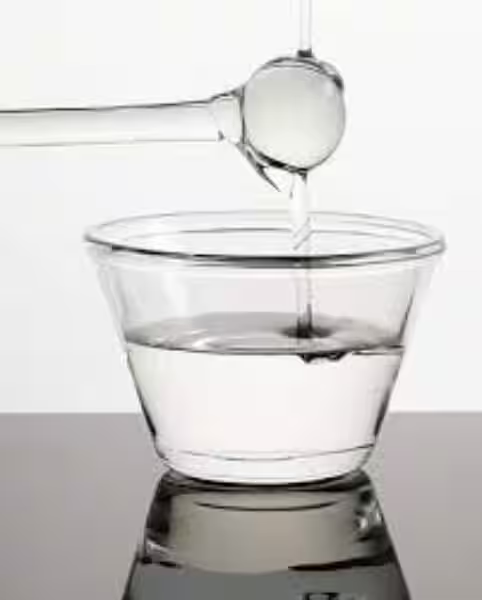
Dioctyl sebacate (DOS), also known chemically as di(2-ethylhexyl) sebacate, boasts a unique combination of properties that contribute to its versatility. Its chemical formula, C26H50O4, hints at its complex molecular structure, which underlies its useful characteristics. At room temperature, it exists as a colorless, odorless, and virtually tasteless liquid.
This seemingly simple description belies its complex functionality. Its most significant attributes lie in its low viscosity, high dielectric strength, and excellent compatibility with a wide range of materials. These properties are pivotal in determining its diverse applications, which we will explore in more detail later. The absence of any strong odor or taste is also crucial in certain applications, particularly in those involving food contact or personal care products.
Key Physical and Chemical Characteristics
Several key properties make DOS stand out:
Low Viscosity: This allows for easy processing and handling, making it suitable for applications requiring fluidity. Think of it like the difference between honey and water – the lower viscosity of DOS makes it easier to incorporate into other materials.
High Dielectric Strength: This is crucial for applications where electrical insulation is vital, such as in high-voltage cables. It acts as a barrier to electrical current flow, preventing short circuits and ensuring safety.
Excellent Compatibility: DOS blends well with numerous polymers, resins, and other substances without causing phase separation or unwanted chemical reactions. This is critical for maintaining the integrity and performance of the final product.
Low Volatility: Unlike some other plasticizers, DOS doesn't readily evaporate. This leads to longer-lasting plasticization effects and reduces concerns about volatile organic compounds (VOCs) releasing harmful chemicals into the environment.
Biodegradability: While not rapidly biodegradable in all environments, some studies suggest a degree of biodegradability under specific conditions. Further research is ongoing to fully understand its environmental impact.
Toxicity: Generally considered to have low toxicity, DOS still requires careful handling and disposal, adhering to standard safety protocols. Its toxicity profile is relatively benign compared to some other plasticizers.
Applications of Dioctyl Sebacate: A Versatile Compound
The versatility of dioctyl sebacate is reflected in its wide range of applications across numerous industries. Its unique blend of properties makes it an ideal component in various products and processes.
DOS in Plastics and Polymers
The most significant application of DOS is as a plasticizer. Plasticizers are added to polymers to enhance their flexibility, workability, and processability. DOS is particularly effective in improving the low-temperature flexibility of certain plastics. This is invaluable in applications where materials need to remain flexible even in cold conditions, such as in automotive parts, outdoor cables, and artificial leather. Its low toxicity also makes it suitable for use in food-contact applications, after appropriate regulatory approvals are obtained.
DOS as a Lubricant and in Other Industrial Applications
DOS also serves as a lubricant in certain applications, particularly where material compatibility is crucial. Its low viscosity and compatibility with various materials make it an effective lubricant, particularly in cold environments or specialized machinery.
Beyond these primary roles, DOS finds use in:
High-voltage cable insulation: Its high dielectric strength makes it suitable for insulating high-voltage cables.
Hydraulic fluids: Its fluidity and compatibility properties make it suitable for some specialized hydraulic fluids.
Solvents: It finds limited use as a solvent for specific substances.
DOS in Personal Care Products
Interestingly, DOS also shows up in the personal care industry. Its silky feel and ease of spreadability make it a desirable ingredient in various cosmetic and personal care products, enhancing their texture and feel. It can be found in products like deodorants, antiperspirants, and moisturizers. Its non-irritating nature and compatibility with human skin make DOS a relatively safe and effective ingredient.
While generally considered safe, handling and disposal of DOS should always follow appropriate safety protocols. Information on its complete toxicological profile and biodegradability is continually being refined through ongoing research. Responsible use and disposal practices are vital to minimizing any potential environmental impact. Always refer to the safety data sheet (SDS) before handling or using dioctyl sebacate. Understanding the potential environmental impact and following proper safety protocols are critical for responsible use of this versatile chemical.
In conclusion, dioctyl sebacate is a remarkable chemical with a wide range of applications. Its unique properties, coupled with generally low toxicity and low volatility, make it a valuable component in various industries. However, continuous research into its biodegradability and environmental impact remains important for ensuring its sustainable and responsible use.
Frequently Asked Questions about Dioctyl Sebacate (DOS)
What is Dioctyl Sebacate (DOS)?
Dioctyl sebacate (DOS), also known as di(2-ethylhexyl) sebacate, is a diester created by combining sebacic acid and 2-ethylhexanol. Its chemical formula is C26H50O4. At room temperature, it's a colorless, odorless, and virtually tasteless liquid. Its low viscosity, high dielectric strength, and excellent compatibility with many materials make it useful in various industrial applications.
What are the key properties of DOS?
DOS possesses several key properties that determine its applications:
Low Viscosity: This makes it easy to process and use in applications requiring fluidity, such as a plasticizer or lubricant.
High Dielectric Strength: This property allows it to be used as an electrical insulator in applications like cables and capacitors.
Excellent Compatibility: It blends well with many polymers and resins without separating, making it effective as a plasticizer.
Low Volatility: It doesn't evaporate easily, leading to longer-lasting effects and reducing environmental concerns related to volatile organic compounds (VOCs).
Biodegradability: While not readily biodegradable in all environments, some research suggests a degree of biodegradability under specific conditions. Further research is needed.
Toxicity: Generally considered to have low toxicity, but appropriate safety precautions should always be used during handling and disposal.
DOS's properties lead to its use in several key applications:
Plasticizer: This is its most common use, increasing the flexibility and workability of polymers in various plastics.
Lubricant: Its low viscosity and compatibility make it suitable for lubrication in specific applications.
High-Voltage Cable Insulation: Its high dielectric strength makes it useful for insulating high-voltage electrical cables.
Solvent: It has limited use as a solvent for certain substances.
Hydraulic Fluids: Its fluid properties and compatibility are used in specialized hydraulic fluids.
Is DOS safe?
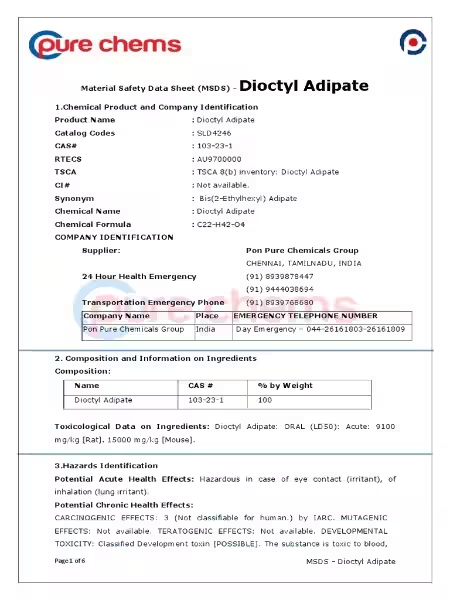
DOS is generally considered to have low toxicity. However, as with any chemical, appropriate safety precautions should be followed during handling and disposal. Consult safety data sheets (SDS) for detailed information.
Is DOS environmentally friendly?
While DOS exhibits some degree of biodegradability under specific conditions, the extent and rate vary. Compared to some other plasticizers, its low volatility reduces environmental concerns associated with VOCs. However, further research on its biodegradability is ongoing.
What is the difference between DOS and other plasticizers?
Compared to some other plasticizers, DOS often offers advantages in its lower volatility (meaning less evaporation and longer-lasting effects), good compatibility with a wide range of materials, and generally lower toxicity. However, the choice of plasticizer depends on the specific application requirements.
Where can I find more information about DOS?
Consult safety data sheets (SDS) and relevant scientific literature for comprehensive information on Dioctyl Sebacate, including detailed safety, handling, and environmental data. You can also contact chemical suppliers for additional product specifications.