Understanding Dioctyl Adipate: A Comprehensive Guide
Understanding Dioctyl Adipate: A Comprehensive Guide
Dioctyl adipate, a common yet often misunderstood chemical, plays a crucial role in various industries. This article aims to demystify dioctyl adipate, clarifying its uses, properties, and safety considerations. We will explore its chemical identity, industrial applications, and the importance of distinguishing it from similar compounds.
Dioctyl Adipate: Chemical Identity and Nomenclature
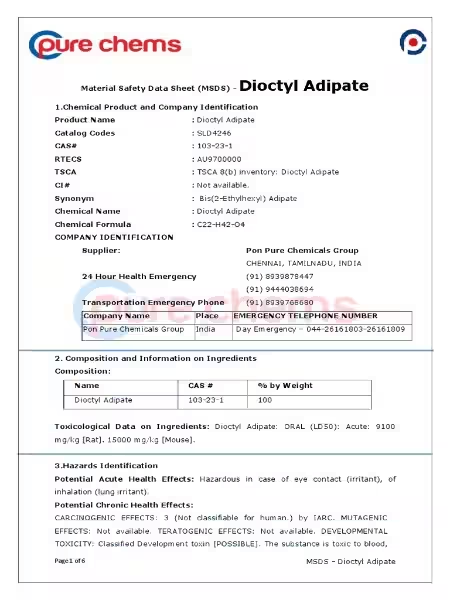
Dioctyl adipate (DOA) is a colorless, oily liquid with the chemical formula (CH₂CH₂CO₂C₈H₁₇)₂. It's classified as a diester, specifically an adipate ester derived from octanol. This seemingly simple description, however, highlights a crucial point: the potential for confusion.
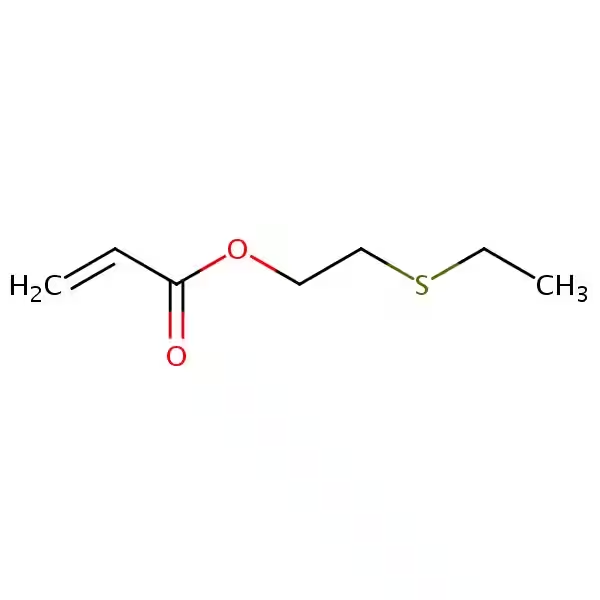
The term "dioctyl adipate" is often used interchangeably with bis(2-ethylhexyl) adipate (DEHA). While functionally similar as plasticizers, these are distinct compounds with different chemical structures and, consequently, potentially different properties and toxicity profiles. This ambiguity in nomenclature necessitates careful attention to the specific chemical being referenced, especially in material safety data sheets and technical specifications. Always verify the precise chemical name and CAS number to avoid errors.
Dioctyl Adipate as a Plasticizer
The primary application of DOA, shared with related diesters like DEHA, is as a plasticizer. Plasticizers are substances added to polymers, like plastics and resins, to increase their flexibility, workability, and durability. Imagine trying to mold a rigid plastic – a plasticizer allows for easier shaping and manipulation, resulting in a more pliable finished product.
DOA's effectiveness as a plasticizer stems from its ability to interact with the polymer chains, reducing intermolecular forces and increasing the material's flexibility. This makes it invaluable in countless applications, from flexible PVC films used in packaging to vinyl flooring and automotive interiors. The specific properties of the final product, such as softness and durability, can be fine-tuned by adjusting the amount of DOA added.
Applications Across Industries
The demand for flexible and durable materials drives the widespread use of DOA across various sectors:
Plastics and Polymers: DOA is a key ingredient in numerous plastic products, enhancing their flexibility and making them easier to process.
Coatings and Inks: Its plasticizing properties improve the flow and adhesion of coatings and inks, leading to smoother, more durable finishes.
Adhesives: It can be incorporated into adhesives to enhance their flexibility and bonding strength.
The versatility of DOA allows it to be used in a wide variety of applications, underpinning its importance in modern manufacturing.
Safety and Toxicity Considerations of Dioctyl Adipate
While DOA is widely used, understanding its safety profile is crucial. Preliminary studies on structurally similar compounds, like adipic acid esters, suggest relatively low acute toxicity. For example, the intravenous LD₅₀ (lethal dose for 50% of the test population) of ethylhexanoate in rats is estimated to be high. However, this is just one data point, and the toxicity of DOA itself may differ slightly.
It is imperative to consult comprehensive safety data sheets (SDS) and conduct thorough risk assessments before handling or using DOA. These documents provide detailed information on potential health hazards, safe handling procedures, and appropriate disposal methods. Remember that acute toxicity data does not fully encompass the long-term health effects or environmental concerns associated with a chemical; a comprehensive investigation is needed. Further research into chronic toxicity, environmental impact, and biodegradability is vital for responsible use.
Responsible Handling and Disposal
Always follow the safety guidelines provided on the SDS. This includes:
Personal Protective Equipment (PPE): Use appropriate PPE, such as gloves and eye protection, when handling DOA.
Ventilation: Ensure adequate ventilation to minimize exposure to vapors.
Disposal: Dispose of DOA and its waste products according to local regulations.
Responsible handling and disposal of DOA are essential to minimize potential risks to human health and the environment.
Conclusion: The Importance of Precise Nomenclature and Responsible Use
Dioctyl adipate (DOA) plays a significant role as a plasticizer in many industrial applications. However, the potential for confusion with similar compounds, like DEHA, emphasizes the need for precise nomenclature and careful identification of the specific chemical being used. While preliminary data suggest relatively low acute toxicity for related compounds, a comprehensive safety assessment, including long-term effects and environmental considerations, is paramount for its responsible use. Always prioritize safety and consult relevant safety data sheets before handling or using DOA in any application.
Here's a FAQ section addressing common questions about Dioctyl Adipate (DOA), based on the provided information. Remember that this information is general and should not replace consultation of a Safety Data Sheet (SDS) for specific handling and safety precautions.
What is Dioctyl Adipate (DOA)?
DOA is a colorless, oily liquid organic compound with the chemical formula (CH₂CH₂CO₂C₈H₁₇)₂. Its primary function is as a plasticizer, increasing the flexibility and workability of polymers and other materials. This makes it a crucial component in numerous industrial applications.
What is the difference between DOA and Bis(2-ethylhexyl) adipate (DEHA)?
While often used interchangeably, DOA and DEHA are distinct compounds. Although both are adipate esters, they have different chemical structures and CAS numbers, leading to potential differences in properties and toxicity profiles. Careful attention to the exact chemical name and CAS number is crucial to avoid confusion.
What are the main applications of DOA?
DOA's primary application is as a plasticizer in various industries. Its use improves the flexibility, durability, and processability of polymers used in numerous products. Specific applications would need further investigation, and the exact application will depend on the specific product in question.
How toxic is DOA?
Available data suggests that adipic acid esters related to DOA generally exhibit low acute toxicity in animal models. However, this information is limited and primarily focuses on acute toxicity (short-term effects). A comprehensive toxicity profile encompassing chronic effects (long-term effects), as well as environmental impacts, is necessary for a full understanding of its safety profile. Consult an SDS for thorough safety information.
Where can I find more detailed information on DOA's toxicity and safety?
For comprehensive information on DOA's toxicity, environmental impact, and safe handling, always consult the Safety Data Sheet (SDS) provided by the manufacturer or supplier of the specific DOA product you are using. The SDS will contain detailed information regarding potential hazards, safe handling procedures, and emergency response measures.
Are there any environmental concerns associated with DOA?
The environmental impact of DOA requires further investigation. While limited information is available from the provided text, the potential for bioaccumulation and persistence in the environment should be considered, and should be a part of any comprehensive risk assessment.
What precautions should I take when handling DOA?
Because DOA is an oily liquid, standard safety precautions for handling chemicals should be followed. This includes the wearing of appropriate personal protective equipment (PPE), such as gloves, eye protection, and potentially respiratory protection, depending on the concentration and application. Always refer to the SDS for specific handling and safety guidelines.
Can I find more detailed information on the chemical properties of DOA?
Detailed information on the physical and chemical properties of DOA (such as molecular weight, melting point, boiling point, solubility, etc.) can be found in comprehensive chemical databases and technical literature, such as the manufacturer's product specifications or relevant scientific publications. Consulting an SDS is also recommended.