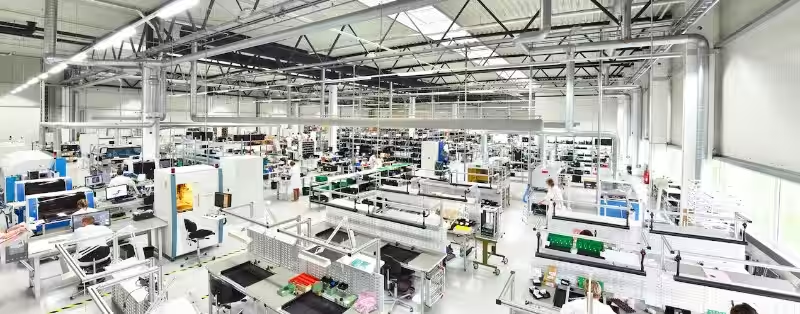
Optimizing Your Operations: Understanding the Role of Fabricas de Producción in Modern Manufacturing
Optimizing Your Operations: Understanding the Role of Fabricas de Producción in Modern Manufacturing
Finding the right staffing solutions is crucial for the success of any manufacturing operation. This often involves navigating the complexities of temporary employment and ensuring a consistent flow of skilled workers. Understanding the vital role of fabricas de producción, or manufacturing plants, in the overall production chain is essential for businesses looking to optimize their processes and remain competitive. This article will explore the key aspects of efficient manufacturing and the supporting roles played by temporary staffing agencies in this dynamic environment.
The Importance of Efficient Manufacturing Processes
Manufacturing plants, or fabricas de producción, are the heart of many industries, responsible for transforming raw materials into finished goods. Efficiency in these plants translates directly to profitability and competitiveness. Minimizing downtime, optimizing workflow, and ensuring the availability of skilled labor are critical elements in achieving this efficiency.
It's not just about speed; it's about precision. A well-oiled manufacturing process minimizes waste, maximizes output, and guarantees consistent product quality. This requires meticulous planning, skilled personnel, and access to reliable resources. Poorly managed processes, on the other hand, can lead to increased costs, delays, and ultimately, a loss of market share.
The Role of Temporary Staffing in Manufacturing
A key aspect of maintaining efficient operations within fabricas de producción is access to a reliable workforce. Seasonality, fluctuating demand, and short-term projects often mean that permanent staffing isn't always the optimal solution. This is where temporary staffing agencies come into play. These agencies provide a crucial bridge, ensuring that manufacturing plants have the necessary personnel when and where they are needed.
Benefits of Using Temporary Staffing Agencies
Using temporary staffing agencies for your fabricas de producción offers several significant advantages:
Flexibility: Easily scale your workforce up or down to meet seasonal or project demands.
Cost-effectiveness: Avoid the expenses associated with hiring permanent employees, including benefits and payroll taxes.
Access to specialized skills: Agencies can provide access to skilled workers with specific expertise needed for particular projects.
Reduced administrative burden: Agencies handle recruitment, screening, onboarding, and payroll, freeing up your internal resources.
Faster response to changing needs: Quickly fill staffing gaps to prevent production delays.
Choosing the right agency is critical. Look for agencies with experience working with manufacturing companies. A strong understanding of the industry's specific needs and requirements is paramount. Consider factors like the agency's reputation, its client base, and its ability to provide candidates with the skills necessary for your specific production needs. Check reviews and testimonials to gauge the agency's performance and client satisfaction levels.
Beyond Temporary Workers: Streamlining Your Fabricas de Producción
Efficient manufacturing isn't solely dependent on staffing. A number of other factors significantly impact the productivity of your fabricas de producción. These include:
Technology and Automation: Investing in advanced technologies can automate repetitive tasks, improve accuracy, and reduce human error.
Inventory Management: Efficient inventory control ensures that the necessary raw materials and components are readily available, minimizing downtime.
Quality Control: Implementing robust quality control procedures helps maintain consistent product quality and reduce waste.
Supply Chain Optimization: Streamlining your supply chain can reduce lead times and improve the efficiency of your overall operations.
Employee Training and Development: Investing in the training and development of your workforce, whether permanent or temporary, enhances skills and productivity.
Optimizing Your Entire Production Process
Considering all these factors holistically is crucial for achieving peak efficiency. It's about creating a synergistic system where each element supports the others. For example, introducing automation might necessitate specialized temporary workers to oversee and maintain the new equipment. Similarly, a robust quality control system relies on skilled inspectors, who might be sourced through a temporary staffing agency.
Conclusion: Building a Resilient and Efficient Manufacturing Operation
The success of your fabricas de producción hinges on several interconnected factors. While temporary staffing agencies offer a vital solution for managing fluctuating workforce needs, optimizing your entire production process—from technology and automation to inventory management and employee training—is crucial for long-term success. By carefully considering these elements and strategically utilizing temporary staffing, you can build a more resilient, efficient, and profitable manufacturing operation. Remember, the right partner, whether it's a temporary staffing agency or a technology provider, can make all the difference in optimizing your overall productivity and competitiveness.
Frequently Asked Questions about Fabricas de Producción (Manufacturing Companies)
This FAQ section addresses common questions about manufacturing companies, drawing on general knowledge of the industry. Specific answers may vary depending on the individual company.
What is a Fabrica de Producción (Manufacturing Company)?
A fabrica de producción, or manufacturing company, is a business that transforms raw materials or components into finished goods. This process often involves various stages, including design, assembly, testing, and packaging. Manufacturing companies can range from small workshops to large multinational corporations.
What types of products do manufacturing companies produce?
Manufacturing companies produce a vast array of products, including everything from consumer goods like clothing and electronics to industrial equipment, vehicles, and pharmaceuticals. The specific products a company manufactures depend on its specialization and target market.
What are the key functions within a fabrica de producción?
A typical manufacturing company has several key functions, including:
Production: This involves the actual manufacturing process, including assembly, fabrication, and quality control.
Engineering: Engineers design products, processes, and equipment.
Procurement: This department sources raw materials and components.
Logistics: This manages the flow of materials and finished goods.
Sales and Marketing: This focuses on selling the company's products.
Human Resources: This manages employee relations and recruitment.
What are the challenges faced by manufacturing companies?
Manufacturing companies face numerous challenges, including:
Competition: Globalization and technological advancements increase competition.
Supply chain disruptions: Unexpected events can impact the availability of raw materials.
Technological advancements: Companies must constantly adapt to new technologies.
Labor costs and availability: Finding and retaining skilled workers can be difficult.
Regulatory compliance: Meeting environmental and safety regulations is crucial.
How do manufacturing companies improve efficiency?
Manufacturing companies employ various strategies to improve efficiency, including:
Automation: Implementing automated systems reduces reliance on manual labor.
Lean manufacturing: This philosophy focuses on eliminating waste and improving processes.
Data analytics: Using data to identify areas for improvement.
Supply chain optimization: Streamlining the flow of materials and goods.
Employee training and development: Investing in skilled workers enhances productivity.
What are the different types of manufacturing processes?
There are many types of manufacturing processes, including:
Mass production: Producing large quantities of identical products.
Custom manufacturing: Producing products to meet specific customer requirements.
Job shop manufacturing: Producing small batches of customized products.
Lean manufacturing: A philosophy focused on efficiency and waste reduction.
How do I find a manufacturing job?
To find a manufacturing job, you can explore online job boards, networking events, and company websites. Consider highlighting relevant skills and experience in your resume and cover letter. Vocational training or specialized skills can significantly increase your job prospects.
This FAQ provides a general overview. For specific information about a particular fabrica de producción, you should consult its website or contact the company directly.