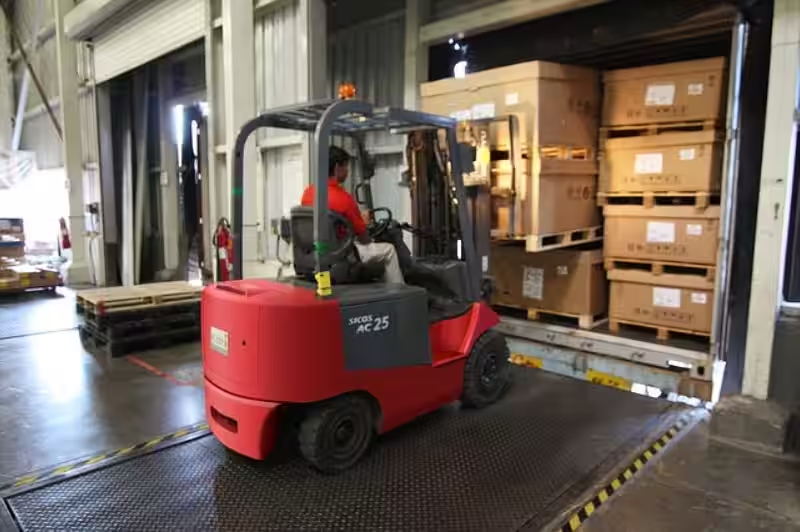
Forklifts are ubiquitous in modern industry, but how much do you really know about their diverse applications and the impact they have on efficiency and safety? This article delves into the many uses of forklifts, exploring their functionality, safety considerations, and the various types available to suit diverse operational needs.
The Versatility of Forklifts: Applications Across Industries
Forklifts, also known as lift trucks or fork trucks, are powered industrial trucks designed for short-distance lifting and movement of materials. Their core function revolves around the precise lifting, carrying, and placement of goods, eliminating the risks associated with manual handling and significantly boosting productivity.
The impact of forklifts extends far beyond simple material handling. They represent a cornerstone of efficient operations across a broad spectrum of industries. Their adaptability, coupled with a range of attachments and specialized models, ensures their suitability for diverse environments and tasks.
Warehousing and Distribution
Perhaps the most common use of forklifts is within warehouses and distribution centers. Here, they are essential for:
Pallet Handling: Efficiently moving and stacking pallets, optimizing storage space.
Inventory Stocking: Precise placement of goods onto shelves and racking systems.
Loading and Unloading Shipments: Streamlining the loading and unloading process, minimizing damage and delays.
The strategic placement of racking systems within a warehouse is often dictated by the type of forklift used, ensuring seamless and safe operation.
Construction and Manufacturing
Forklifts play critical roles in construction and manufacturing environments. In construction, they handle:
Heavy Materials: Transporting bricks, lumber, steel, and other building materials across uneven terrain.
Site Logistics: Moving equipment and supplies around the construction site efficiently.
Within manufacturing plants, uses include:
Raw Material Handling: Moving raw materials from storage to the production line.
Finished Goods Transport: Transferring finished products to packaging and shipping areas.
Component Movement: Facilitating the smooth flow of components within the production process.
Conclusion: The Essential Role of Forklifts in Modern Industry
The uses of forklift are integral to the smooth functioning of numerous industries. From the efficient movement of goods in warehouses to the handling of heavy materials on construction sites, forklifts have revolutionized material handling, significantly improving productivity and workplace safety. However, their safe and effective operation demands proper training, adherence to safety regulations, and regular maintenance. By understanding the different types of forklifts and their specific applications, businesses can optimize their operations and create a safer work environment for their employees.
Forklift FAQs
What is a forklift?
A forklift, also known as a lift truck or fork truck, is a powered industrial truck used to lift and move materials over short distances. It's a crucial piece of equipment in many industries for its efficiency and ability to handle heavy loads safely.
What are the different types of forklifts?
Forklifts come in various types to suit different needs and environments. These include counterbalanced forklifts (the most common type), reach trucks (for narrow aisles), order-picking trucks, sideloaders, low lift trucks, stackers, and specialized models like container handlers and rough-terrain forklifts.
What powers a forklift?
Forklifts can be powered by a variety of sources, including gasoline, propane (LPG), compressed natural gas (CNG), diesel, lead-acid batteries, lithium-ion batteries, and even fuel cells. The choice of power source depends on factors like operating environment, fuel availability, and environmental considerations.
How much weight can a forklift lift?
Forklift load capacity varies greatly depending on the model and size. They can range from lifting a few thousand pounds to over 50,000 pounds (or even more in specialized applications). The maximum weight capacity is always clearly stated on the forklift's nameplate.
What are some common forklift attachments?
Many attachments expand a forklift's functionality beyond basic pallet handling. These include sideshifters, rotators, fork positioners, clamps, pole attachments, slip sheet attachments, drum handlers, man baskets, and telescopic forks. These attachments allow forklifts to handle a wide variety of materials and perform specialized tasks.
Forklifts are indispensable in numerous industries. Common applications include warehouses and distribution centers (for pallet handling and inventory management), construction sites (for moving heavy materials), manufacturing plants (for transporting materials and finished goods), and retail settings (for efficient stock replenishment). They are used in many environments, both indoors and outdoors.
What are the safety considerations when using a forklift?
Forklift safety is paramount. Operators must be properly trained and certified. Safe operating practices include adhering to load limits, avoiding sharp turns with raised loads, maintaining awareness of surroundings, and using appropriate safety equipment. Regular maintenance and inspections are also crucial. Warehouse layouts must also accommodate safe forklift operation. Many modern forklifts incorporate safety features like warning lights and pedestrian detection systems.
What are the benefits of using a forklift?
Forklifts offer significant advantages. They increase productivity by moving materials faster and more efficiently. They reduce workplace injuries by minimizing manual handling. This leads to cost savings through reduced labor strain, lower insurance premiums, and improved overall operational efficiency. They also allow businesses to handle heavier loads with fewer workers, optimizing staffing and resource allocation.
What are some common forklift safety features?
Modern forklifts include various safety features designed to protect operators and others. These may include high-visibility seat belts, warning lights and horns, backup alarms, load backrest extensions, overhead guards, and advanced systems like ultrasonic or RF-based pedestrian detection.
What are the environmental considerations related to forklifts?
The environmental impact of forklifts varies depending on the power source. Electric forklifts (battery-powered) offer zero emissions during operation, making them preferable for indoor use and environmentally sensitive areas. Internal combustion engine forklifts produce emissions, although emission control technologies are continually improving. Fuel cell forklifts are also a developing option, offering zero tailpipe emissions.