Understanding Hexamethylenetetramine: A Versatile Compound with Diverse Applications
Understanding Hexamethylenetetramine: A Versatile Compound with Diverse Applications
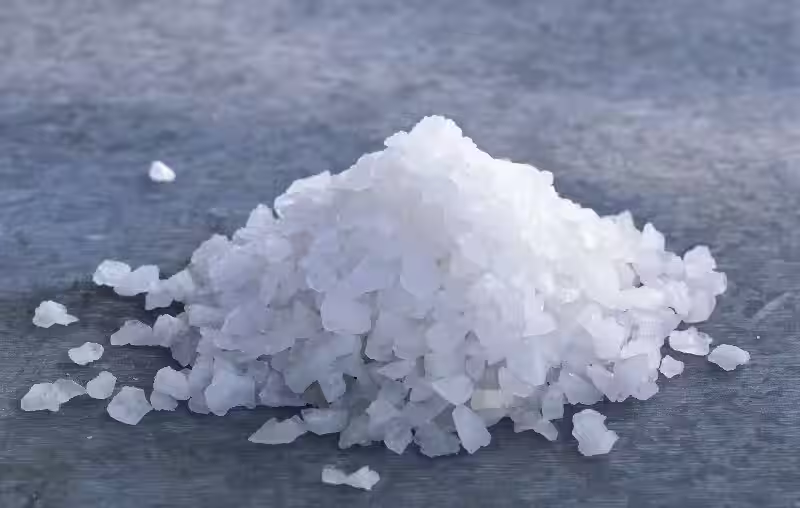
Hexamethylenetetramine, a compound with the deceptively simple chemical formula (CH₂)₆N₄, is far more complex and multifaceted than its appearance suggests. Also known as hexamine, methenamine, or 1,3,5,7-tetraazaadamantane, this white crystalline solid boasts a wide array of applications spanning various industries, from manufacturing to medicine and even pyrotechnics. This article delves into the fascinating properties and uses of hexamethylenetetramine, exploring its unique characteristics and the reasons behind its widespread utility.
The Chemistry and Structure of Hexamethylenetetramine
Hexamethylenetetramine's distinctive tetrahedral cage structure is key to understanding its properties. This cage-like arrangement, similar to that of adamantane, results in a remarkably stable molecule. The nitrogen atoms at the vertices of the tetrahedron contribute to its reactivity and allow it to participate in a surprising number of chemical reactions.
Its high solubility in water and polar organic solvents makes it readily accessible for a variety of chemical processes. This solubility, combined with its structural stability, makes hexamethylenetetramine a versatile reagent in many chemical syntheses. The ease with which it can be incorporated into reactions contributes significantly to its wide range of uses.
Industrial Applications of Hexamethylenetetramine
The industrial uses of hexamethylenetetramine are extensive and significant. Perhaps its most prominent role is as a hardening agent in the production of phenolic resins. These resins find applications in countless products, including:
Brake linings: Providing strength and durability.
Abrasives: Improving the binding of abrasive particles.
Fireproof materials: Contributing to their fire-resistant properties.
Beyond phenolic resins, hexamethylenetetramine is a crucial component of hexamine fuel tablets. These tablets are known for their smokeless combustion, high energy density, and the absence of ash— making them ideal for applications where clean burning is paramount. However, it's crucial to remember that the fumes produced during combustion are toxic and require appropriate ventilation.
Pyrotechnic Applications
In pyrotechnics, hexamethylenetetramine plays a vital role in controlling combustion temperature and color intensity. Its ash-free burning property is especially valuable in indoor fireworks, where minimizing residue is crucial. The precise control it offers over the combustion process allows pyrotechnicians to achieve specific visual effects.
Hexamethylenetetramine in Medicine and Pharmaceuticals
In the medical field, hexamethylenetetramine often appears under the names methenamine or hexamine. Its primary application is as a urinary antiseptic and antibacterial agent, particularly effective in an acidic urine environment. It is frequently used to prevent and treat urinary tract infections (UTIs), often administered as methenamine mandelate or methenamine hippurate.
While the efficacy of hexamethylenetetramine in preventing UTIs is still under ongoing investigation and debate, some studies suggest that it can be as effective as low-dose antibiotics. This potential advantage is significant, as it offers a way to combat UTIs without contributing to the growing problem of antibiotic resistance. Furthermore, its astringent properties have led to its inclusion in some over-the-counter antiperspirants.
Hexamethylenetetramine as a Reagent in Organic Chemistry
Hexamethylenetetramine's versatility extends to its crucial role as a reagent in organic chemistry. It serves as a key component in several important reactions, including:
The Duff reaction: Used for the formylation of arenes.
The Sommelet reaction: Enabling the conversion of benzyl halides to aldehydes.
The Delepine reaction: Facilitating amine synthesis.
However, its utility must be considered alongside safety concerns. Hexamethylenetetramine is a precursor in the synthesis of several explosives, including RDX (and consequently C-4), octogen, and HMTD. This has led to restrictions on its sale and distribution in many regions, highlighting the need for responsible handling and regulation.
Food Industry and Beyond: Other Applications of Hexamethylenetetramine
In some regions, such as the European Union, hexamethylenetetramine is used as a food preservative (INS number 239, E number E239). However, its use is not permitted in other countries, including the USA, Australia, and New Zealand. This difference in regulatory approval highlights the ongoing debate surrounding its safety and efficacy as a food additive.
Extraterrestrial Presence
Intriguingly, hexamethylenetetramine has been detected in meteorites, suggesting that this versatile compound might have extraterrestrial origins. This discovery adds another layer to our understanding of its prevalence and formation in the universe.
Although the number of hexamethylenetetramine producers in Europe has significantly decreased since 1990, its importance across various industries remains undeniable. Ongoing research into its properties and applications, coupled with responsible regulation, will ensure its continued and safe use in the future. Its unique combination of stability, reactivity, and versatility assures its place as a crucial chemical compound with a wide range of applications, from everyday products to sophisticated chemical processes.
Hexamethylenetetramine (HMTA) FAQ
What is hexamethylenetetramine (HMTA)?
Hexamethylenetetramine (HMTA), also known as hexamine or 1,3,5,7-tetraazaadamantane, is a heterocyclic organic compound with the chemical formula (CH₂)₆N₄. It's a white crystalline solid that's highly soluble in water and many polar organic solvents. Its structure is a unique tetrahedral cage.
What are the main industrial uses of HMTA?
HMTA is primarily used as a hardening agent in the production of phenolic resins, which find applications in various materials like brake linings, abrasives, and fire-resistant materials. It's also a key component in hexamine fuel tablets, valued for their smokeless combustion and high energy density. Additionally, it plays a role in pyrotechnics, helping control combustion temperature and color.
What are the medical applications of HMTA?
In medicine, HMTA (often sold as methenamine or hexamine) acts as a urinary antiseptic and antibacterial agent, particularly effective in acidic urine. It's used to treat and prevent urinary tract infections (UTIs), usually as methenamine mandelate or methenamine hippurate. It also has astringent properties and is used in some over-the-counter antiperspirants. Its effectiveness in preventing UTIs is still being researched.
What is HMTA's role in organic chemistry?
HMTA is a versatile reagent in organic synthesis, participating in reactions like the Duff reaction (formylation of arenes), the Sommelet reaction (converting benzyl halides to aldehydes), and the Delepine reaction (amine synthesis). It's also a crucial precursor in the synthesis of several explosives, including RDX and HMTD.
Is HMTA used in the food industry?
In some regions (e.g., the EU), HMTA is used as a food preservative (INS number 239, E number E239). However, its use is not permitted in others (e.g., the USA, Australia, and New Zealand).
Due to its use as a precursor in explosive synthesis, HMTA's sale is restricted in some countries, like the UK. Regulations vary by region.
What are the safety concerns associated with HMTA?
HMTA is flammable and its fumes are toxic. Appropriate safety precautions, including proper handling and storage, are necessary. Skin contact may cause allergic reactions in some individuals.
What is the structure of HMTA?
HMTA has a unique cage-like structure, similar to adamantane, but with nitrogen atoms at the corners of the tetrahedron.
Where can I find more information on HMTA's safety data?
Consult the Safety Data Sheet (SDS) provided by the supplier of HMTA. This document contains detailed information on hazards, handling precautions, and emergency procedures.
Is HMTA found naturally?
Interestingly, HMTA has been detected in meteorites, suggesting it may have extraterrestrial origins.
What are the other names for HMTA?
HMTA is also known as hexamine, urotropin, and 1,3,5,7-tetraazaadamantane.
How soluble is HMTA?
HMTA is highly soluble in water and various polar organic solvents.
What is the appearance of HMTA?
It's a white crystalline solid.
What is the CAS number for HMTA?
The CAS number for HMTA is 100-97-0.
What is hexamine fuel?
Hexamine fuel tablets are solid fuel tablets containing HMTA as their primary component. They are known for smokeless combustion and high energy density.
Is HMTA an explosive itself?
While not an explosive in its pure form, HMTA is a key precursor in the synthesis of several powerful explosives.
Is HMTA environmentally friendly?
The environmental impact of HMTA depends on its application and proper disposal methods. More research is needed in certain areas.
How is HMTA produced?
The industrial production of HMTA typically involves the reaction of formaldehyde and ammonia.
What is the typical purity of commercially available HMTA?
Commercially available HMTA typically has a purity of 99% or higher.
Has the production of HMTA changed over time?
The number of HMTA producers in Europe has significantly decreased since 1990.