What Does a Laser Worker Do? A Comprehensive Guide
What Does a Laser Worker Do? A Comprehensive Guide
Laser workers are highly skilled professionals crucial to many industries. Their roles are diverse, demanding both technical expertise and a strong commitment to safety. This guide explores the various aspects of this exciting and important career path.
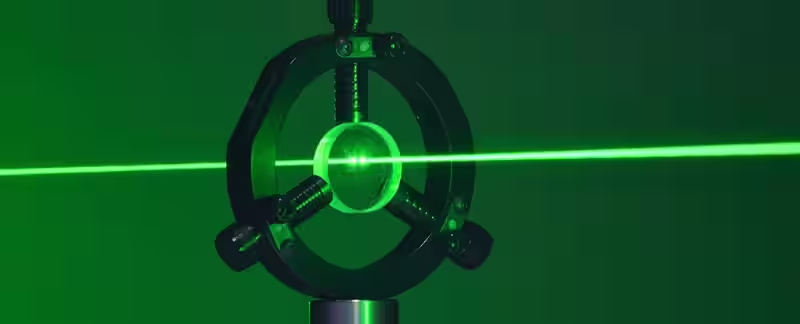
A laser worker's primary duty centers around the operation, maintenance, and troubleshooting of laser equipment. This involves a wide range of tasks depending on their specialization and work environment.
The day-to-day tasks can be very varied. One day might involve preventative maintenance, like cleaning optical components or replacing parts. The next might involve complex troubleshooting of a malfunctioning laser system. This requires a deep understanding of the laser's mechanics, optics, and electronics. Regular calibration is essential to ensure accuracy and prevent errors, a key part of a laser worker's routine.
Laser safety is paramount. Every action a laser worker takes must prioritize the safety of themselves and others. This involves strict adherence to safety protocols and the use of appropriate personal protective equipment (PPE), such as laser safety eyewear. Regular training and updates on safety regulations are essential.
Equipment Operation and Maintenance: The Foundation of the Role
This area forms the core of a laser worker's responsibilities. They are tasked with ensuring the safe and effective operation of lasers, regardless of the specific application. This includes:
Calibration: Ensuring the laser is producing the correct output power and wavelength.
Setup: Preparing the laser for operation, including aligning optical components and connecting power supplies.
Preventative Maintenance: Regular cleaning, inspection, and part replacement to prevent malfunctions and extend the lifespan of the equipment.
Troubleshooting: Identifying and resolving technical issues that may arise during operation.
The level of technical expertise required varies depending on the complexity of the laser system. Some systems are simpler and easier to maintain, while others may require advanced knowledge of electronics, optics, and software. Regardless of the complexity, a thorough understanding of the equipment and its operating principles is crucial.
Specializations and Work Environments for Laser Workers
The field of laser technology is broad, leading to several distinct specializations for laser workers:
Medical Laser Technicians: Precision and Patient Care
Medical laser technicians work in hospitals, clinics, and surgical centers, assisting surgeons and other medical professionals. Their environment is meticulously clean and sterile, adhering to strict hygiene protocols. Their responsibilities often extend beyond equipment operation to include:
Procedural Assistance: Preparing patients, monitoring the laser during procedures, and assisting the medical staff.
Patient Care: Providing pre- and post-procedure care, including patient education and addressing concerns.
Documentation: Maintaining accurate records of procedures and patient outcomes.
This specialization demands a high level of precision and attention to detail, as any error could have serious consequences for the patient. Strong communication skills are also essential, as they need to effectively interact with medical professionals and patients alike.
Aesthetic Laser Technicians: Enhancing Beauty and Confidence
Aesthetic laser technicians work in beauty clinics or medical spas, using lasers for cosmetic procedures such as hair removal and skin rejuvenation. While the environment is generally less sterile than a surgical setting, cleanliness and safety remain paramount. They are responsible for:
Client Consultation: Assessing client needs and recommending appropriate treatments.
Treatment Application: Operating aesthetic lasers to achieve desired cosmetic outcomes.
Aftercare Instructions: Providing clients with proper aftercare instructions to optimize results and minimize risks.
This specialization requires a blend of technical skill and interpersonal abilities, as they must build rapport with clients while ensuring their safety and satisfaction.
Industrial Laser Technicians: Precision Manufacturing and Materials Processing
Industrial laser technicians work in manufacturing settings, using lasers for cutting, welding, and engraving various materials. Their work environment can be noisy and involve heavy machinery. They are responsible for:
Operating high-powered lasers: Precisely controlling the laser parameters to achieve desired results.
Maintaining production equipment: Keeping the laser systems running efficiently and preventing downtime.
Ensuring production quality: Monitoring the quality of laser-processed materials to meet specifications.
This specialization demands a high level of technical expertise and problem-solving skills, along with a focus on safety given the high-power lasers and heavy machinery involved. This type of laser worker often works in teams, coordinating with other manufacturing professionals.
Research Laser Technicians: Advancing Scientific Knowledge
Research laser technicians work in controlled laboratory environments, assisting scientists with experiments. Their roles involve a high level of scientific understanding and a rigorous adherence to safety protocols. They are often responsible for:
Setting up and operating specialized laser systems: Ensuring the lasers are performing optimally during experiments.
Collecting and analyzing experimental data: Assisting research scientists in data acquisition and interpretation.
Maintaining laboratory equipment: Keeping the laser systems and other equipment in good working order.
This specialization demands a strong background in science and a keen attention to detail, as their work directly supports scientific advancements. Precision is key, as any error in data collection or equipment operation could affect the validity of the research.
The Importance of Safety for Laser Workers
The Occupational Safety and Health Administration (OSHA) plays a vital role in ensuring the safety of all workers, including laser workers. OSHA provides extensive resources and guidelines to help minimize risks associated with laser exposure. They emphasize the importance of training, appropriate PPE, and regular maintenance to reduce workplace hazards. The collaboration between OSHA and organizations like the Laser Institute of America (LIA) provides valuable safety information and best practices. A conscientious laser worker actively contributes to a safe and healthy workplace by adhering to these guidelines. Understanding laser hazards, including the vulnerability of the eyes, is crucial for preventing injuries. A laser worker's commitment to safety is not just a job requirement; it's a crucial part of responsible laser technology application.
Laser technicians are highly skilled professionals responsible for the operation, maintenance, and troubleshooting of laser equipment across various industries. Their specific duties vary depending on their specialization (medical, aesthetic, industrial, research, telecommunications, or entertainment), but all involve ensuring the safe and efficient use of lasers. Core responsibilities include equipment setup, calibration, preventative maintenance (cleaning, part replacement), troubleshooting malfunctions, and adhering to strict safety protocols. In healthcare settings, they may also assist with procedures, provide patient care, and maintain accurate documentation. Many technicians also train others on safe laser use.
What are the different specializations within laser technology?
Several specializations exist, each with a unique work environment:
Medical Laser Technicians: Assist surgeons in hospitals and clinics with laser-assisted procedures.
Aesthetic Laser Technicians: Perform cosmetic procedures like hair removal in beauty clinics or medical spas.
Industrial Laser Technicians: Operate lasers in manufacturing for cutting, welding, and engraving.
Research Laser Technicians: Assist scientists in research labs with laser-based experiments.
Telecommunications and Entertainment Laser Technicians: Maintain laser systems in fiber optics and laser shows (less common but still relevant).
What kind of training or education is required to become a laser technician?
The educational requirements vary depending on the specialization and employer. However, many positions require a minimum of an associate's degree in laser technology or a related field. Further certifications and specialized training are often beneficial and may be required for certain roles, especially in medical settings. Continuing education is crucial to stay updated on advancements in laser technology and safety regulations.
What is the work environment like for a laser technician?
The work environment differs significantly depending on the specialization:
Medical/Aesthetic: Generally clean and controlled environments, prioritizing sterility (medical) or cleanliness (aesthetic).
Industrial: Can be noisy and involve heavy machinery, requiring adherence to stringent safety protocols.
Research: Controlled lab settings emphasizing safety and adherence to rigorous experimental protocols.
Telecommunications/Entertainment: Varies greatly depending on the specific setting (e.g., a telecommunications facility vs. a concert venue).
Safety is paramount. Laser technicians must adhere to strict safety protocols to prevent injuries from laser radiation. This includes the use of appropriate personal protective equipment (PPE), such as laser safety eyewear, and understanding the potential hazards associated with laser operation. Regular safety training and adherence to OSHA regulations are crucial.
What are the career prospects for laser technicians?
The demand for skilled laser technicians is growing across various sectors. Advancements in laser technology continue to drive the need for professionals who can operate, maintain, and troubleshoot this sophisticated equipment. Career opportunities exist in healthcare, manufacturing, research, telecommunications, and entertainment.
What are the potential risks associated with working with lasers?
The primary risk is exposure to laser radiation, which can cause damage to the eyes and skin. Other potential risks include exposure to hazardous chemicals, electrical hazards, and injuries from heavy machinery (especially in industrial settings). Proper training, safety protocols, and PPE are essential to mitigate these risks.
What role does OSHA play in laser technician safety?
OSHA (Occupational Safety and Health Administration) sets and enforces safety standards to protect workers from laser-related hazards. They collaborate with organizations like the Laser Institute of America (LIA) to provide resources and guidance to employers on implementing effective safety programs. OSHA resources include safety bulletins, fact sheets, and online tools to help companies comply with regulations and minimize risks.
What is the difference between a medical laser technician and an aesthetic laser technician?
While both work with lasers in healthcare settings, medical laser technicians assist surgeons in more invasive procedures within sterile surgical environments. Aesthetic laser technicians perform less invasive cosmetic procedures in beauty clinics or medical spas, with a focus on treatments like hair removal and skin rejuvenation.
Is there a lot of ongoing learning involved in this career?
Yes. Laser technology is constantly evolving, so continuous learning is crucial. Technicians must stay updated on new equipment, safety regulations, and advancements in laser applications to maintain their skills and expertise. This often involves attending workshops, conferences, and pursuing further certifications.