A Career in Recycling: Opportunities for Recycle Workers
A Career in Recycling: Opportunities for Recycle Workers
Are you interested in a rewarding career that contributes to environmental sustainability? The recycling industry is booming, and offers a diverse range of jobs for people with various skill sets and educational backgrounds. This article explores the various roles available to recycle workers, outlining the required skills, education, and potential earnings.
The volume of municipal solid waste (MSW) in the United States, while recently affected by economic factors, remains substantial. This necessitates robust recycling infrastructure and a skilled workforce to manage the process effectively. Despite significant improvements in recycling rates since 1960—from a mere 6.4% to 25% in 2009—there's still considerable room for growth, creating numerous opportunities for those seeking a career in this vital sector.
The industry's expansion isn't solely driven by environmental concerns; it also creates economic opportunities. Recycling diverts waste from landfills, reduces the need for virgin materials, and stimulates innovation in material recovery and reuse. This translates into a need for more skilled workers at all levels of the process.
Stages of the Recycling Process and Related Jobs
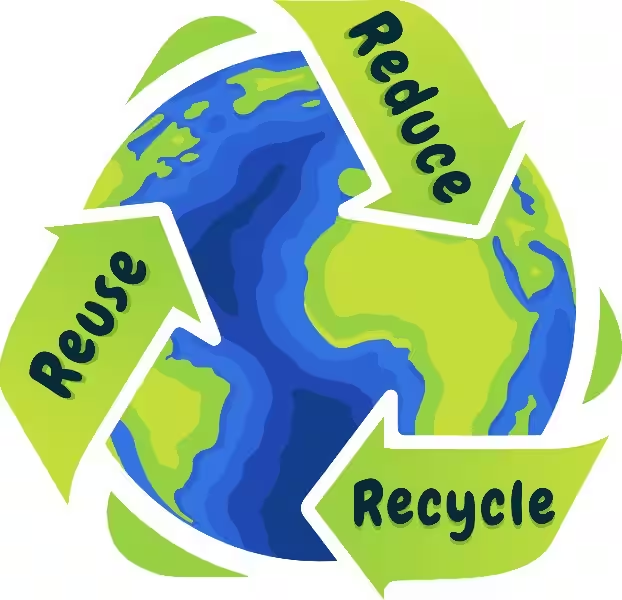
The recycling process is a multi-stage operation, each phase providing opportunities for recycle workers. These stages include:
Collection: This involves gathering recyclables from various sources like households, businesses, and construction sites. Collection methods vary, encompassing curbside pickup (made more efficient by single-stream recycling), drop-off centers, and deposit return systems.
Transportation: Once collected, recyclables are transported to Materials Recovery Facilities (MRFs). This requires a fleet of vehicles and skilled drivers.
Processing at MRFs: At MRFs, advanced technology and manual sorting work together to separate various materials. Automated systems like magnets and air classifiers are employed alongside human sorters, who ensure the efficient separation of recyclable materials.
Sale and Reuse: Finally, processed recyclables are compacted and sold to manufacturers for reuse in new products, completing the cycle and demonstrating the practical economic benefits of recycling.
The recycling industry offers jobs requiring diverse skill sets and educational backgrounds. Here are some key roles:
1. Drivers (Recyclable Material Collectors): These individuals are responsible for collecting and transporting recyclables to MRFs. The job requires a Class A or B Commercial Driver's License (CDL), a clean driving record, and the physical capacity for heavy lifting. While the median annual wage varies by location and experience, it's a physically demanding but essential role within the recycling ecosystem. Many companies offer training programs to help individuals meet the requirements for a CDL.
2. Sorters: Sorters work at MRFs, manually separating recyclable materials from contaminants. While formal education isn't a prerequisite, physical stamina, sharp eyesight, and the ability to stand for extended periods are crucial. Accuracy is key to ensure the purity of the recycled materials and prevent contamination.
3. Mechanics, Technicians, and Machinery Maintenance Workers: These skilled professionals are vital for keeping the equipment at MRFs and in recycling trucks functioning smoothly. A high school diploma or GED, vocational training, and practical experience in mechanical repair are typically necessary. The specific wage varies depending on their area of specialization and experience.
4. MRF Managers: MRF managers oversee the entire operation, ensuring efficiency and safety. This typically demands a bachelor's or master's degree in a relevant field, such as business administration (MBA) or industrial engineering, along with experience in waste management. Their leadership skills are essential in overseeing complex processes and large teams.
5. Route Managers: These individuals plan and optimize the routes for recycling collection trucks, ensuring efficiency and cost-effectiveness. A high school diploma or GED is usually required, often supplemented by an associate's degree and experience in logistics or waste management. This role requires strong organizational and analytical skills to coordinate complex logistics operations.
6. Sales Representatives: Sales representatives in the recycling industry sell recycling services and processed recyclables to municipalities and manufacturers. A bachelor's degree and strong communication and negotiation skills are generally required. Success in this role hinges on building relationships and effectively conveying the value proposition of recycled materials.
The recycling industry needs workers with a diverse range of skills and educational backgrounds. For example, while some jobs, like sorters, require physical stamina and attention to detail more than formal education, others, such as MRF managers or sales representatives, usually require a bachelor’s or master’s degree. Many positions benefit from prior experience in waste management, demonstrating a commitment to the industry. Regardless of the specific role, all recycle workers contribute to an increasingly important and expanding sector.
The Future of Recycling and its Workforce
As environmental awareness grows and regulations become stricter, the demand for efficient and sustainable waste management will only increase. This means more opportunities for professionals in the recycling industry. Continuous advancements in technology are also transforming the industry, creating new roles for skilled individuals. The future of recycling promises to be dynamic, innovative, and rewarding for those who choose to be a part of it. The career paths available to recycle workers are diverse and offer the chance to make a significant positive impact on the environment.
Recycling Worker FAQs
What are the different jobs available in the recycling industry?
The recycling industry offers a diverse range of jobs, from physically demanding roles requiring manual labor to management and specialized technical positions. These include recyclable material collectors (drivers), sorters at Materials Recovery Facilities (MRFs), mechanics and technicians, MRF managers, route managers, and sales representatives.
What are the requirements for becoming a recyclable material collector (driver)?
This role typically requires a Class A or B Commercial Driver's License, a clean driving record, and the ability to handle heavy lifting. Physical stamina is essential due to the demanding nature of the work.
What are the requirements for working as a sorter at an MRF?
While formal education isn't a requirement for sorters, good eyesight, physical stamina, and the ability to work on your feet for extended periods are crucial. The job involves manually sorting recyclables and removing non-recyclable items.
What kind of training or education is needed for maintenance and repair work in the recycling industry?
Mechanics, technicians and machinery maintenance workers typically need a high school diploma or GED, along with vocational training and experience in mechanical repair. Specific requirements may vary depending on the type of equipment.
What educational background is needed for management positions in recycling?
Management positions like MRF managers and route managers often require at least a bachelor's degree, sometimes a master's degree (MBA or industrial engineering), and experience in waste management or a related field.
What are the typical salaries for recycling jobs?
Salaries vary greatly depending on the position and level of experience. In 2010 (data used as a reference point), median annual wages ranged from approximately $23,570 for sorters to $90,790 for MRF managers. Other roles, such as sales representatives and route managers, fell within this range. It's important to note that these figures are from 2010 and are likely higher in the present day.
What is the future outlook for jobs in the recycling industry?
With increasing volumes of municipal solid waste and a growing focus on recycling, the demand for skilled workers in the recycling industry is expected to continue to grow. Opportunities exist for individuals with a wide range of skills and educational backgrounds.
Is prior experience in waste management necessary?
While not always required, prior experience in waste management can be beneficial for many roles within the recycling industry, providing a valuable foundation of knowledge and skills.
How does single-stream recycling impact the industry?
The increasing prevalence of single-stream recycling (where all recyclables are collected together) has affected collection methods, leading to higher volumes processed at MRFs and increased demand for efficient sorting technologies and workers.
What types of skills are valuable in the recycling industry?
Valuable skills vary by position but often include physical stamina, good eyesight, mechanical aptitude, communication skills, problem-solving abilities, and experience with logistics and waste management. For management roles, leadership and business acumen are also crucial.