Is Starting an Oil Recycling Business Right for You?
Is Starting an Oil Recycling Business Right for You?
The oil recycling business offers a unique blend of environmental responsibility and economic opportunity. The potential for profit is there, but success hinges on careful planning, understanding the market, and navigating the regulatory landscape. This article will delve into the key aspects of starting and running a successful oil recycling business.
Understanding the Environmental and Economic Benefits
The statement "Recycling used motor oil in South Carolina (SC) yields 2.5 quarts of lubricating oil from the equivalent of 42 gallons of crude oil" powerfully illustrates the core advantages of this industry. This isn't just about cleaning up waste; it's about resource conservation on a significant scale.
Recycling used oil drastically reduces the demand for new crude oil extraction. This translates into less habitat destruction, fewer greenhouse gas emissions from drilling and transportation, and a decreased reliance on a finite resource. It's a win for the environment, and it's naturally a more sustainable practice.
Furthermore, the economic benefits are substantial. The process of recycling used oil creates jobs, stimulates local economies, and potentially lowers costs for consumers by reducing reliance on imported crude oil. A well-run oil recycling business contributes positively to both the environment and the economy.
Types of Oil and Their Recycling Processes
The oil recycling business isn't a one-size-fits-all endeavor. Different types of oil require different processing methods. We're primarily looking at:
Used Motor Oil: This is a significant source of recyclable material. The process often involves filtering, cleaning, and sometimes re-refining to produce new lubricating oil or other products.
Used Cooking Oil: Restaurants and food processing facilities generate vast amounts of used cooking oil. This oil can be converted into biodiesel fuel, a renewable energy source, or processed for other industrial applications.
Industrial Oils and Lubricants: Many industries use specialized oils and lubricants that can be recycled, though the process might be more complex and require specialized equipment.
Understanding these differences is vital for developing a targeted business plan.
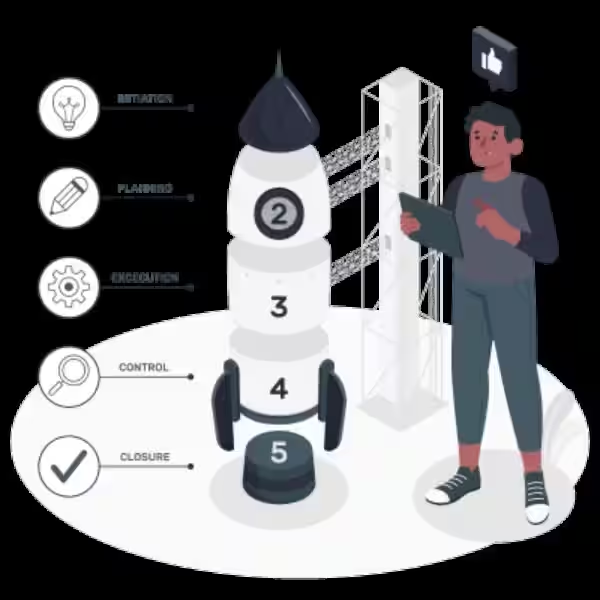
Starting Your Oil Recycling Business: A Step-by-Step Guide
Launching a successful oil recycling business requires careful planning and execution. Here's a breakdown of the crucial steps:
1. Market Research and Business Planning
Before investing significant capital, conduct thorough market research. Identify your target customer base (restaurants, mechanics, industrial facilities), assess the competition, and determine the potential demand for your services in your chosen area. Develop a comprehensive business plan that includes:
Executive Summary: A concise overview of your business.
Company Description: Your business structure, mission, and vision.
Market Analysis: Your research on the demand, competition, and pricing.
Organization and Management: Your business structure and team.
Service or Product Line: The types of oil you will recycle and how you will process them.
Marketing and Sales Strategy: How you'll attract and retain clients.
Financial Projections: Your projected revenue, expenses, and profitability.
Navigating the regulatory landscape is crucial. Obtain all necessary licenses and permits from local, state, and federal authorities. This may include environmental permits, business licenses, and waste disposal permits. Failure to comply with regulations can result in hefty fines and legal repercussions. Consult with legal and environmental professionals to ensure full compliance.
3. Equipment and Infrastructure
The equipment required will depend on the types of oil you choose to handle. At a minimum, you'll need:
Collection Vessels: Drums, tanks, or other containers for storing collected oil.
Transportation: A truck or van suitable for safely transporting oil.
Processing Equipment: This can range from simple filtration systems to sophisticated re-refining equipment, depending on your chosen processes.
Storage Facilities: A secure location for storing collected and processed oil.
4. Marketing and Sales
Effectively marketing your services is essential. Consider:
Direct Mail Marketing: Targeting businesses directly in your area.
Online Marketing: Building a professional website and leveraging social media.
Networking: Building relationships with potential clients in the hospitality and automotive sectors.
Partnerships: Collaborating with other businesses in related industries.
5. Financial Management
Careful financial management is paramount. Track your expenses, monitor revenue, and maintain accurate financial records. Secure adequate funding through loans, investors, or personal savings. Regularly review your financial projections and adjust your business plan as needed.
The Challenges and Rewards of Oil Recycling
While profitable, the oil recycling business presents challenges:
High Initial Investment: The cost of equipment and infrastructure can be substantial.
Market Fluctuations: The price of recycled oil can fluctuate, impacting profitability.
Environmental Regulations: Compliance with environmental regulations is crucial and can be costly.
However, the rewards are equally significant: You'll be contributing to environmental sustainability, creating jobs, and building a profitable business. The satisfaction of making a real difference in the world is a powerful motivator, and the business potential is there for those willing to put in the effort. The key is thorough planning, diligent execution and a commitment to providing a high-quality, environmentally responsible service.
Frequently Asked Questions about the Oil Recycling Business
What are the environmental benefits of used oil recycling?
Improper disposal of used motor oil severely contaminates soil and groundwater, harming ecosystems. Recycling prevents this, diverting hazardous waste from landfills and protecting our natural environment. In South Carolina, this is especially critical given the state's diverse ecosystems. Furthermore, recycling 42 gallons of crude oil yields only 2.5 quarts of refined lubricating oil. Therefore, recycling significantly reduces the demand for crude oil extraction, minimizing habitat disruption and greenhouse gas emissions associated with drilling and transportation.
What are the economic advantages of starting an oil recycling business?
An oil recycling business offers several economic benefits. Firstly, it provides a valuable service, reducing disposal costs for clients. Secondly, converting used oil back into usable oil is a cost-effective alternative to producing oil from scratch, potentially lowering costs for consumers and reducing reliance on imported crude oil. Thirdly, the recycling process itself creates jobs and stimulates the local economy by supporting businesses involved in collection, processing, and re-refining.
What are the startup costs associated with an oil recycling business?
Starting an oil recycling business requires a modest amount of initial capital. Estimates suggest around $20,000 for essential equipment like barrels, a collection truck, and storage facilities, but this can vary significantly depending on the scale of operations and the level of automation. Remember to factor in costs for regulatory compliance, permits, licenses, insurance, and marketing. Securing sufficient funding is crucial for a successful launch.
What are the regulatory hurdles involved in starting an oil recycling business?
Understanding and adhering to local, state (like South Carolina's specific regulations), and federal regulations is crucial. These regulations cover aspects such as waste handling, transportation, storage, processing, and disposal. Compliance often necessitates investments in safety and pollution control measures, adding to the initial capital outlay. Thorough research and consultation with relevant authorities are vital to ensure legal compliance and avoid penalties.
What market research is needed before starting an oil recycling business?
Before starting, conduct thorough market research to analyze the competition, assess the market’s capacity for another waste oil collector, and identify your target customers (restaurants, mechanics, etc.). Understanding the demand for your services, the pricing of collected oil, and the existing competition will help you develop a sustainable business model and avoid market saturation.
What types of oil can be recycled in this business?
The business can focus on specific oil types such as used cooking oil (for biodiesel conversion) or automotive oil, or it can handle a broader range of oils. Each type requires different processing techniques, and the market value of the recycled product will vary accordingly. It’s essential to identify your niche and tailor your operations and marketing accordingly.
How can I effectively market my oil recycling business?
Effective marketing is crucial for customer acquisition and business growth. Utilize a multi-pronged approach, including mailers, website development, SEO optimization, and word-of-mouth referrals. Highlight the environmental benefits of recycling and the cost savings for clients. Continuous marketing efforts are vital for maintaining a steady flow of business.
What is the potential profitability of an oil recycling business?
The potential for profit exists, but it's crucial to remember that the business model hinges on providing a needed service and profiting from the collected oil’s recycling or resale. Profitability depends largely on factors such as efficient operations, effective marketing, securing competitive pricing for the recycled oil, and the scale of operations. A detailed financial projection, factoring in all costs and potential revenues, is vital for assessing the viability and potential profitability of the venture.
What are the major challenges in the oil waste recovery business?
The main challenges include the high capital investment required for equipment, infrastructure, and regulatory compliance, making it a high-risk venture. Success also depends on producing high-quality recovered oil that can compete effectively with other oil sources in terms of both price and quality. A thorough assessment of these factors is essential before investing.