Understanding the Potholing Machine: A Safer Approach to Utility Location
Understanding the Potholing Machine: A Safer Approach to Utility Location
Locating underground utilities before excavation is paramount for safety and efficiency. While methods like ground-penetrating radar (GPR) exist, they can be unreliable, especially in areas where horizontal directional drilling (HDD) has been used. This is where the potholing machine comes in, offering a precise and safe alternative.
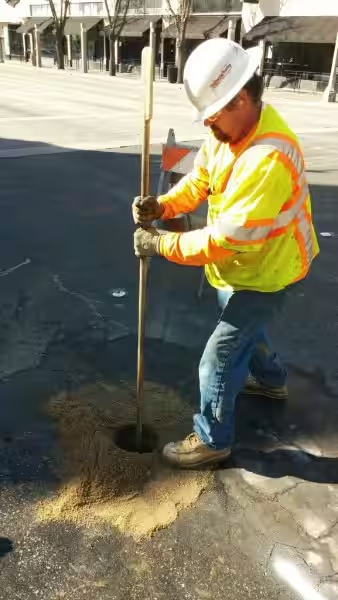
Potholing, also known as daylighting, is a technique that involves creating a small test hole to directly expose underground utilities. This contrasts with traditional excavation methods that can be disruptive, time-consuming, and dangerous.
The need for potholing stems from stringent safety regulations and the inherent risks of damaging utility lines. Accurately locating utilities is crucial to avoid worker injuries, costly repairs, and potential environmental damage. Regulations often mandate significant buffer zones around utility lines, emphasizing the need for precise location techniques.
Traditional Methods vs. Potholing Machines
Traditional methods for utility location, such as electromagnetic location and ground-penetrating radar (GPR), often prove inadequate in certain situations. For instance, the minimal soil disturbance characteristic of HDD makes it difficult for GPR to effectively detect buried lines. This is where the precision of a potholing machine becomes invaluable.
Manual excavation, while seemingly simple, is inherently risky. The potential for collapsing soil and accidental utility damage necessitates a safer, more reliable approach. Potholing machines provide this solution through a controlled and precise excavation process.
Potholing Techniques: Hydro Excavation and Vacuum Excavation
Once the precise location is determined, the potholing machine facilitates two main excavation methods: hydro excavation and vacuum excavation.
Hydro Excavation
Hydro excavation uses high-pressure water jets to liquefy the soil. This liquefied soil is then vacuumed up into a holding tank. While effective, especially in heavily compacted areas, hydro excavation is more time-consuming and generates slurry waste requiring proper disposal. This adds to the overall project cost and complexity.
Vacuum excavation, on the other hand, utilizes pressurized air to loosen the soil, which is then immediately vacuumed into a collection tank. This method is generally faster and more efficient, especially in less compacted soils. The excavated soil can often be reused as backfill, minimizing waste and environmental impact. Vacuum excavation is frequently the preferred method for its speed and cost-effectiveness.
The Benefits of Using a Potholing Machine
Employing a potholing machine, whether for hydro or vacuum excavation, offers numerous advantages:
Enhanced Safety: Drastically reduces the risk of damaging underground utilities and injuring workers.
Improved Efficiency: Faster excavation compared to traditional methods, leading to quicker project completion.
Cost Savings: Prevents costly delays and repairs associated with accidental utility damage.
Accessibility: Allows access to areas inaccessible to larger excavation equipment.
Precise Location: Provides accurate information on utility location, size, depth, and condition.
Choosing the Right Potholing Machine
The selection of a potholing machine depends on several factors, including the type of soil, the size and depth of the utilities, and the project's specific requirements. Factors like the machine's suction power, tank capacity, and maneuverability are all crucial considerations. It's crucial to assess your needs carefully before making a purchase or rental decision. Consult with industry professionals to determine the most suitable equipment for your specific application.
Conclusion: The Importance of Precise Utility Location
The potholing machine represents a significant advancement in underground utility location. Its ability to provide precise information while minimizing risk and environmental impact makes it an essential tool for any project involving excavation near buried utilities. By prioritizing safety and efficiency, potholing machines contribute to smoother, safer, and more sustainable construction projects. The investment in a potholing machine, or the use of a rental service, is a strategic move towards minimizing potential disruptions and maximizing project success.
Here's an FAQ section about potholing machines, based on the provided information. Remember that this information is limited, so some answers may be less detailed than ideal. More specific information about particular potholing machine models would allow for more comprehensive answers.
Potholing Machine FAQ
What is a potholing machine, and what is its purpose?
A potholing machine, often integrated into a hydrovac truck, is used to precisely locate underground utilities before excavation. It creates a small test hole (a "pothole") to expose the utility line, allowing for accurate assessment of its location, depth, size, and condition. This minimizes the risk of damaging underground utilities during excavation. Potholing is especially crucial in areas where traditional methods like ground-penetrating radar (GPR) are less effective, such as after horizontal directional drilling (HDD).
What are the different methods used in potholing?
The two primary methods used in potholing are hydro excavation and vacuum excavation. Hydro excavation uses pressurized water to liquefy the soil, which is then vacuumed into a holding tank. Vacuum excavation uses pressurized air to loosen the soil, followed by vacuum suction for removal. The choice of method often depends on soil conditions; hydro excavation is often necessary for heavily compacted soils, while vacuum excavation is generally faster and more efficient for less compacted soils.
Why is potholing necessary?
Potholing is necessary to ensure safety and prevent damage to underground utilities during excavation. Accurately locating utilities minimizes the risk of worker injury from collapsing soil or accidental utility damage. Regulations often mandate a significant buffer zone around utility lines, making precise location crucial. Potholing reduces the environmental impact compared to traditional excavation methods.
What are the benefits of using a potholing machine?
Potholing offers several key benefits: reduced risk of damaging underground utilities; minimized environmental impact; faster project completion due to a smaller footprint; access to areas inaccessible to larger machinery; reduced risk of accidents and costly delays; and simplified site restoration.
Potholing is typically performed using a hydrovac truck. This combines both water and vacuum systems in a single unit, allowing for both hydro and vacuum excavation methods to be employed as needed.
Is potholing more expensive than traditional excavation?
While potholing involves equipment costs, it often results in long-term cost savings by preventing costly damage to utilities and avoiding associated delays and repairs. The reduced risk of accidents also contributes to lower overall project costs. The initial investment in a hydrovac truck might seem high, but the return on investment can be significant over time.
What are the limitations of potholing?
Hydro excavation adds time and expense due to the need for slurry disposal. Vacuum excavation may be less effective in extremely hard or compacted soils. The effectiveness of potholing also relies on the operator's skill and the accuracy of existing utility maps.
How does potholing compare to traditional excavation methods?
Potholing causes significantly less soil disturbance than traditional excavation. It is a safer, more efficient, and environmentally friendly alternative, especially when traditional location methods prove insufficient. It allows for more precise utility location, reducing the chance of accidental damage.
Is potholing suitable for all types of soil?
While vacuum excavation is efficient in many soil types, hydro excavation is often necessary for heavily compacted soils. The suitability of potholing depends on the specific soil conditions at the worksite.
What safety precautions are necessary when using a potholing machine?
Standard construction site safety procedures should be followed. Specific precautions include proper training for operators, use of personal protective equipment (PPE), and adherence to all relevant safety regulations. The precise safety measures will depend on the specific potholing machine and the worksite conditions.