Mastering RFx Management: Streamlining Your Procurement Process
Mastering RFx Management: Streamlining Your Procurement Process
Effective procurement is the backbone of a successful business. However, many organizations struggle with inefficient processes, leading to wasted time, missed opportunities, and compromised ROI. One key area for improvement lies in RFx management. This article explores the complexities of the RFx process, highlighting its crucial components and offering strategies for optimization.
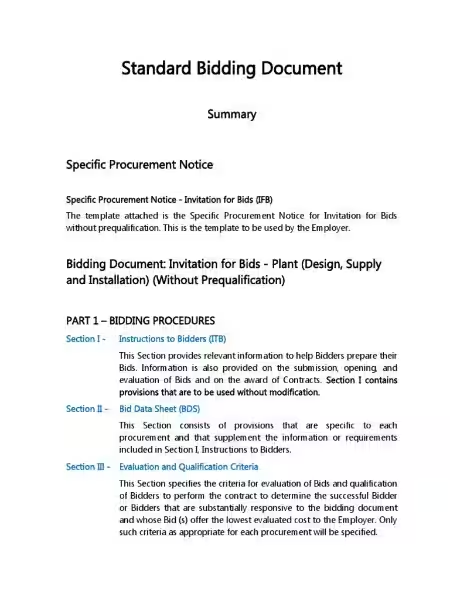
The Request for X (RFx) process is a multi-stage system designed to optimize supplier selection and contract negotiation. It encompasses three primary request types, each serving a distinct purpose:
Request for Information (RFI): This initial stage is exploratory. It's about gathering preliminary information from potential vendors to understand their capabilities and gauge market offerings. Think of it as your initial fact-finding mission. You're not yet asking for proposals or pricing; you're simply exploring the landscape to identify potential partners who might be a good fit. A well-structured RFI will clearly articulate your needs and expectations, prompting vendors to provide relevant information efficiently.
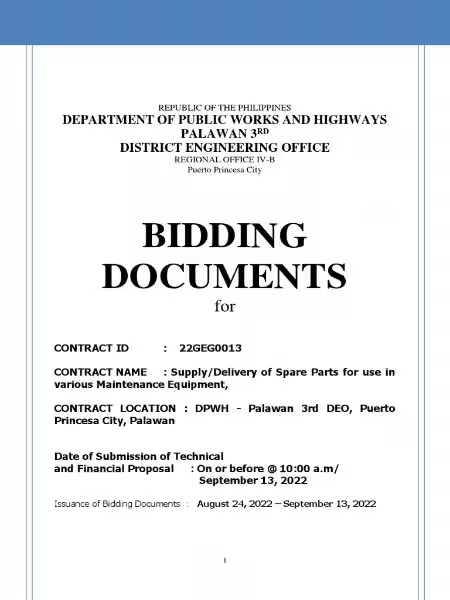
Request for Proposal (RFP): Once you've identified potential vendors through your RFI, the RFP takes center stage. This is where you formally invite vendors to submit detailed proposals outlining their solutions, including pricing and implementation plans. The RFP provides a structured framework for evaluation, allowing you to compare vendors' offerings side-by-side based on pre-defined criteria. This stage allows for a more in-depth assessment, ensuring that you select a solution that not only meets your needs but also aligns with your budget and strategic goals.
Request for Quotation (RFQ): The final stage, the RFQ, focuses solely on pricing. With the requirements already defined through the RFI and RFP, you'll request final pricing from your shortlisted vendors, facilitating a cost-effective decision. This stage ensures transparency and allows for a direct comparison of pricing among your preferred vendors. While price is crucial, remember that the lowest bid isn't always the best option; consider the holistic value proposition of each vendor.
While the RFx process is fundamentally sound, traditional methods often fall short. Common challenges include:
Manual Processes: Handling numerous documents and emails manually is time-consuming and error-prone.
Inconsistent Communication: Different communication formats and channels lead to confusion and delays.
Difficult Comparison: Collating and comparing vendor responses from spreadsheets or disparate systems is cumbersome and inefficient.
Lengthy Cycle Times: The entire RFx-to-award process can be significantly prolonged due to manual inefficiencies.
These challenges lead to increased costs, project delays, and a higher risk of selecting an unsuitable vendor.
Leveraging Technology for Efficient RFx Management
Modern RFx management solutions address these challenges through automation and streamlined workflows. Specialized software can help you:
Automate Tasks: Automate tasks like distributing RFx documents, collecting responses, and conducting initial evaluations.
Centralize Communication: Provide a centralized platform for all communication, ensuring transparency and reducing the risk of miscommunication.
Facilitate Data-Driven Decision Making: Utilize data analytics to identify patterns, trends, and potential risks in vendor responses.
Improve Collaboration: Foster seamless collaboration among internal stakeholders and external vendors.
Reduce Manual Effort: Free up your team's time, allowing them to focus on strategic initiatives rather than administrative tasks.
By leveraging technology, organizations can significantly reduce the time spent on the RFx process, improve compliance, and enhance overall procurement efficiency.
Beyond the Basics: Risk Management and RFx
Effective RFx management isn't solely about selecting the right solution; it's also about mitigating risks associated with the chosen vendor. This includes:
Financial Stability: Assessing the financial health of vendors to avoid potential disruptions in supply.
Cybersecurity: Evaluating vendors' cybersecurity postures to prevent data breaches and other security incidents.
Reputation: Considering a vendor's reputation and track record to ensure alignment with your organization's values and goals.
Integrating your RFx process with your third-party risk management program is crucial for a holistic approach. This ensures that you're not just selecting a vendor based on price or functionality, but also on its overall risk profile.
Conclusion: Embracing a Strategic Approach to RFx Management
Effective RFx management is more than just a series of forms and emails; it's a strategic process that requires careful planning, robust technology, and a keen eye for detail. By understanding the intricacies of the RFx process and leveraging technology to streamline workflows and mitigate risks, organizations can significantly improve their procurement efficiency, reduce costs, and ensure the selection of high-quality, reliable vendors. This translates into a stronger, more resilient supply chain and a more competitive advantage in the market. Investing in a well-defined and technologically supported RFx process is not an expense; it's an investment in the long-term success of your organization.
RFx Management FAQ
Here are some frequently asked questions about Request for X (RFx) management:
What is RFx Management?
RFx management is the process of strategically managing requests for information (RFI), requests for proposal (RFP), and requests for quotation (RFQ) to efficiently and effectively source goods and services from suppliers. It streamlines the vendor selection process, ensuring that organizations choose the best solution while mitigating risks. The goal is to optimize the entire procurement cycle, from initial need identification to contract finalization.
What are the different types of RFx documents?
There are several types of RFx documents, each serving a distinct purpose:
RFI (Request for Information): Used to gather preliminary information from potential vendors about their capabilities and offerings. This helps define requirements and narrow down the field of potential suppliers.
RFP (Request for Proposal): A more formal request, soliciting detailed proposals from pre-selected vendors outlining their solutions, pricing, and timelines. This allows for a thorough comparison of offerings.
RFQ (Request for Quotation): Used to obtain price quotes from a shortlist of vendors after requirements have been defined through RFI and RFP processes. This focuses solely on pricing and payment terms.
What are the key stages of the RFx process?
The RFx process typically involves three key phases:
Cost Savings: Identifying the most cost-effective solutions.
Improved Compliance: Ensuring adherence to organizational and regulatory requirements.
Mitigated Supply Risk: Thoroughly vetting vendors to reduce potential risks.
Enhanced Spend Analysis: Gaining greater visibility into spending patterns.
Streamlined Sourcing: Reducing the time and resources required for vendor selection.
Efficient Contract Management: Simplifying contract negotiation and management.
Valuable Market Intelligence: Gaining insights into market trends and supplier capabilities.
What are the common challenges in RFx management?
Common challenges include:
Excessive Paperwork: Manual processes leading to inefficiencies.
Inconsistent Communication: Difficulty in tracking and managing communications with multiple vendors.
Difficulty in Comparing Vendor Responses: Challenges in analyzing and comparing large amounts of data from different sources.
Lengthy RFx-to-Award Cycle: Extended timelines due to manual processes and inefficient workflows.
How can technology improve RFx management?
Specialized software solutions automate workflows, facilitate data-driven decision-making, and reduce manual effort. These tools help organizations manage the entire RFx lifecycle more efficiently, leading to faster turnaround times and improved outcomes. They often include features for centralizing communication, streamlining comparisons of vendor responses, and integrating with broader risk management platforms.
Why is risk assessment crucial in RFx management?
Selecting the right solution is only half the battle. A thorough risk assessment of potential vendors, encompassing financial stability, cybersecurity posture, and reputation, is crucial to mitigate potential supply chain disruptions and other risks. Integrating RFx with a third-party risk management (TPRM) program is vital for a holistic approach.
How can I choose the right RFx software?
Consider factors such as: ease of use, scalability, integration capabilities with existing systems, reporting and analytics features, and the level of support offered by the vendor. It's crucial to select a solution that aligns with your organization’s specific needs and long-term goals.