Working on Heights: A Comprehensive Guide to Safety
Working on Heights: A Comprehensive Guide to Safety
Working at heights is a common task across many industries, from construction and maintenance to telecommunications and window cleaning. However, it also presents significant risks. Falls from heights are a leading cause of serious injuries and fatalities in the workplace. Understanding and mitigating these risks is paramount for ensuring worker safety. This guide will delve into essential safety practices and equipment to help you navigate the challenges of working on heights safely and effectively.
Working at any height above ground level introduces the potential for serious injury or death. A fall, even from a relatively low height, can result in broken bones, head trauma, spinal cord injuries, or even fatalities. The severity of the injury is directly related to the height of the fall and the surface impacted.
The potential consequences extend beyond the immediate physical harm. Workplace accidents can lead to significant legal liabilities, increased insurance premiums, and damage to a company's reputation. Furthermore, the emotional toll on the injured worker, their family, and coworkers can be substantial. Therefore, prioritizing safety is not just a legal requirement but a moral imperative.
Essential Safety Equipment for Working on Heights
Proper personal protective equipment (PPE) is the cornerstone of any fall protection plan. This equipment is designed to mitigate the consequences of a fall, preventing severe injuries or death. Key components include:
Personal Fall Arrest Systems (PFAS)
A PFAS typically consists of a full-body harness, a lanyard or shock-absorbing lifeline, and an anchor point. The harness must fit properly and comfortably, distributing the force of a fall evenly across the body. The lanyard connects the harness to the anchor point, limiting the fall distance. Different lanyard types exist, including retractable lanyards offering greater flexibility and shorter fixed lanyards for specific tasks. Choosing the correct lanyard length is crucial to preventing a fall from exceeding safe limits.
It's vital to choose a PFAS that meets the requirements of relevant safety standards (like ANSI in the US or equivalent international standards). Features like extra D-rings for attaching tools or specialized materials (fire-resistant or arc-safe) might be necessary depending on the specific work environment. Always remember that comfort is secondary to proper fit and functionality. A poorly fitting harness can be just as dangerous as no harness at all.
Regular inspection of all PPE is crucial. This should include both pre-use checks by the worker and periodic professional inspections (at least annually). Look for signs of wear and tear, damage to webbing, stitching, or buckles. Any damaged or questionable equipment should be immediately replaced. Knowing what constitutes unacceptable wear and tear is essential for worker safety. Proper maintenance prolongs the life of your equipment and ensures continued protection.
Choosing the Right Fall Protection Method for the Job
The optimal fall protection method depends on the specific circumstances of the job. Several options exist, each with its own advantages and limitations.
Passive Fall Protection Systems
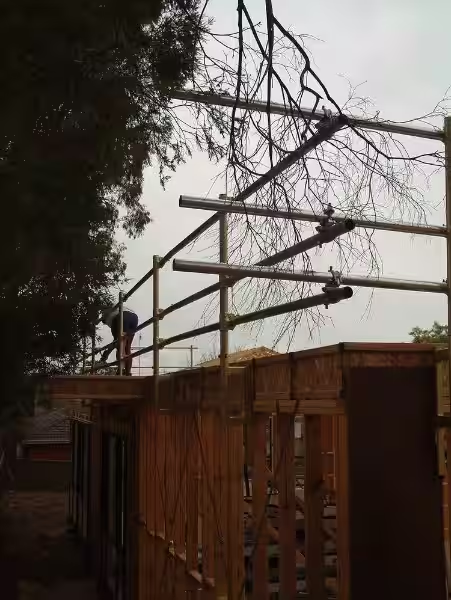
These systems aim to prevent falls from occurring in the first place. Railings are a prime example. They provide a physical barrier, preventing workers from falling over the edge. Various railing systems are available to suit different rooftop styles and structures. They are the simplest and most effective form of fall protection, requiring minimal training and additional equipment.
Active Fall Protection Systems
Active fall protection systems are designed to arrest a fall once it has begun. PFAS are the most common example of this, involving a harness, lanyard, and anchor point. The choice of anchor point is critical. It must be structurally sound, capable of withstanding significant forces (at least 5,000 pounds). Avoid using unsuitable materials like PVC pipes. Secure anchor points on structural steel using appropriate beam clamps or correctly installed manufactured roofing anchors are preferable.
Other Equipment Considerations
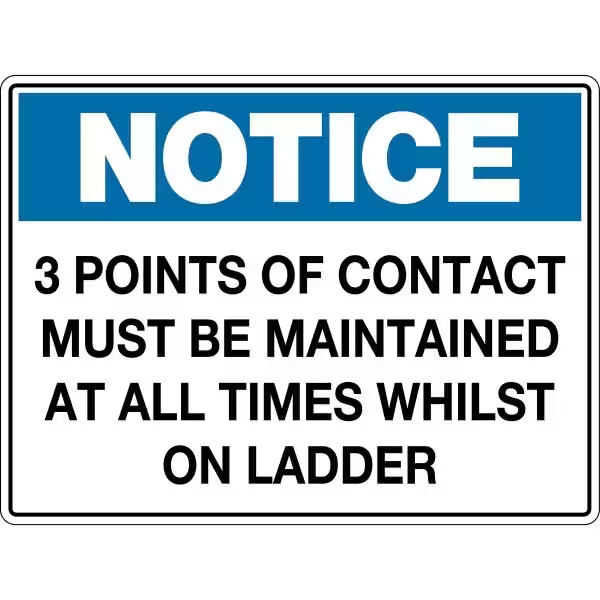
Other equipment such as scaffolds, aerial lifts (boom lifts and scissor lifts), and ladders also play a role. Each piece of equipment has specific safety protocols that must be followed. For instance, working on a scaffold requires ensuring guardrails are in place and sturdy. Aerial lifts necessitate proper tie-off points and awareness of the lift's limitations. Ladders demand adherence to safe usage guidelines, including proper extension and maintaining three points of contact at all times. Fixed ladders over 24 feet require a ladder safety system with a continuous lifeline.
Calculating Fall Distance and Understanding Anchor Points
Accurately calculating fall distance is crucial when using a PFAS. This involves considering the lanyard length, the deceleration device deployment, the body length below the D-ring, and any harness/anchor sag. A seemingly short 6-foot lanyard could result in a much longer fall distance in reality. Always ensure sufficient clearance below the anchor point.
OSHA (Occupational Safety and Health Administration) regulations mandate specific fall protection measures based on factors like height, frequency, and duration of work. Understanding these regulations is crucial for compliance. Furthermore, comprehensive training for all workers is essential. This training should cover the proper use of equipment, fall hazard recognition, and emergency procedures. Working on heights safely requires knowledge, skill, and a commitment to safe practices. Neglecting this training is not only negligent but also illegal. Falls are a leading cause of death in many industries, making proper training absolutely non-negotiable for safe work practices. Remember, the cost of a fall far outweighs the investment in safety training.
Working at Heights: Frequently Asked Questions
Here are some frequently asked questions about working safely at heights:
What are the biggest risks associated with working at heights?
The primary risk is falling. Falls from heights can lead to serious injuries, including broken bones, head trauma, spinal cord injuries, and even death. The severity of the injury is directly related to the height of the fall.
What is the most effective way to prevent falls from heights?
The most effective method is to use passive fall protection systems, such as railings and guardrails. These prevent falls before they happen, requiring minimal additional equipment or training. However, for situations where railings aren't feasible, active fall protection systems are necessary.
What is Personal Fall Arrest System (PFAS) and how do I choose the right one?
A PFAS is a system designed to arrest a fall. It typically consists of a full-body harness, a lanyard, and an anchor point. When choosing a PFAS, ensure it's ANSI-compliant. While all compliant harnesses function similarly, consider features like extra D-rings, fire resistance, or arc-safe design based on your specific needs. The lanyard length needs to be appropriate for the working height and should incorporate the fall distance calculation. Comfort is important, but proper fit and functionality are paramount.
How important is PPE inspection?
Regular inspection of your PPE is crucial. Conduct a pre-use inspection before each job, checking for any wear and tear or damage. Annual, or more frequent, inspections by a competent person are also required to ensure the equipment remains safe and functional.
Accurately calculating fall distance is vital. This involves considering the lanyard length, the length of your body below the D-ring, and any sag in the harness or anchor point. A 6-foot lanyard, for example, might require significantly more clearance than 6 feet when accounting for deceleration device deployment and body length.
What constitutes a safe anchor point?
Anchor points must be structurally sound and capable of withstanding at least 5,000 pounds of force. They should be professionally engineered for the expected load or be inherently strong materials such as structural steel with appropriate attachments. Never use unsuitable materials like PVC pipes or decorative steel.
What equipment is appropriate for working at heights?
The best equipment depends on the specific task. Scaffolds with railings are ideal for some jobs, while others may require aerial lifts (boom lifts or scissor lifts—both requiring proper tie-offs), or ladders. Always choose the safest option available and consider durable scaffolding as a safer alternative to ladders for extended periods or complex tasks. Remember that even with aerial lifts, proper tie-off is crucial.
What are the safety rules for using ladders?
Proper ladder use requires training. Always extend the ladder at least 3 feet beyond the working platform, maintain a 4:1 rise-to-run ratio, and keep three points of contact (two hands, one foot; or two feet, one hand). For fixed ladders over 24 feet, a continuous lifeline system is mandatory. Safe transitions at the top and bottom are also critical.
How does OSHA determine fall protection needs?
OSHA regulations consider the frequency, duration, and location of work at heights. Tasks performed infrequently (once a month or less) or temporarily (2 hours or less) might have different requirements compared to frequent or prolonged work at heights. Proximity to fall hazards is also a critical factor.
Why is training so important?
Thorough training is legally mandated and absolutely essential. Falls are a leading cause of death in many industries, making comprehensive training non-negotiable for safe work practices. Training ensures workers understand the risks, proper equipment use, and safety procedures.