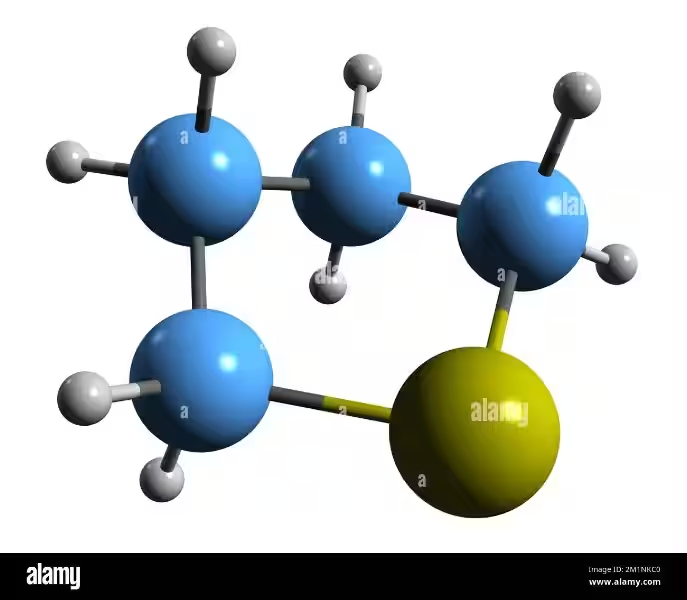
Thiophane, also known as tetrahydrothiophene, is a fascinating heterocyclic compound with a surprisingly broad range of applications. Its simple structure—a saturated five-membered ring containing a sulfur atom—belies its versatility in various fields, from organic synthesis to material science. This article explores the properties, applications, and commercial availability of thiophane, focusing on its significance in the chemical industry.
The Chemical Properties and Structure of Thiophane
Thiophane is a colorless liquid with a characteristic, albeit unpleasant, odor. This odor, often described as pungent and reminiscent of decaying cabbage, is a crucial factor in its historical and current uses as an odorant in certain gases. Its relatively low molecular weight contributes to its volatility, a property that impacts its handling and applications.
Its chemical structure, a saturated thiophene ring, dictates its reactivity. The sulfur atom acts as a nucleophilic center, allowing for various chemical transformations, making it a valuable intermediate in organic synthesis. This sulfur atom is also crucial for its ability to act as a ligand in coordination chemistry, forming complexes with various transition metals. Its ability to readily undergo oxidation to form sulfolane, a polar aprotic solvent with various industrial uses, further highlights its importance in chemical manufacturing.
Reactivity and Derivatization
The reactivity of thiophane stems primarily from the sulfur atom's lone pairs of electrons. These lone pairs make it susceptible to electrophilic attack, enabling the formation of a wide variety of derivatives. Alkylation, acylation, and oxidation are just a few of the numerous reactions thiophane readily undergoes. This rich reactivity is harnessed in many synthetic pathways, allowing the creation of complex molecules with tailored properties. Furthermore, the ring itself can undergo ring-opening reactions, providing access to open-chain compounds.
Thiophane’s Applications Across Industries
The versatility of thiophane and its derivatives has led to its adoption across several industries. Its use as an odorant in natural gas, particularly in mixtures with other odorizers, remains a significant application. However, its role extends far beyond this.
Thiophane serves as a vital building block in organic synthesis, enabling the construction of complex molecules with diverse functionalities. Its sulfur atom can be strategically incorporated into drug candidates to improve their properties, such as bioavailability, solubility, or binding affinity to target receptors. Many pharmaceutical compounds contain thiophane or its derivatives as key structural motifs. The presence of sulfur often lends desirable properties, such as increased lipophilicity, which influences how well a drug is absorbed and distributed in the body.
Material Science and Polymer Chemistry
Thiophane derivatives are also finding increasing use in the realm of materials science. The incorporation of thiophane units into polymer chains can lead to materials with enhanced properties. For example, the sulfur atom can contribute to improved thermal stability, flexibility, or even conductivity, depending on the specific derivative and the polymerization methodology employed.
Commercial Availability and Sigma-Aldrich’s Role
Companies like Sigma-Aldrich play a crucial role in providing researchers and industries with access to thiophane and its derivatives. Sigma-Aldrich's catalog likely features various grades of thiophane, differing in purity and intended use. The "reagent grade" would be suitable for demanding laboratory experiments, while a "technical grade" might suffice for less sensitive applications. Each product listing would meticulously detail the purity, packaging, and relevant safety information, including a Safety Data Sheet (SDS).
This detailed information ensures safe handling and use, crucial for minimizing risks associated with handling chemicals. Furthermore, Sigma-Aldrich's established supply chain greatly contributes to the accessibility of thiophane for researchers and industrial users, facilitating the progress of research and development in various fields. The availability of high-purity thiophane, in particular, is essential for sensitive analytical techniques and cutting-edge research requiring precise control over chemical reactions. The company's role extends beyond simply supplying the chemical; it also offers valuable technical support and assists in navigating the complexities of chemical handling and application.
The applications of thiophane are constantly expanding. Research into its use in novel materials, such as conductive polymers or advanced catalysts, is ongoing. Furthermore, its potential in green chemistry approaches, where minimizing environmental impact is paramount, is also being explored. The continued development of new synthetic methods and the ongoing investigation of thiophane's properties promise to expand its utility even further in the future. The simple five-membered ring containing a sulfur atom holds a wealth of potential, waiting to be further unlocked by ongoing research and innovation.
Thiophane (Tetrahydrothiophene) FAQ
Here are some frequently asked questions about thiophane, also known as tetrahydrothiophene, and its availability from Sigma-Aldrich:
What is thiophane?
Thiophane, or tetrahydrothiophene, is a heterocyclic organic compound. Its structure consists of a five-membered saturated ring containing four carbon atoms and one sulfur atom. It's a colorless liquid with a strong, unpleasant odor. This odor is the reason it's sometimes used as an odorant in gases. However, its main applications lie in its chemical reactivity and use as a building block for synthesizing more complex molecules.
Where can I buy thiophane?
Sigma-Aldrich is a major supplier of thiophane and related compounds. You can find their offerings through their online catalog. They offer various grades and purities of thiophane to suit different research and industrial needs. Remember to always consult the Safety Data Sheet (SDS) before handling any chemical.
What are the different grades of thiophane available?
Sigma-Aldrich likely offers various grades of thiophane, such as reagent grade (for laboratory use requiring high purity) and technical grade (for less demanding applications where higher impurity levels are acceptable). The specific grades available will vary depending on current inventory. The grade will influence the price and the acceptable impurity level.
What purity levels of thiophane are available?
The purity of thiophane is critical for many applications. Sigma-Aldrich likely offers thiophane with varying purity levels, expressed as a percentage. Higher purity thiophane is necessary for sensitive experiments and research applications. The exact purities available will be listed in their product catalog.
Thiophane and its derivatives find use in several areas:
Organic Synthesis: As a building block for preparing more complex molecules, including pharmaceuticals, agrochemicals, and materials for material science. Its sulfur atom allows for various chemical transformations.
Pharmaceutical Research: Thiophane structures can be incorporated into drug molecules to alter their properties, such as improving bioavailability or binding affinity.
Material Science: Thiophane derivatives might be used in creating polymers or other materials with specific properties.
Analytical Chemistry: It may serve as a standard or reagent in various analytical techniques.
What safety precautions should I take when handling thiophane?
Thiophane has a strong, unpleasant odor and may pose other health hazards. Always consult the Safety Data Sheet (SDS) provided by Sigma-Aldrich for specific handling instructions, safety precautions, and emergency response procedures. Appropriate personal protective equipment (PPE), such as gloves and eye protection, should be used when handling this chemical. Work in a well-ventilated area or under a fume hood.
What packaging options are available for thiophane?
Sigma-Aldrich typically offers various packaging options, such as bottles and vials, in different sizes to accommodate diverse needs. The specific packaging will depend on the amount ordered and the product's grade and purity. Refer to the Sigma-Aldrich catalog for details on available packaging sizes.
Does Sigma-Aldrich provide technical support for thiophane?
Sigma-Aldrich generally provides technical support to its customers. Their website or customer service representatives can answer specific questions about thiophane, its applications, and handling. This support can be invaluable for choosing the correct product and ensuring its safe and effective use.