Understanding Working Height and OSHA Fall Protection Regulations
Understanding Working Height and OSHA Fall Protection Regulations
Working at heights is a significant contributor to workplace accidents, leading to serious injuries and fatalities. Understanding the regulations and safety measures surrounding working height is crucial for maintaining a safe work environment. This article will explore OSHA's requirements for fall protection and provide practical guidance for staying safe while working at elevated positions.
OSHA’s Fall Protection Standards: Height Isn’t the Only Factor
The Occupational Safety and Health Administration (OSHA) has established strict regulations to minimize fall-related incidents. While many associate these regulations solely with working height, the reality is more nuanced. OSHA's requirements aren't simply about the distance above the ground; they consider the potential severity of a fall and the presence of hazards.
OSHA's regulations specify fall protection requirements based on industry and the presence of hazards. While the required height for implementing fall protection varies (four feet in general industry, five feet in shipyards, six feet in construction, and eight feet in longshoring), the critical factor is the potential for injury. Regardless of the working height, fall protection is always mandatory if a fall could result in contact with dangerous machinery or equipment. This means that even a seemingly low working height necessitates fall protection if a fall could lead to serious injury.
This emphasizes a critical point: OSHA prioritizes hazard mitigation over a simple height-based assessment. A fall from a relatively low working height onto a piece of dangerous machinery poses the same, or even greater, risk than a fall from a higher height onto a softer surface.
Employer Responsibilities: A Multifaceted Approach to Safety
OSHA places significant responsibilities on employers to create and maintain a safe working environment. These responsibilities go beyond simply providing fall protection equipment; they encompass a broader commitment to worker safety.
Securing the Workspace
Employers must take proactive steps to eliminate or mitigate hazards. This includes:
Securing floor openings: All floor holes presenting a fall risk must be guarded with railings, toe-boards, or secure covers.
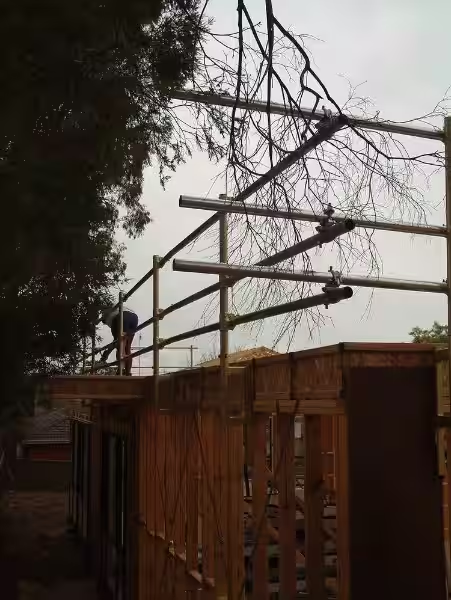
Protecting elevated work areas: Elevated platforms, floors, and runways with open sides require guardrails and toe-boards to prevent falls.
Protecting against falls onto hazards: Even at low working heights, if a fall could result in contact with dangerous equipment or machinery, fall protection is mandatory.
Beyond structural safeguards, employers are responsible for:
Providing Personal Protective Equipment (PPE): Employers must provide necessary PPE, including fall protection equipment (harnesses, lanyards, etc.), at no cost to the workers. This equipment must be regularly inspected and maintained.
Providing adequate worker training: Training must be conducted in a language understood by all workers, covering job-specific hazards and safety procedures. This includes proper use and inspection of PPE and understanding the limitations of different fall protection systems.
Choosing the Right Fall Protection Equipment
OSHA recognizes several fall protection methods, including:
Guardrails and toe-boards: These provide a physical barrier to prevent falls from elevated work surfaces.
Safety harnesses and lifelines: These systems allow workers to be tethered to a secure anchor point, preventing a fall from becoming a free fall.
Safety nets: These are used to catch workers in the event of a fall.
Adequate stair and hand railings: Proper stairways and handrails are essential for safe access to elevated work areas.
The selection of appropriate fall protection depends on a site-specific risk assessment, taking into account the working height, the presence of hazards, and the nature of the work being performed. A thorough risk assessment is crucial to determine the most effective and appropriate fall protection system for a given task.
Beyond the Height: A Holistic Approach to Safety
OSHA's fall protection regulations emphasize a holistic approach to safety. It's not just about meeting minimum height requirements; it's about creating a culture of safety where hazards are proactively identified and mitigated. This includes maintaining clean and dry work areas to minimize slip and fall risks, and consistently enforcing safety procedures.
The ultimate goal is to prevent falls before they happen. By understanding and implementing OSHA's guidelines, employers can significantly reduce the risk of fall-related injuries and fatalities, creating a safer and more productive work environment for everyone. Remember, a proactive approach to safety is far more effective and ultimately less costly than dealing with the consequences of an accident. Paying attention to the specifics of your working height and selecting the right fall protection is paramount to ensuring a safe work environment for yourself and your colleagues.
Working at Heights: Frequently Asked Questions
Here are some frequently asked questions about working at heights and OSHA regulations:
What is considered "working at heights" according to OSHA?
OSHA defines working at heights as any work where a fall could cause injury. This isn't solely determined by a specific height; even seemingly low elevations can pose significant risks. While specific fall protection requirements trigger at different heights depending on the industry (4 feet in general industry, 5 feet in shipyards, 6 feet in construction, and 8 feet in longshoring), fall protection is always mandatory when working above dangerous machinery or equipment, regardless of height.
What are the basic OSHA requirements for fall protection?
OSHA mandates that employers implement preventative measures to protect workers from falls. These measures vary depending on the specific worksite and hazards but generally include:
Guardrails and Toeboards: These must be installed around floor openings, elevated work areas, and anywhere a fall onto a hazard is possible.
Safety Netting: Depending on the situation, safety nets can provide a secondary layer of protection.
Personal Protective Equipment (PPE): Employers must provide and ensure the proper use of PPE such as harnesses, lanyards, and appropriate anchoring systems.
Training: Workers must receive thorough training on the proper use of fall protection equipment and safe work practices.
The specific type of fall protection required will depend on a comprehensive risk assessment.
At what height does OSHA require fall protection?
The height at which fall protection is required varies based on the industry: four feet in general industry, five feet in shipyards, six feet in construction, and eight feet in longshoring. However, this is not a strict rule; fall protection is always necessary when working above dangerous machinery or equipment, regardless of height.
What are an employer's responsibilities regarding fall protection?
Employers have a significant legal and ethical responsibility to ensure worker safety. This includes:
Providing and maintaining fall protection equipment: This must be inspected regularly and replaced as needed.
Ensuring proper training: Workers must be trained on how to properly use fall protection equipment and understand the risks associated with working at heights.
Developing and implementing a comprehensive fall protection plan: This plan should outline procedures for preventing falls and responding to fall incidents.
Maintaining a safe work environment: This includes keeping work areas clean and dry to minimize slip and fall hazards.
Failing to meet these responsibilities can result in significant fines and legal repercussions.
What types of fall protection are available?
OSHA recognizes several methods of fall protection, including:
Guardrails and toeboards
Safety nets
Personal fall arrest systems (harnesses, lanyards, and anchor points)
Positioning devices
Stair and hand railings
The appropriate method will be determined by a job-specific risk assessment.
What happens if a fall occurs?
In the event of a fall, immediate medical attention should be sought. The incident should be thoroughly investigated to determine the cause and prevent future occurrences. OSHA requires employers to report serious workplace injuries and fatalities. A thorough investigation helps identify systemic failures and implement improvements to prevent similar accidents.