Understanding Diallyl Phthalate: Uses, Concerns, and Future Directions
Understanding Diallyl Phthalate: Uses, Concerns, and Future Directions
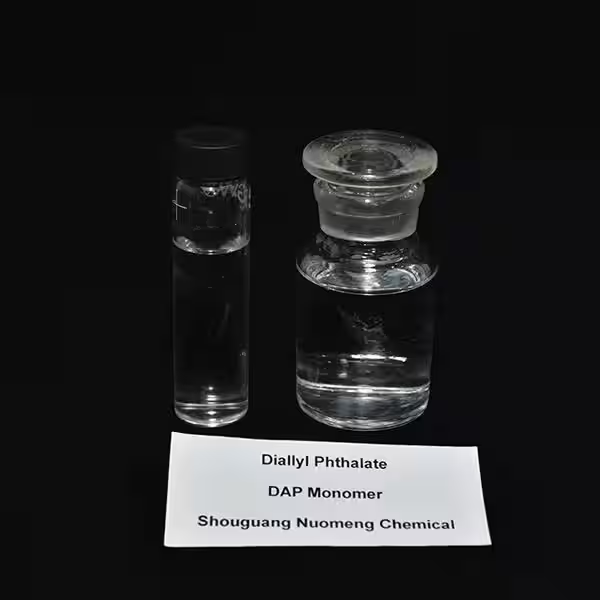
Diallyl phthalate (DAP), a chemical compound with the formula C₁₂H₁₄O₄, plays a significant role in various industries, primarily as a plasticizer in the production of polyvinyl chloride (PVC) plastics. While offering valuable properties, DAP also presents several concerns prompting ongoing research and regulatory scrutiny. This article aims to provide a comprehensive overview of diallyl phthalate, exploring its uses, potential risks, and the current regulatory landscape.
Diallyl Phthalate as a Plasticizer: Enhancing PVC Properties
Diallyl phthalate's primary function is to enhance the flexibility and workability of PVC. It achieves this by integrating into the polymer matrix, effectively increasing the distance between the PVC polymer chains. This crucial action reduces the strength of intermolecular forces, resulting in a material that is less brittle and more pliable.
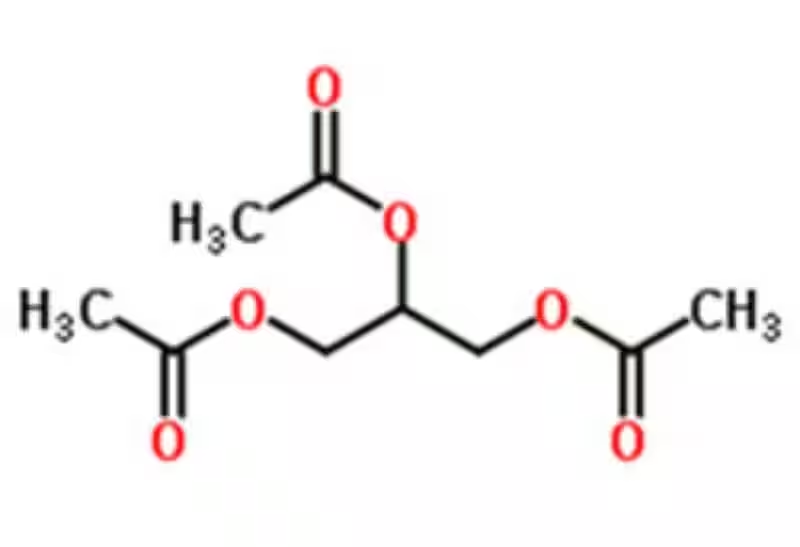
The effectiveness of DAP as a plasticizer is directly linked to its molecular structure. The two allyl groups provide the necessary flexibility, while the phthalate ester ensures compatibility with the PVC polymer. This careful balance of properties makes DAP a highly effective additive, expanding the range of applications for PVC in various products.
Potential Health Effects of Diallyl Phthalate Exposure
Despite its widespread use, concerns exist regarding the potential health effects of diallyl phthalate exposure. The degree of toxicity is debated and heavily dependent on factors such as exposure level and route of administration. However, several studies suggest potential adverse effects.
These potential effects include reproductive toxicity, developmental toxicity, and endocrine disruption. Some research even hints at potential links to liver and kidney damage, although further investigation is necessary to establish definitive causal relationships and understand the underlying mechanisms. The most significant concern revolves around long-term, low-level exposure through dermal contact or ingestion of contaminated food or water.
Understanding the Research and its Limitations
It's important to note that the research surrounding DAP's toxicity is ongoing and complex. Results vary across studies due to differences in methodology, exposure levels, and animal models used. Therefore, drawing definitive conclusions about its long-term health impact requires caution and a critical evaluation of the available data. More research is urgently needed to clarify the extent and nature of these potential risks, especially at low-dose exposures.
The environmental impact of diallyl phthalate is another critical area of concern. DAP's persistence in the environment and potential for bioaccumulation in organisms raise significant questions about its effects on aquatic and terrestrial ecosystems.
The degradation rate of DAP varies greatly depending on environmental conditions, but its presence in landfills and potential for leaching into groundwater pose significant challenges. Furthermore, the possibility of biomagnification through the food chain adds another layer of complexity to its environmental risk profile, highlighting the need for a thorough understanding of its long-term fate in various ecosystems.
Bioaccumulation and Biomagnification: A Detailed Look
Bioaccumulation refers to the gradual accumulation of DAP in the tissues of living organisms. This occurs when the rate of uptake exceeds the rate of elimination. Biomagnification, on the other hand, describes the increasing concentration of DAP as it moves up the food chain. Predators consuming prey with accumulated DAP will ingest higher concentrations, potentially leading to significant adverse effects at the top of the food chain. Understanding these processes is crucial for evaluating the overall ecological impact of diallyl phthalate.
Regulatory Landscape and Global Perspectives on Diallyl Phthalate
The regulatory landscape surrounding diallyl phthalate varies significantly across the globe. Various jurisdictions have implemented different levels of restriction or regulation, reflecting ongoing efforts to assess its safety and potential risks.
Many countries have imposed limits on its use in specific applications, especially those involving food contact materials or products intended for children. These regulations often reflect a precautionary principle acknowledging the uncertainties surrounding DAP's long-term health and environmental effects. The ongoing debate highlights the challenge of balancing the benefits of using this effective plasticizer with the potential risks it poses.
The Precautionary Principle in Action
The precautionary principle guides many regulatory decisions regarding DAP. This principle suggests that when there is uncertainty about the potential harm of a substance, precautionary measures should be taken even in the absence of conclusive scientific evidence. This approach reflects the need to protect human health and the environment, even when facing incomplete data.
Conclusion: The Ongoing Need for Research and Responsible Use
Diallyl phthalate remains a widely used plasticizer, valued for its ability to enhance the flexibility of PVC. However, concerns regarding its potential toxicity, particularly its reproductive and developmental effects, and its environmental persistence and bioaccumulation potential necessitate ongoing research and careful regulation. The absence of definitive conclusions on its long-term health impacts underscores the need for continued monitoring and further investigation into the effects of low-dose exposures and its overall environmental fate. The precautionary approach adopted by various regulatory bodies emphasizes the crucial need to balance the benefits of its use with the potential risks it poses. Further research will be vital in shaping future regulations and ensuring responsible use of this important industrial chemical.
Frequently Asked Questions about Diallyl Phthalate (DAP)
What is Diallyl Phthalate (DAP)?
Diallyl phthalate (DAP) is a chemical compound with the formula C₁₂H₁₄O₄. Its primary use is as a plasticizer, primarily in the manufacturing of polyvinyl chloride (PVC) plastics. It enhances the flexibility and workability of PVC by increasing the distance between polymer chains, making the material more pliable and less brittle.
How does DAP work as a plasticizer?
DAP's effectiveness stems from its molecular structure. The two allyl groups provide flexibility, while the phthalate ester ensures compatibility with the PVC polymer. By integrating into the PVC matrix, it reduces intermolecular forces between polymer chains, resulting in increased flexibility.
Is DAP safe?
The safety of DAP is a subject of ongoing research and debate. While not inherently toxic at low concentrations, studies have suggested potential adverse effects, including reproductive and developmental toxicity, and endocrine disruption. The severity of these effects depends heavily on exposure levels and route of administration. Long-term, low-level exposure through dermal contact or ingestion is a particular concern. Further research is needed to definitively establish causal relationships and understand the mechanisms involved.
What are the potential health effects of DAP exposure?
Potential health effects associated with DAP exposure, based on current research, include reproductive toxicity, developmental toxicity, and endocrine disruption. Some studies also suggest potential links to liver and kidney damage, but more research is needed to confirm these links and understand the underlying mechanisms.
DAP's persistence in the environment and potential for bioaccumulation in organisms raise environmental concerns. Its presence in landfills and potential leaching into groundwater are significant challenges. Biomagnification through the food chain further complicates its environmental risk profile. The degradation rate of DAP varies depending on environmental conditions.
What are the regulatory perspectives on DAP?
Global regulatory perspectives on DAP vary. Some jurisdictions have implemented limits on its use in specific applications, particularly those involving food contact materials or children's products. These regulations often reflect a precautionary approach, acknowledging uncertainties surrounding its long-term health and environmental effects. Ongoing efforts are underway to assess its safety and potential risks.
What are the alternatives to DAP?
The availability of suitable alternatives to DAP depends heavily on the specific application. Research is ongoing into finding safer and more environmentally friendly plasticizers for PVC and other polymers. Specific alternatives would need to be evaluated based on the required properties and performance characteristics.
Where can I find more information on DAP safety and regulations?
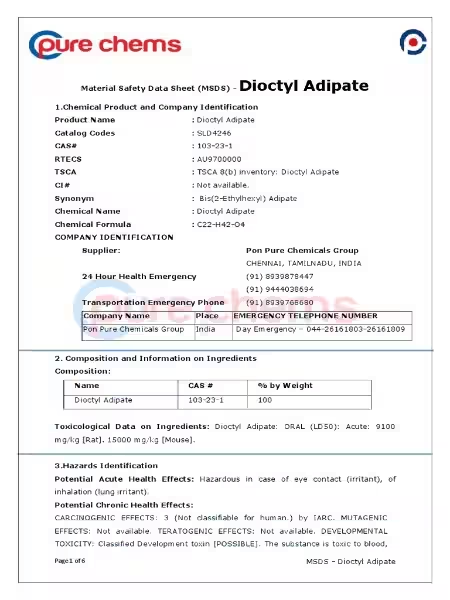
Information on DAP safety and regulations can be found through various sources, including government agencies (such as the EPA in the US or equivalent agencies in other countries), scientific literature databases (like PubMed), and industry associations. Consulting safety data sheets (SDS) for specific DAP products is also crucial.
Is DAP used in any products I might encounter daily?
DAP is primarily used as a plasticizer in PVC products. Therefore, it's possible to find it in a wide range of items, including some types of flooring, clothing, packaging, and medical devices. However, the concentration of DAP in these products will vary significantly.
What precautions should be taken when handling DAP?
Always follow the safety data sheet (SDS) for any DAP product you are handling. This will provide specific guidance on appropriate personal protective equipment (PPE), handling procedures, and emergency response measures. Good ventilation is generally recommended when working with DAP.