Understanding MSDS Book Requirements: A Guide to OSHA Compliance
Understanding MSDS Book Requirements: A Guide to OSHA Compliance
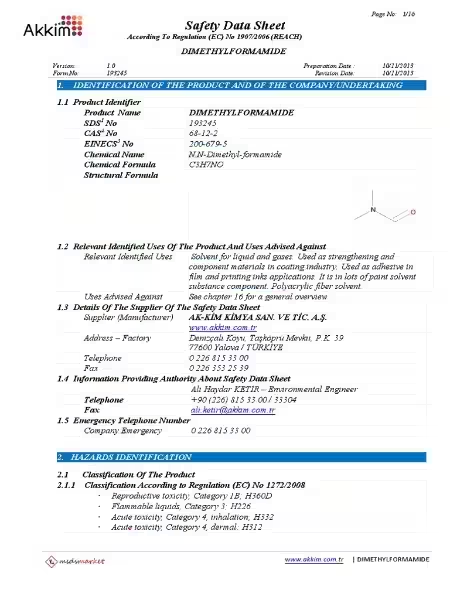
Creating a comprehensive and accessible Material Safety Data Sheet (MSDS) – now Safety Data Sheet (SDS) – book is crucial for maintaining a safe workplace and adhering to OSHA regulations. Many businesses struggle to understand the exact requirements, leading to confusion and potential non-compliance. This article clarifies the MSDS book requirements and provides practical guidance for creating a compliant and user-friendly system.
OSHA’s Focus: Accessibility, Not Specific Formatting
The Occupational Safety and Health Administration (OSHA) doesn't prescribe a rigid format for your SDS binder. Their primary concern is ensuring that employees have easy and immediate access to the necessary safety information whenever needed. This means no more searching through countless files or relying on memory; the information must be readily available at the point of need.
Think of it this way: the goal isn't to have the "prettiest" SDS binder, but the most useful one. A well-organized, easily accessible binder is far more effective than a meticulously formatted but difficult-to-navigate one. This accessibility directly impacts employee safety and reduces the risk of workplace accidents.
Location, Location, Location: Where Should Your SDS Book Be?
The location of your SDS binder isn't dictated by strict rules, but it needs to be strategically placed and clearly communicated. The best location will depend on your specific work environment.
Consider these examples:
Multiple work sites: A cleaning service with multiple vans should have an SDS binder in each vehicle.
Construction sites: A general contractor should place binders in each job trailer.
Small businesses: A small office might keep the binder in a common area like a break room or office, provided its location is clearly documented.
The key is to ensure that all employees, regardless of their work location, can easily access the necessary SDS information. This location must be explicitly stated within your company's written Hazard Communication Program.
This isn't just about placement; it's about communication. You must formally document the binder's location in your written hazard communication program. This ensures that everyone understands where to find the information, facilitating quick access in emergencies. Failure to document this critical aspect might lead to non-compliance, even if the binder is conveniently located.
Employee Training: The Cornerstone of SDS Book Effectiveness
Simply providing an SDS binder isn't enough; thorough employee training is crucial. Employees must know:
The binder's location: They need to know exactly where to find it, quickly and easily.
How to use the binder: This includes understanding the organization system and how to locate specific SDSs.
How to interpret SDS information: Training should cover the key sections of an SDS and how to understand the hazard information presented.
This training is integral to ensuring the effectiveness of your SDS system. Without proper training, a perfectly organized binder is essentially useless.
GHS and SDS Content: Keeping Up-to-Date
The Globally Harmonized System (GHS) has significantly altered SDS content and labeling. While OSHA doesn't mandate specific binder organization, the updated SDS format, required by GHS, impacts how employees interact with the information. Your training should reflect these changes, ensuring employees understand the new information layout and the significance of the updated hazard classifications.
Building Your SDS Book: A Step-by-Step Guide
Creating a functional SDS binder involves several key steps:
Inventory Hazardous Materials: This isn't just a list of everything; focus on materials that pose a significant risk if mishandled, considering both the substance and its quantity. A small bottle of glue might not need an SDS, but a large drum definitely does.
Gather SDSs: Manufacturers should provide SDSs, but often don't. Use online searches (material name + "SDS") to locate them. These sheets contain vital safety information.
Create a User-Friendly Index: For smaller collections, a simple list with page numbers might suffice. Larger collections (75+ SDSs) benefit from a categorized index for improved efficiency. OSHA prioritizes ease of access over specific formatting.
Choose a Durable Binder: A sturdy, poly binder is ideal for its durability and resistance to workplace conditions. Organize the binder into sections: Hazard Communication Policy, comprehensive inventory/index, and the SDSs themselves. Including relevant OSHA publications is also beneficial.
Conclusion: Prioritizing Accessibility and Training
The MSDS book requirements, as defined by OSHA, center on providing employees with readily available access to critical safety information. While the specific format and location are flexible, the emphasis on accessibility and employee training remains paramount. A well-organized SDS binder combined with comprehensive employee training forms the cornerstone of a robust hazard communication program, minimizing workplace risks and ensuring compliance. Remember, the goal is a system that empowers employees to work safely and confidently.
Frequently Asked Questions: MSDS (now SDS) Book Requirements
This FAQ section addresses common questions regarding the requirements for maintaining a Safety Data Sheet (SDS) binder, formerly known as the Material Safety Data Sheet (MSDS) binder, in compliance with OSHA's Hazard Communication Standard.
What are the OSHA requirements for an SDS binder?
OSHA's Hazard Communication Standard doesn't specify a particular format for SDS binders. The primary requirement is ensuring readily available employee access to SDSs throughout their workday. Employees shouldn't need to memorize SDS information; the binder serves as a quick reference for safe handling procedures.
Where should I keep my SDS binder?
There's no single "correct" location. The binder's placement depends on your workplace. For example:
Multiple work locations: A cleaning service might place binders in each vehicle.
Construction sites: A general contractor might use binders in each job trailer.
Small businesses: A common area like a break room or office is acceptable, as long as its location is clearly communicated and documented.
The crucial factor is clear communication of the binder's location to all employees. This location must be formally documented in your company's written hazard communication program.
What should be included in my SDS binder?
Your SDS binder should include:
A Hazard Communication Policy: Outlining responsibilities and the proper use of SDS sheets, including procedures for accessing and using the information contained within.
A comprehensive SDS inventory list/index: This allows for quick and easy location of specific SDSs. For larger collections (75 or more SDSs), organizing this index by category is highly recommended.
The SDSs themselves: These sheets must be up-to-date and readily accessible.
Consider adding relevant OSHA publications to further enhance the binder's value. A durable, poly binder is recommended for its durability and ease of handling.
What kind of training is required regarding the SDS binder?
Employee training is paramount. Workers must be trained on:
Binder location: They need to know exactly where to find the binder.
SDS interpretation: Training should cover how to locate and understand the relevant information within an SDS, including the updated format as mandated by the Globally Harmonized System (GHS).
This training is crucial for preventing workplace hazards. It ensures employees can quickly and easily find the necessary safety information when needed.
Does the Globally Harmonized System (GHS) affect my SDS binder?
Yes. The GHS significantly impacts SDS content and labeling. While OSHA doesn't dictate binder organization, the GHS mandates specific information on SDSs, influencing their content and the information employees need to understand. Your employee training should reflect these GHS updates.
How do I create an SDS inventory?
Creating an SDS inventory involves these steps:
Inventory Hazardous Materials: Thoroughly list all materials requiring special handling due to potential hazards. Consider both the substance and its quantity.
Locate SDSs: Obtain the SDS for each hazardous material. Manufacturers are obligated to provide these, but they may not be included with purchase. Online searches can be helpful.
Create an Index: Develop a user-friendly index for quick access. This can be a simple list with page numbers or a more categorized system for larger collections.
What type of binder should I use?
A durable, poly binder is recommended due to its flexibility, lightweight nature, and resistance to various work environments.
Remember, the focus is on ensuring employees can quickly and easily access the necessary safety information to prevent accidents and injuries. The specific format of your SDS binder is less important than ensuring its accessibility and that employees know how to use it.