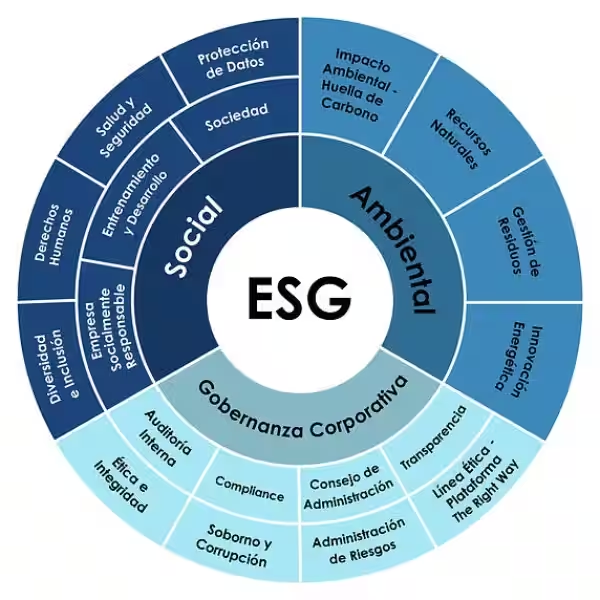
Social justice investing (SJI) is rapidly becoming a mainstream investment strategy, driven by a growing awareness of social issues and a desire to align financial goals with personal values. But what exactly is social justice investing, and is it the right approach for you? This article will explore the key aspects of SJI, helping you determine if it aligns with your investment philosophy and goals.
Social justice investing, a subset of Environmental, Social, and Governance (ESG) investing, focuses on generating positive social impact alongside financial returns. Unlike traditional investing that prioritizes solely financial gains, SJI considers the ethical and societal implications of investments. It actively seeks opportunities to promote social justice and equity, addressing issues like poverty, inequality, and environmental degradation.
This differs from simply avoiding "bad" companies. SJI goes beyond negative screening (excluding companies involved in harmful activities) to actively seek out and invest in companies and organizations that demonstrably promote positive social and environmental change. This proactive approach aims to create a more equitable and sustainable world.
Key Principles of Social Justice Investing
Several core principles underpin successful social justice investing strategies. These principles guide investors in making choices that align with their values and contribute to a more just society.
Impact-Driven Investment Strategies
The primary goal of SJI isn't just profit; it's positive impact. Investors carefully assess the social and environmental benefits of potential investments, going beyond merely financial projections. This involves a deeper due diligence process which considers a company's:
Labor practices: Fair wages, safe working conditions, and respect for workers' rights.
Community engagement: Positive contributions to the surrounding community.
Environmental stewardship: Sustainable practices and efforts to minimize environmental harm.
Diversity and inclusion: Equitable representation within the company's workforce and leadership.
Finding investments that meet these criteria requires thorough research and collaboration with organizations specializing in social impact assessments.
Alignment of Values
SJI allows investors to align their investments with their personal values. If you're passionate about education, affordable housing, or environmental protection, SJI provides avenues to support these causes through your investment portfolio. This creates a sense of purpose and satisfaction beyond simply accumulating wealth.
This personal alignment is a crucial aspect of SJI. It emphasizes the investor's role not just as a capital provider but as an active participant in creating positive change. A key element is transparency—understanding exactly where your money goes and the impact it has.
Measuring Social Impact
Measuring the precise social impact of investments can be challenging. However, advancements in data collection and analysis are making it easier to track and quantify the positive effects of SJI. Some organizations use specific metrics to assess the impact of their investments, focusing on key performance indicators related to social and environmental outcomes.
This careful measurement is essential for accountability and to demonstrate the effectiveness of SJI strategies. It ensures that investments are not only ethically sound but also demonstrably effective in achieving their social objectives.
Different Approaches to Social Justice Investing
There are various ways to incorporate SJI principles into your investment portfolio. The approach you choose will depend on your investment goals, risk tolerance, and level of involvement.
ESG Funds and ETFs: These offer diversified exposure to companies with strong ESG profiles, simplifying the process of incorporating SJI principles into your portfolio. They often screen out companies with poor social or environmental records.
Impact Investing Funds: These funds directly invest in companies or projects with a measurable social or environmental impact. They go beyond simply avoiding "bad" companies to actively seeking out "good" ones.
Community Development Financial Institutions (CDFIs): CDFIs provide loans and other financial services to underserved communities, promoting economic development and social justice at a local level.
Individual Stock Selection: This involves researching and selecting individual companies that align with your values. This requires more time and effort but offers greater control and customization.
Potential Challenges of Social Justice Investing
While SJI offers significant benefits, it also presents some challenges:
Data Availability: Comprehensive and reliable data on social and environmental performance isn't always readily available for all companies.
Performance Measurement: Assessing and comparing the social impact of different investments can be complex.
Potential for "Greenwashing": Some companies may exaggerate their ESG credentials to attract investors.
Despite these challenges, the advantages of social justice investing are increasingly outweighing its drawbacks. The growing demand for transparent and responsible investing is driving innovation and improvement in data collection and measurement techniques.
The Future of Social Justice Investing
The future of investing is increasingly intertwined with social justice considerations. The younger generation of investors, in particular, is driving this trend, demanding investments that align with their values and create a positive impact on the world. As awareness of social and environmental issues grows, we can expect to see continued growth in SJI, with more innovative strategies and better measurement tools emerging. The integration of social justice into investment decisions is not merely an ethical choice but a strategic one, recognizing that companies that prioritize social responsibility are often better positioned for long-term success. Social justice investing, therefore, is not just about doing good; it's about doing well.
Frequently Asked Questions about Social Justice Investing (SJI)
What is Social Justice Investing (SJI)?
Social Justice Investing (SJI) is a type of investing that aligns investment decisions with personal values related to social justice. It's a subset of Environmental, Social, and Governance (ESG) investing, placing a strong emphasis on the "S" – social factors. SJI seeks to generate both financial returns and positive social impact by investing in companies and initiatives that actively promote social justice, such as those addressing issues like worker rights, diversity and inclusion, and community development. It differs from traditional investing by explicitly incorporating ethical and social considerations into the investment strategy.
How does SJI differ from traditional investing?
Traditional investing primarily focuses on maximizing financial returns with less or no explicit consideration for social or environmental impact. SJI, however, integrates social justice principles into the investment process. It considers not only the potential for financial gain but also the positive social and environmental consequences of the investments. This approach seeks to generate returns while contributing to a more equitable and sustainable world.
What are some examples of SJI investments?
SJI investments can take many forms. These include investing in companies committed to fair labor practices, diverse workforces, and community engagement; supporting organizations working to address social inequalities; and participating in initiatives focused on affordable housing, education, or healthcare access. The specific investments are tailored to the investor's values and goals, and can range from readily available ESG mutual funds to more bespoke managed accounts.
Is SJI less profitable than traditional investing?
Contrary to a common misconception, SJI doesn't necessarily sacrifice financial returns. Studies have shown that companies with strong social justice practices often exhibit greater resilience and stability, potentially leading to better long-term performance. In fact, data suggests that a significant percentage of ESG-screened indexes have outperformed their broad market counterparts in recent years.
How can I get started with SJI?
There are several ways to integrate SJI principles into your investment portfolio. Options include investing in pre-constructed ESG portfolios or ESG mutual funds and ETFs readily available through many brokerage firms. For a more customized approach, you can work with a financial advisor specializing in socially responsible investing to create a portfolio tailored to your specific values and social justice goals.
What are the challenges of SJI?
One key challenge has been the difficulty in accurately measuring and quantifying social impact. However, advancements in company reporting and data analysis are making it easier to assess the social performance of companies and build portfolios aligned with social justice objectives. Another challenge involves ensuring transparency and accountability in the investment process. Choosing reputable and transparent fund managers or advisors is critical.
What is the role of Adasina (or a similar organization) in SJI?
Organizations like Adasina act as a bridge between investors seeking social impact and social justice initiatives needing funding. They work to align investors with causes aligned with their values, develop customized investment criteria, engage in industry campaigns to promote greater social responsibility, and educate investors about the potential of SJI. Essentially, they facilitate the flow of capital towards positive social change while providing expertise and support to both investors and the organizations they fund.