Understanding Phosphoric Acid Solution: A Comprehensive Guide
Understanding Phosphoric Acid Solution: A Comprehensive Guide
Phosphoric acid solution is a versatile chemical compound with a wide array of applications, from fertilizer production to food processing. This guide will explore its properties, production methods, uses, and safety considerations. Understanding its diverse roles is crucial for various industries and even everyday consumers.
The industrial production of phosphoric acid solution primarily relies on two distinct processes: the wet process and the dry process. Each method offers advantages and disadvantages concerning cost-effectiveness, purity, and environmental impact.
The wet process, the more prevalent method, leverages the reaction between phosphate rock (containing minerals like fluorapatite and calcium hydroxyapatite) and sulfuric acid. This reaction yields a phosphoric acid solution, typically containing 23–33% P₂O₅ (equivalent to 32–46% H₃PO₄). This initial solution is then often concentrated further to commercially viable grades, reaching 54–62% P₂O₅ (75–85% H₃PO₄) or even superphosphoric acid concentrations. The byproducts of this process, gypsum (calcium sulfate) and hydrogen fluoride, require careful management due to their potential environmental impact.
On the other hand, the dry process, also known as the thermal process, uses an electric arc furnace to reduce phosphate ore with coke and silica, initially producing elemental phosphorus. This elemental phosphorus is subsequently burned to create phosphorus pentoxide (P₂O₅), which is then dissolved in water to produce a high-purity phosphoric acid solution. While this method results in a higher initial concentration of P₂O₅ (around 85%) and fewer impurities, it is significantly more energy-intensive and expensive compared to the wet process. This high energy consumption makes the dry process less environmentally friendly than the wet process, despite the superior purity of the resulting phosphoric acid.
Choosing the Right Process
The choice between the wet and dry processes depends heavily on the desired purity of the final phosphoric acid solution and the economic considerations of the production facility. High-purity applications, such as in the semiconductor industry, might necessitate the dry process despite its higher cost. However, for large-scale fertilizer production, the cost-effectiveness of the wet process typically makes it the preferred choice, even if it results in a less pure phosphoric acid solution. Environmental regulations also play a significant role, influencing the choice of production method.
Purification of Phosphoric Acid Solution
Regardless of the chosen production method, the resulting phosphoric acid solution often requires further purification to meet specific quality standards. A variety of techniques are employed, depending on the intended application and the type and concentration of impurities present.
Several techniques are employed to achieve the desired purity. Liquid-liquid extraction using organic solvents, such as tributyl phosphate, effectively removes certain impurities. Nanofiltration membranes can also be used to separate impurities based on size and charge. For applications requiring exceptional purity, like the production of semiconductors, fractional crystallization is employed to thoroughly eliminate residual contaminants. These advanced purification techniques ensure the phosphoric acid solution meets the exacting standards required for specialized uses.
The purity of the phosphoric acid solution is critical for its various applications. For instance, food-grade phosphoric acid (E338), used as a food additive, must meet stringent purity standards to be safe for consumption. In contrast, phosphoric acid used in fertilizers may require less stringent purification, as the presence of certain impurities might not significantly impact its effectiveness. The level of purification significantly impacts the cost and the final application of the produced phosphoric acid.
Properties of Phosphoric Acid Solution
Phosphoric acid (H₃PO₄) is a triprotic acid, capable of donating three protons (H⁺) in an aqueous solution. Each dissociation step has its characteristic pKa value (2.14, 7.20, and 12.37), indicating its relative strength as an acid. Aqueous phosphoric acid solutions up to 62.5% H₃PO₄ exhibit a eutectic behavior, meaning they have a lower freezing point than either pure water or pure phosphoric acid. Concentrated solutions, above 85%, have a tendency towards slow self-condensation, forming pyrophosphoric acid and other polyphosphoric acids. This self-condensation makes obtaining pure orthophosphoric acid a challenging process, often requiring careful fractional freezing/melting techniques.
Understanding the Implications of its Properties
The triprotic nature of phosphoric acid allows it to participate in a variety of chemical reactions. Its ability to donate protons makes it a useful acidulant in various applications, from food and beverage processing to metal treatment. The self-condensation property of concentrated solutions is important to consider in storage and handling, as this can alter the chemical composition over time. The eutectic behavior is relevant for applications where freezing point depression is a factor.
Uses of Phosphoric Acid Solution
The vast majority (approximately 90%) of phosphoric acid production is dedicated to the production of fertilizers. Its role as a source of phosphorus, an essential nutrient for plant growth, is paramount in modern agriculture. Beyond fertilizers, food-grade phosphoric acid (E338) finds widespread use as an acidulant and preservative in various food and beverage products, most notably colas. Other applications include metal polishing (etching), steel passivation (phosphatization), and the production of various phosphate derivatives used in detergents, water treatment, and even toothpastes.
Diverse Applications
The versatility of phosphoric acid solution stems from its unique chemical properties, which allow for its use in a vast array of seemingly unrelated applications. From the large-scale production of fertilizers essential for global food security to the subtle role it plays in enhancing the flavor and shelf life of beverages and foods, its presence is pervasive. The diverse applications underline its importance in various sectors of the economy.
While not as strong as some other acids, concentrated phosphoric acid solutions are corrosive and can cause severe skin burns and eye damage. Appropriate safety measures, such as wearing protective gloves and eye protection, are essential when handling it. Long-term consumption of phosphoric acid-containing soft drinks is linked to potential health concerns like dental erosion and, in some studies, is associated with osteoporosis in women. Therefore, moderation in consumption of such beverages is advised.
Responsible Handling and Usage
The corrosive nature of concentrated phosphoric acid solution necessitates careful handling and appropriate safety measures. Proper personal protective equipment (PPE) and safe handling procedures are crucial to avoid accidents and injuries. Awareness of potential long-term health effects associated with excessive consumption of phosphoric acid-containing products is also important for consumers. Understanding the safety aspects is integral to the responsible use of phosphoric acid solutions.
Frequently Asked Questions about Phosphoric Acid Solution
What is phosphoric acid?
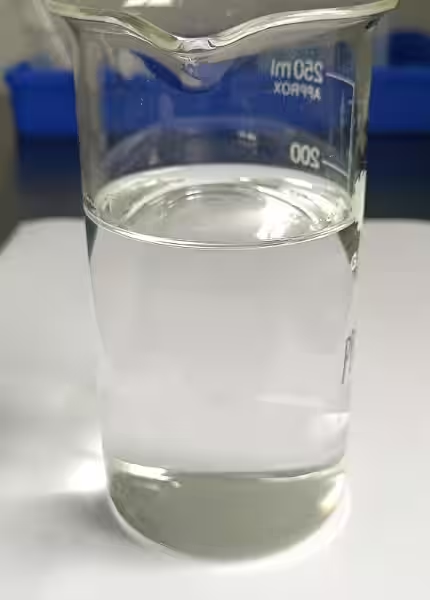
Phosphoric acid (H₃PO₄), also known as orthophosphoric acid or phosphoric(V) acid, is a colorless, odorless, inorganic compound. It's commonly found as an 85% aqueous solution, appearing as a syrupy liquid.
How is phosphoric acid produced?
There are two main production methods: the wet process and the dry process. The wet process, more common and cost-effective, treats phosphate minerals with sulfuric acid. The dry process uses an electric arc furnace to produce elemental phosphorus, which is then burned and dissolved in water. The dry process yields higher purity but is more energy-intensive.
What are the different concentrations of phosphoric acid solutions?
Phosphoric acid solutions are available in various concentrations. The wet process typically yields solutions containing 23–33% P₂O₅ (32–46% H₃PO₄). These can be further concentrated to commercial grades (54–62% P₂O₅ or 75–85% H₃PO₄) or even superphosphoric acid (over 70% P₂O₅, nearly 100% H₃PO₄).
How is phosphoric acid purified?
Purification methods depend on the intended use and initial purity. Common techniques include liquid-liquid extraction using organic solvents, nanofiltration to remove impurities, and fractional crystallization for extremely high purity.
What are the key properties of phosphoric acid?
Phosphoric acid is a triprotic acid, meaning it can donate three protons (H⁺) in solution. Aqueous solutions up to 62.5% H₃PO₄ are eutectic, showing freezing point depression. Concentrated solutions (above 85%) can undergo self-condensation, forming pyrophosphoric acid and other polyphosphoric acids.
What are the main uses of phosphoric acid?
The largest use (approximately 90%) is in fertilizer production. Food-grade phosphoric acid (E338) is used as an acidulant and preservative in foods and beverages. Other applications include metal polishing, steel passivation, and components in detergents and toothpastes.
Concentrated phosphoric acid solutions are corrosive and can cause severe skin burns and eye damage. While not a strong acid in the same way as hydrochloric acid, it's still important to handle it with care and appropriate safety measures. Long-term consumption of high levels in soft drinks has been linked to potential health concerns.
What is the pKa of phosphoric acid?
Phosphoric acid has three pKa values, reflecting its three dissociation steps: 2.14, 7.20, and 12.37.
What is the difference between the wet and dry process for phosphoric acid production?
The wet process is cheaper and uses phosphate minerals and sulfuric acid. The dry process is more expensive and energy-intensive, using an electric arc furnace to produce elemental phosphorus first, resulting in higher purity acid.
What is superphosphoric acid?
Superphosphoric acid is a highly concentrated form of phosphoric acid, containing over 70% P₂O₅ (nearly 100% H₃PO₄).
What are the safety precautions when handling phosphoric acid?
Always wear appropriate personal protective equipment (PPE), including gloves, eye protection, and a lab coat. Work in a well-ventilated area. In case of contact, immediately flush the affected area with plenty of water and seek medical attention.
What is the role of phosphoric acid in fertilizers?
Phosphoric acid is a key ingredient in phosphate fertilizers, providing phosphorus, a crucial nutrient for plant growth.
What is the role of phosphoric acid in food and beverages?
Food-grade phosphoric acid acts as an acidulant (providing a tart taste) and preservative in various products, notably colas.
Can phosphoric acid be used in metal treatments?
Yes, it's used in metal polishing (etching) and steel passivation (phosphatization) to create protective coatings.
What is the eutectic point of phosphoric acid solutions?
Aqueous solutions up to 62.5% H₃PO₄ are eutectic, meaning they have a lower freezing point than either pure water or pure phosphoric acid at that concentration.
Why is deuterated water used in some phosphoric acid solutions?
Deuterated water (D₂O) is used in NMR reference standards to minimize interference from hydrogen nuclei (¹H) in the NMR spectrum, improving signal clarity and accuracy.
How is phosphoric acid used in water treatment?
Phosphoric acid and its derivatives can be used in water treatment for various purposes, including pH adjustment and corrosion control.
What is the self-condensation reaction of phosphoric acid?
Concentrated phosphoric acid solutions can slowly undergo self-condensation, forming pyrophosphoric acid and other polyphosphoric acids.
How is the purity of phosphoric acid specified?
Purity is often expressed as a percentage of P₂O₅ or H₃PO₄. High-purity phosphoric acid may be specified for specific applications, such as semiconductor manufacturing.