Understanding Potassium Ferrocyanide: Uses, Properties, and Safety
Understanding Potassium Ferrocyanide: Uses, Properties, and Safety
Potassium ferrocyanide, also known as potassium hexacyanoferrate(II) trihydrate (K₄[Fe(CN)₆]·3H₂O), is a fascinating chemical compound with a surprisingly diverse range of applications. Its history stretches back centuries, yet its relevance in modern industry and scientific research remains strong. This article explores its properties, uses, and safety considerations to provide a comprehensive overview for those interested in learning more.
A Look into the History and Chemical Properties of Potassium Ferrocyanide
First synthesized in the mid-18th century, potassium ferrocyanide's early production methods were rather rudimentary, involving reactions of Prussian blue with potassium hydroxide or utilizing iron filings, potassium carbonate, and nitrogenous organic materials. This highlights the evolution of chemical synthesis techniques over time. The synthesis was essentially a trial-and-error process, unlike the more precise and controlled methods employed today.
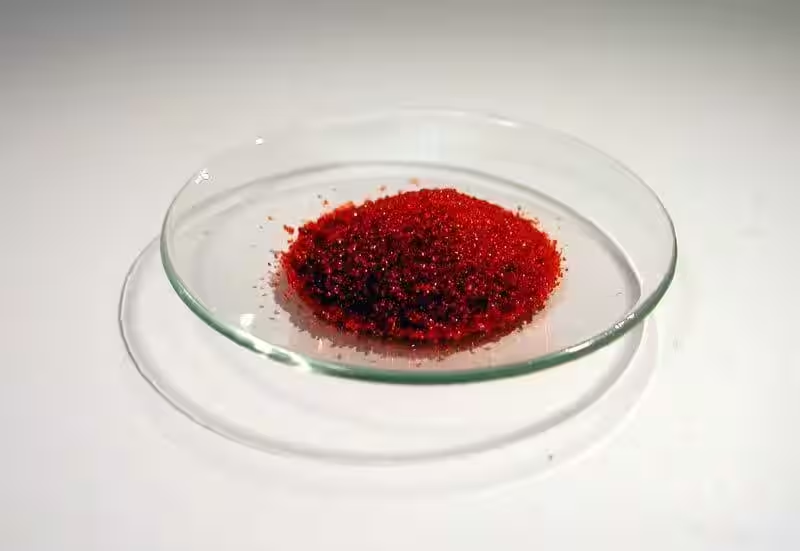
Modern industrial production is far more refined and efficient. It typically involves a reaction between hydrogen cyanide, iron(II) chloride, and calcium hydroxide, followed by a treatment with potassium salts. This process is optimized for yield and purity, reflecting the advancements in chemical engineering. The resulting product is a lemon-yellow monoclinic crystalline compound.
Key Chemical Reactions of Potassium Ferrocyanide
Potassium ferrocyanide is not just a passive compound; it participates in several significant chemical reactions. One important reaction is its oxidation with chlorine gas, which yields potassium ferricyanide (K₃[Fe(CN)₆]). This conversion is practically useful for removing potassium ferrocyanide from solutions where its presence is unwanted.
Another notable reaction is its interaction with ferric salts, such as iron(III) chloride. This reaction produces Prussian blue (Fe₄[Fe(CN)₆]₃), a deep blue pigment historically significant for creating vibrant colors in paintings and blueprints. The intense color of Prussian blue is directly attributable to the chemical reaction between potassium ferrocyanide and iron(III) salts.
The Diverse Applications of Potassium Ferrocyanide
The versatility of potassium ferrocyanide is evident in its many uses across diverse industries and scientific fields. It serves as an anticaking agent in both table salt and road salt, preventing clumping and maintaining free-flowing properties. This is a critical application, ensuring the consistent performance of these essential commodities. The mechanism involves preventing moisture absorption.
Beyond its role as an anticaking agent, potassium ferrocyanide finds use in metallurgy. It is employed in the purification of tin and in the separation of copper-molybdenum ores. These processes leverage its ability to selectively interact with specific metal ions. This selective interaction is a crucial aspect of its effectiveness in these industrial applications.
Potassium Ferrocyanide in Food and Laboratory Settings
The food industry also utilizes potassium ferrocyanide, though its use is strictly regulated in regions like the EU. It plays a role in winemaking and citric acid production, though the specific mechanisms and roles are complex and require further investigation. In this capacity, it acts as a processing aid.
In laboratories, potassium ferrocyanide serves a variety of purposes. It's used to determine the concentration of potassium permanganate solutions via redox titration. It can also act as a buffer in certain enzyme assays, such as those involving beta-galactosidase. Furthermore, its ability to form Prussian blue upon reaction with iron makes it a valuable reagent for identifying the presence of iron ions.
Other Specialized Applications of Potassium Ferrocyanide
Another less common yet significant application lies in agriculture. Potassium ferrocyanide can be used as a component of specialized fertilizers, offering a source of potassium and other nutrients to plants. The exact mechanisms of the plant uptake and utilization of potassium remain a topic of ongoing research.
Finally, potassium ferrocyanide is a component of Augendre's powder, a high-energy blasting agent. This application highlights the compound's unique chemical properties and potential for use in specialized industrial processes. This application demonstrates a far more intense use of the compound’s properties.
Structural Aspects and Toxicity of Potassium Ferrocyanide
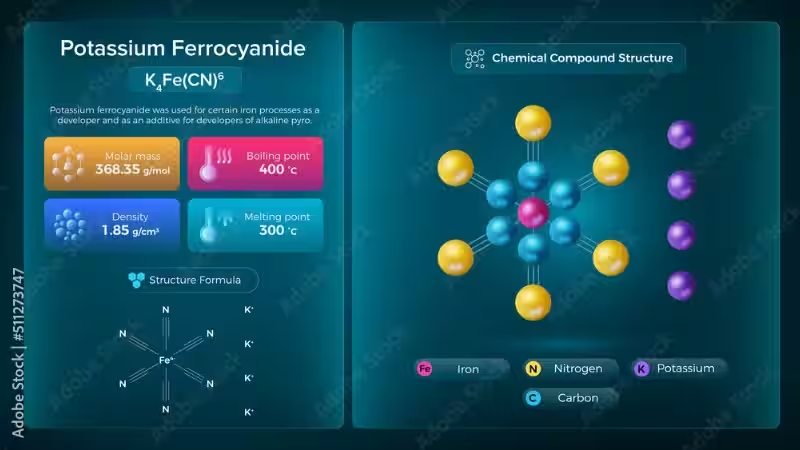
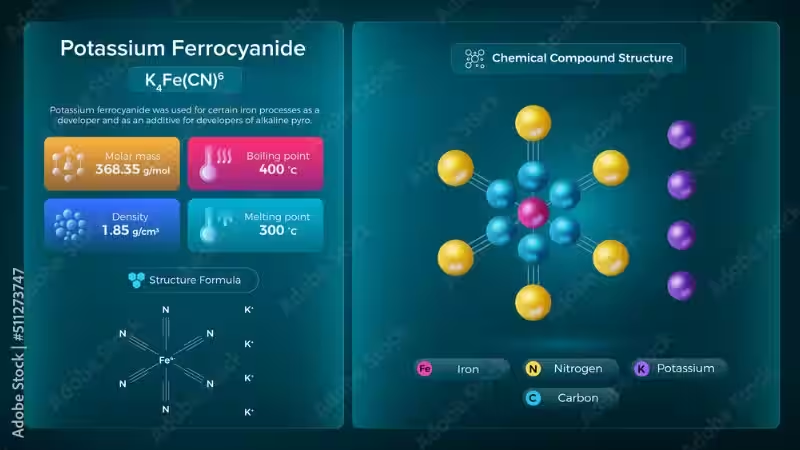
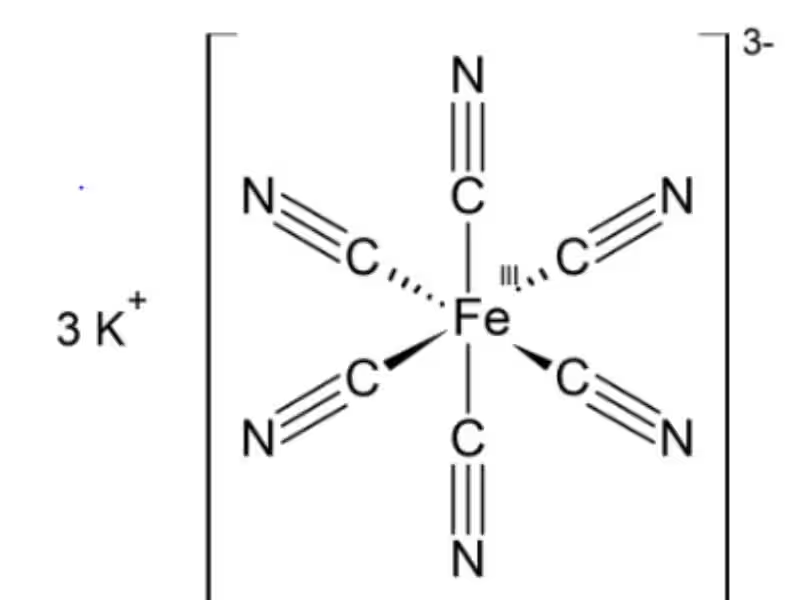
Solid potassium ferrocyanide possesses a complex polymeric structure characterized by octahedral [Fe(CN)₆]⁴⁻ centers cross-linked with K⁺ ions. These K⁺---NC linkages are crucial for maintaining the solid-state structure. However, these linkages break upon dissolution in water, resulting in the dissociation of the complex into its constituent ions. This characteristic influences its behavior and reactivity in aqueous solutions.
In terms of toxicity, studies on rats have indicated relatively low toxicity, with an LD₅₀ (lethal dose for 50% of the population) ranging from 1.6 to 3.2 g/kg, primarily affecting the kidneys. While considered safe in its approved applications, it is crucial to remember that appropriate handling procedures are essential. Proper safety measures should always be followed when working with any chemical compound, including potassium ferrocyanide. Importantly, potassium ferrocyanide should never be confused with its related compound, potassium ferricyanide, which exhibits different properties and toxicity levels.
Conclusion: A Versatile and Relatively Safe Compound
Potassium ferrocyanide, despite its somewhat intimidating name, is a versatile compound with a wide array of applications. From its use as an anticaking agent to its role in laboratory assays and industrial processes, this compound has played and continues to play a significant role in various sectors. Understanding its properties, applications, and safety considerations is crucial for anyone working with or researching this remarkable substance. While generally considered safe when used appropriately, responsible handling and adherence to safety guidelines remain paramount.
Frequently Asked Questions about Potassium Ferrocyanide
What is potassium ferrocyanide?
Potassium ferrocyanide, also known as potassium hexacyanoferrate(II) trihydrate (K₄[Fe(CN)₆]·3H₂O), is a lemon-yellow crystalline compound. It's a complex coordination compound containing iron(II) and cyanide ions.
What is its history?
First synthesized in 1752 by Pierre Joseph Macquer, early production methods involved reactions with Prussian blue or using organic materials, iron, and potassium carbonate. Modern industrial production uses hydrogen cyanide, iron(II) chloride, and calcium hydroxide, followed by potassium salt treatment.
How is potassium ferrocyanide produced industrially?
Modern industrial synthesis involves reacting hydrogen cyanide, iron(II) chloride, and calcium hydroxide. This intermediate product is then treated with potassium salts to yield potassium ferrocyanide.
What are some key chemical reactions of potassium ferrocyanide?
Oxidation with chlorine gas produces potassium ferricyanide. Reaction with ferric salts (like iron(III) chloride) forms Prussian blue, a deep blue pigment. Treatment with nitric acid, followed by neutralization, yields sodium nitroprusside. Historically, it was a precursor to potassium cyanide before the advent of the Castner process.
What are the applications of potassium ferrocyanide?
Its uses are diverse: an anticaking agent in salt, in tin purification and ore separation, in wine and citric acid production, as a laboratory reagent (e.g., in determining potassium permanganate concentration, as a buffer in assays, and as an iron identification reagent), as a plant fertilizer, and a component in some explosives (Augendre's powder). In the EU, its food additive use is strictly regulated.
What is the structure of potassium ferrocyanide?
In the solid state, it has a complex polymeric structure with octahedral [Fe(CN)₆]⁴⁻ units cross-linked by K⁺ ions. These K⁺---NC linkages break when dissolved in water.
Is potassium ferrocyanide toxic?
Toxicity studies in rats show relatively low toxicity (LD₅₀ of 1.6–3.2 g/kg), primarily affecting the kidneys. While generally considered safe in approved applications, proper handling and usage guidelines are crucial.
How does potassium ferrocyanide differ from potassium ferricyanide?
Potassium ferricyanide (K₃[Fe(CN)₆]) is the oxidized form of potassium ferrocyanide. They have different oxidation states of iron (Fe²⁺ in ferrocyanide, Fe³⁺ in ferricyanide) and exhibit different chemical properties and reactivities.
What precautions should be taken when handling potassium ferrocyanide?
While relatively low in toxicity, standard laboratory safety practices should always be followed. Avoid ingestion and inhalation of dust. Wear appropriate personal protective equipment (PPE), including gloves and eye protection.
What is potassium ferrocyanide's role as an anticaking agent?
It prevents clumping in table salt and road salt by reducing moisture absorption.
What is its role in the wine industry?
It can be involved in specific winemaking processes, though the exact nature and extent of its use are not widely publicized and likely depend on the specific methods employed by different winemakers.
Can potassium ferrocyanide be used in home experiments?
Yes, but it should be handled carefully, following safety guidelines. Small quantities are available for educational and experimental purposes from scientific supply companies.
Is potassium ferrocyanide a food additive?
Yes, but its use is regulated in many countries, including the EU. It functions primarily as an anticaking agent.
Is potassium ferrocyanide flammable?
No, potassium ferrocyanide is not considered flammable.
Does potassium ferrocyanide have radioactive properties?
No, potassium ferrocyanide does not possess any radioactive properties.
Where can I buy potassium ferrocyanide?
It can be purchased from scientific supply companies, typically in small quantities for experimental or educational use.
What is the difference between sodium ferrocyanide and potassium ferrocyanide?
They are chemically similar, differing primarily in the alkali metal cation (sodium vs. potassium). Potassium ferrocyanide may be used as a substitute for Sodium ferrocyanide in some applications.
What is the purpose of the 3H2O in the chemical formula K₄[Fe(CN)₆]·3H₂O?
The 3H₂O indicates three water molecules are bound per formula unit of potassium ferrocyanide, making it a trihydrate.
What should I do if I accidentally ingest potassium ferrocyanide?
Seek immediate medical attention. Provide information about the substance ingested to medical professionals.
Is potassium ferrocyanide environmentally friendly?
While generally considered non-toxic at typical usage levels, proper disposal according to local regulations is important to minimize its environmental impact.


![Understanding K₃[Fe(CN)₆]: Properties, Applications, and Safety of Potassium Ferricyanide](https://laboraprevencion.com/en/wp-content/uploads/k3-fe-cn-6.avif "Understanding K₃[Fe(CN)₆]: Properties, Applications, and Safety of Potassium Ferricyanide")