Understanding Your D-Limonene SDS: A Comprehensive Guide
Understanding Your D-Limonene SDS: A Comprehensive Guide
Understanding the safety data sheet (SDS) for any chemical is crucial, especially for those used in various industries. This is particularly true for d-limonene, a naturally occurring compound with widespread applications. This article aims to demystify the d-limonene SDS, explaining its key components and guiding you through the information vital for safe handling and use. Navigating the sometimes complex language of an SDS can be daunting, but we'll break it down into easily digestible sections.
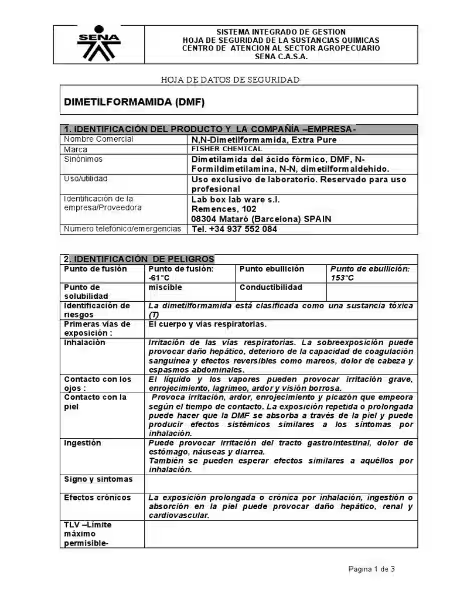
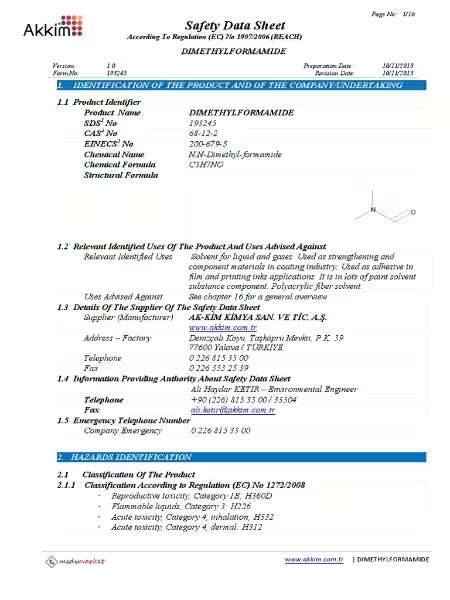
The d-limonene SDS, or Safety Data Sheet, is a document that provides comprehensive information on the hazards associated with handling, storing, and using d-limonene. It's a legally mandated document designed to ensure the safety of workers and the environment. Every supplier of d-limonene is required to provide an SDS with each shipment. This isn't just a formality; it's a vital tool for responsible chemical management.
Think of the SDS as your essential guide to working safely with d-limonene. It's not a simple instruction manual, but rather a detailed compilation of data needed to make informed decisions about safety protocols and risk mitigation.
Key Sections of a D-Limonene SDS & What They Mean
An SDS is typically organized into 16 sections, although the exact formatting might vary slightly between suppliers. Let's explore some of the most critical sections relevant to d-limonene:
Section 1: Identification
This section provides basic information about the product, including its chemical name (d-limonene), synonyms (like (+)-limonene or R-(+)-limonene), manufacturer's information, and emergency contact details. This is your go-to section for quick identification and crucial contact information in case of an accident or spill.
It will also include the product's CAS number (Chemical Abstracts Service Registry Number), a unique identifier for the substance in chemical databases. Knowing this number allows for quick cross-referencing of safety information from various sources.
Section 2: Hazard Identification
This section outlines the hazards associated with d-limonene. This is arguably the most crucial section since it directly addresses the potential risks. You'll find information on potential health hazards (like skin irritation or respiratory sensitization), physical hazards (flammability), and environmental hazards.
Pay close attention to the signal words used (danger or warning) and the hazard statements, which clearly describe the specific risks. For example, d-limonene is flammable, and its vapors can cause eye and respiratory irritation; this will be clearly noted.
Section 3: Composition/Information on Ingredients
This section details the precise chemical composition of the d-limonene product. While pure d-limonene is often the primary ingredient, other components might be present, such as stabilizers or solvents. Knowing the exact composition is vital for assessing potential interactions and hazards.
This section is useful for understanding the purity level of the d-limonene, and any potential additives which could impact its handling and applications. Understanding these additives is key to selecting the proper PPE (personal protective equipment).
Section 4: First-Aid Measures
This section provides guidance on what to do in case of accidental exposure to d-limonene. It outlines procedures for skin contact, eye contact, inhalation, and ingestion. Keep in mind that this section provides first aid advice, not medical treatment. Always seek professional medical attention if necessary.
Immediate action is crucial in any accident involving chemical exposure. Familiarize yourself with the recommended first aid steps before handling d-limonene to ensure you know what to do in an emergency.
Section 8: Exposure Controls/Personal Protection
This section details the necessary precautions to minimize exposure to d-limonene. It specifies appropriate engineering controls (like ventilation), work practices (like using proper equipment), and personal protective equipment (PPE). This will typically include items such as gloves, eye protection, and respiratory protection, depending on the concentration and application of d-limonene.
Understanding this section is critical for safe handling of d-limonene in any setting. Failure to use appropriate PPE can result in serious health consequences.
Section 9: Physical and Chemical Properties
This section provides physical and chemical properties of d-limonene, such as its appearance, odor, boiling point, melting point, and flammability. This information is important for understanding the substance's behavior and selecting appropriate storage and handling methods. For example, knowing its flash point is critical for fire safety.
This is essential for risk assessment and proper storage, ensuring compatibility with other materials. Understanding the physical properties helps ensure the correct handling and storage procedure is followed.
Section 10: Stability and Reactivity
This section describes the stability of d-limonene under various conditions and its potential reactivity with other substances. It outlines conditions that should be avoided (like high temperatures or incompatible materials) and potential hazardous decomposition products.
This section details important information regarding potential chemical reactions that could occur under specific conditions, allowing for proactive safety measures.
Section 11: Toxicological Information
This section provides detailed information about the potential health effects of d-limonene exposure, including acute and chronic effects. It will frequently reference the LD50 (lethal dose 50%) and other toxicity data. This is critical for understanding the potential health risks associated with handling d-limonene.
Careful study of this section is vital for implementing appropriate safety measures and understanding the potential short-term and long-term effects of exposure.
Section 12: Ecological Information
This section discusses the environmental effects of d-limonene, including its potential impact on aquatic life and other organisms. Understanding this information is crucial for responsible disposal and minimizing environmental contamination.
This is essential for environmentally conscious practices and helps to reduce the ecological footprint of using d-limonene.
Section 13: Disposal Considerations
This section provides guidance on the proper disposal of d-limonene and its containers. It will often specify permitted methods and any special precautions that must be taken. Compliance with local regulations is highly important in this area.
Improper disposal can lead to environmental contamination, thus following the recommendations in this section is crucial.
Section 15: Regulatory Information
This section lists relevant regulations and labeling requirements for d-limonene. This information ensures compliance with local, state, and federal laws and regulations.
Staying compliant with regulatory mandates reduces legal risks and ensures environmental responsibility.
The d-limonene SDS is not just a document; it's a comprehensive safety manual. By understanding the information contained within it, you can significantly reduce the risks associated with handling and using this versatile compound. Always consult the SDS provided by your supplier and ensure that all safety procedures are diligently followed. Remember, safety is paramount, and the information provided in the SDS is crucial for protecting yourself, your colleagues, and the environment.
Since I don't have access to a specific d-limonene SDS (Safety Data Sheet), I cannot provide answers based on a real document. However, I can create a plausible FAQ section based on general knowledge of d-limonene and typical SDS content. Remember, this information is for illustrative purposes only and should not be used as a substitute for consulting the actual SDS for the specific d-limonene product you are using. Always refer to the manufacturer's SDS for accurate and up-to-date safety information.
d-Limonene SDS: Frequently Asked Questions
What are the main hazards associated with d-limonene?
D-limonene is generally considered relatively safe, but like any chemical, it presents certain hazards. The primary concern is its flammability. It's also a skin and eye irritant, and may cause respiratory irritation at high concentrations. Some individuals may experience allergic reactions. Specific hazards can vary depending on concentration and formulation. Always consult the SDS for the specific product.
What are the recommended personal protective equipment (PPE) when handling d-limonene?
Appropriate PPE depends on the situation and concentration of d-limonene. As a minimum, safety glasses or goggles and gloves should be worn. A respirator may be necessary for high concentrations or prolonged exposure. The specific PPE requirements will be detailed in the SDS.
What is the first aid treatment for d-limonene exposure?
In case of skin contact, wash the affected area thoroughly with soap and water. For eye contact, flush with plenty of water for at least 15 minutes. If inhaled, move the person to fresh air. If ingested, do not induce vomiting. Seek immediate medical attention in all cases of significant exposure. The SDS will provide more detailed first aid instructions.
What are the storage and handling recommendations for d-limonene?
D-limonene should be stored in a cool, dry, well-ventilated area, away from ignition sources and incompatible materials. Containers should be kept tightly closed. Specific storage recommendations will be outlined in the SDS.
What are the environmental hazards of d-limonene?
While generally considered biodegradable, d-limonene can still have environmental impacts, particularly if released in large quantities into waterways or soil. Proper disposal methods are crucial. The SDS will provide guidance on environmentally responsible handling and disposal.
What is the flash point of d-limonene?
The flash point of d-limonene varies depending on the purity and formulation. This critical information, indicating the temperature at which it can ignite, is always clearly stated in the SDS.
Where can I find the complete SDS for d-limonene?
The SDS should be readily available from the supplier or manufacturer of the d-limonene product you are using. Many manufacturers make their SDSs available online.
Is d-limonene toxic?
The toxicity of d-limonene depends on the route of exposure, the duration of exposure, and the concentration. While generally considered relatively low in toxicity, high concentrations or prolonged exposure can cause adverse health effects. The SDS provides detailed information on toxicity.
This FAQ section provides a general overview. Always consult the specific SDS for the d-limonene product you are handling for complete and accurate safety information. This information is for educational purposes and does not constitute professional safety advice.