Understanding Triethyl Citrate: A Versatile Compound Across Industries
Understanding Triethyl Citrate: A Versatile Compound Across Industries
Triethyl citrate (TEC) is a fascinating chemical compound with a surprisingly wide range of applications. Its seemingly simple structure belies its versatility, making it a key ingredient in various industries, from food production to pharmaceuticals and plastics manufacturing. This article delves into the properties of triethyl citrate and explores its diverse uses.
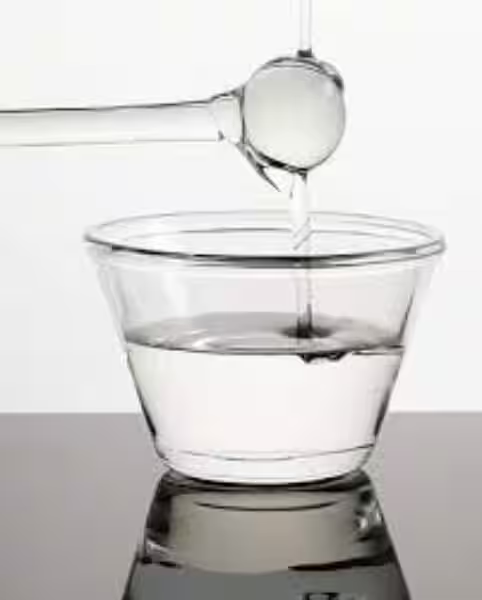
Triethyl citrate is a colorless, odorless liquid ester derived from citric acid. This seemingly simple description belies the complex interplay of properties that make TEC so useful. Its structure, a triester of citric acid with three ethyl groups, grants it several key characteristics.
Firstly, TEC possesses excellent emulsifying and stabilizing properties. This means it can help to blend otherwise immiscible substances, such as oil and water, creating stable mixtures. This is crucial in many food applications, as we'll explore further. The ester bonds contribute to its remarkable stability, allowing it to maintain its effectiveness even under varying conditions of temperature and pressure.
Secondly, and closely related to its emulsifying capabilities, TEC acts as an effective plasticizer. Plasticizers increase the flexibility and workability of materials, particularly polymers like PVC. This property is highly valued in the plastics industry, where it allows for the creation of more pliable and durable products. The ability to modify the physical properties of plastics in this way makes TEC indispensable in various manufacturing processes.
Triethyl Citrate in the Food Industry
In the food industry, triethyl citrate holds the European Union food additive designation E1505. Its role is multifaceted, leveraging its emulsifying, stabilizing, and solvent properties.
TEC is frequently used in confectionery products to improve texture and prevent stickiness. Its ability to bind water molecules contributes to the desired consistency and prevents crystallization. Beyond confectionery, TEC finds application in other food products where emulsion stability is crucial, such as dressings and sauces. The prevention of phase separation, where the components of a mixture separate, is a key advantage, ensuring a smooth and uniform product.
Its use extends to the stabilization of whipped egg whites, maintaining their airy texture and preventing collapse. This capability significantly enhances the quality and consistency of various baked goods and desserts. The safety of triethyl citrate, generally recognized as safe (GRAS) by regulatory bodies, makes it a popular and reliable choice for food manufacturers.
Applications in Pharmaceuticals and Cosmetics
Beyond the food industry, triethyl citrate finds significant applications in the pharmaceutical and cosmetic sectors. In pharmaceuticals, TEC acts as an excipient—an inactive ingredient that improves the formulation and handling of medications.
It can be used to improve the flow of powders, making it easier to process and fill capsules. Further, TEC enhances the stability of various drug formulations, preventing degradation and ensuring the medication's effectiveness. In some cases, it can even aid in controlled drug release, ensuring a consistent therapeutic effect. Its biocompatibility and generally low toxicity make it a preferred choice for many pharmaceutical applications.
In cosmetics, TEC often functions as a plasticizer, improving the texture and feel of films and coatings. It contributes to the smoothness and pliability of various skincare and personal care products. Its moisturizing properties further enhance its suitability for applications where skin hydration is a key concern.
Triethyl Citrate in Plastics and Beyond
The plastics industry is another significant user of triethyl citrate. As a plasticizer, TEC improves the flexibility, durability, and processability of various plastics, particularly polyvinyl chloride (PVC). By incorporating TEC, manufacturers can adjust the hardness and flexibility of the plastic to suit specific applications.
This enhances the range of potential uses for the plastic, from flexible films to more rigid components. The ability to modify the plastic's properties without compromising its overall strength or durability makes TEC a valuable asset in the manufacturing process. Its non-toxicity also makes it a safer alternative to some more hazardous plasticizers.
More recently, triethyl citrate has emerged as a pseudo-emulsifier in e-cigarette liquids. Unlike traditional emulsifiers like lecithin, TEC possesses the unique ability to vaporize, making it suitable for this application. Its use in e-liquids is a relatively recent development, and ongoing research is exploring its long-term implications.
The safety profile of triethyl citrate is generally favorable. It is generally recognized as safe (GRAS) for food applications and exhibits low toxicity in other uses. This makes it a preferred choice in many industries where safety and biocompatibility are paramount.
Furthermore, triethyl citrate is biodegradable, reducing its environmental impact compared to some alternative plasticizers. Its relatively benign nature makes it a more sustainable option, aligning with the growing emphasis on environmentally friendly manufacturing processes. However, responsible usage and disposal practices remain crucial to minimize any potential environmental impact.
Conclusion: The Multifaceted Nature of Triethyl Citrate
Triethyl citrate's versatility arises from its unique combination of properties – its emulsifying, stabilizing, plasticizing, and solvent capabilities. This, combined with its generally recognized safety and biodegradability, makes it a valuable component in a wide range of industries. From enhancing the texture of food products to improving the properties of plastics and playing a role in pharmaceutical formulations, triethyl citrate’s contributions are multifaceted and significant. As research continues, new applications for this remarkable compound are likely to emerge.
Frequently Asked Questions about Triethyl Citrate (TEC)
What is Triethyl Citrate (TEC)?
Triethyl citrate (TEC) is a colorless, odorless liquid ester derived from citric acid. It's characterized by its versatility, finding applications across various industries due to its emulsifying, stabilizing, and plasticizing properties. Its generally recognized as safe (GRAS) status makes it suitable for use in food and other applications.
What are the primary uses of Triethyl Citrate?
TEC has diverse applications:
Food Industry: As an emulsifier and stabilizer, it enhances the texture and stability of foams (like in whipped egg whites) and prevents phase separation in various food products.
Pharmaceutical Industry: It serves as a coating agent for pharmaceuticals, improving controlled release and stability of medications.
Plastics Industry: It acts as a plasticizer, improving the flexibility, durability, and processability of plastics, particularly PVC.
E-cigarette Liquids: More recently, it's used as a pseudo-emulsifier, its ability to vaporize being a key advantage.
Yes, TEC is generally recognized as safe (GRAS) by regulatory bodies for use in food and many other applications. Its biocompatibility contributes to its safety profile. However, like any substance, it should be used according to recommended guidelines and concentrations.
How does Triethyl Citrate act as a plasticizer?
TEC's molecular structure allows it to interact with polymers (like PVC), increasing their flexibility and reducing their brittleness. It essentially lubricates the polymer chains, making the plastic more pliable and easier to process.
What are the environmental implications of using Triethyl Citrate?
TEC is considered relatively environmentally benign due to its biodegradability and low toxicity. This makes it a more sustainable alternative to some other plasticizers with potentially harmful environmental impacts.
What is the difference between Triethyl Citrate and other emulsifiers?
While many emulsifiers are used in food, TEC's ability to vaporize distinguishes it. This is particularly relevant in its application in e-cigarette liquids, where other emulsifiers (like lecithin) wouldn't be suitable.
Is Triethyl Citrate suitable for use in cosmetics?
Yes, its biocompatibility and plasticizing properties make it suitable for use in certain cosmetic formulations, potentially improving texture and feel.
Where can I find more information about the safety of Triethyl Citrate?
You can consult safety data sheets (SDS) provided by manufacturers and regulatory agency databases for detailed information regarding its safety profile and usage guidelines. These resources often include toxicity data and recommended handling procedures.
Are there any potential long-term health effects associated with Triethyl Citrate?
Extensive research supports TEC's safety profile in its approved applications. However, ongoing research, especially regarding its use in e-cigarettes, continues to explore potential long-term effects.
Is Triethyl Citrate soluble in water?
Triethyl citrate exhibits some water solubility, although the exact solubility depends on temperature and other factors. Its solubility characteristics contribute to its use in various applications requiring interaction with both aqueous and non-aqueous systems.