Understanding the SDS of Sodium Carbonate: A Comprehensive Guide
Understanding the SDS of Sodium Carbonate: A Comprehensive Guide
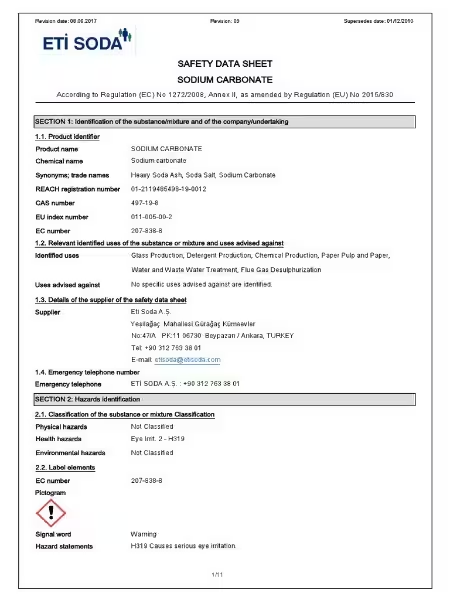
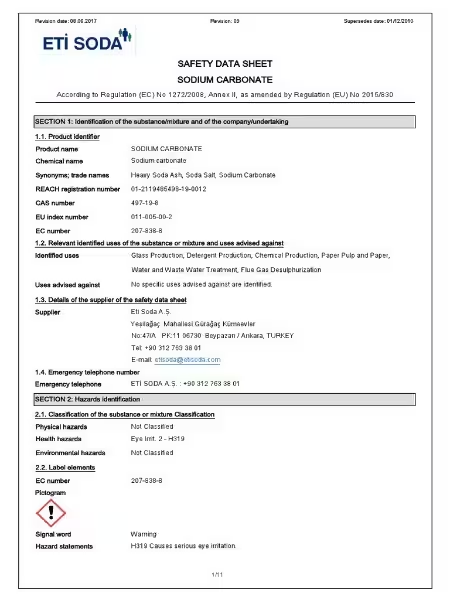
Sodium carbonate, also known as soda ash, is a widely used chemical with various applications. Understanding its safety profile is crucial for safe handling and responsible disposal. This article aims to demystify the Safety Data Sheet (SDS) of sodium carbonate, providing clear and accessible information on its hazards, handling precautions, and environmental considerations.
The SDS of sodium carbonate classifies it as posing certain health hazards. While generally considered a low-hazard chemical in its solid form, it's essential to understand its potential risks.
Ingestion is a primary concern, with the SDS categorizing sodium carbonate as acutely toxic (Category 5). This doesn’t mean it’s highly lethal, but ingestion can cause adverse effects and may require medical attention. Symptoms might include nausea and vomiting. Always seek medical advice if you ingest sodium carbonate.
Skin and eye contact are other potential hazards. The SDS lists sodium carbonate as causing mild skin irritation (Category 3) and serious eye irritation (Category 2A). Immediate and thorough rinsing with copious amounts of water is crucial in case of contact. Persistent irritation necessitates seeking medical attention. Protective gear is therefore essential when handling sodium carbonate.
Handling and Storage of Sodium Carbonate
Safe handling practices are paramount when working with sodium carbonate. The SDS emphasizes the importance of using appropriate personal protective equipment (PPE). This includes gloves, protective clothing, and eye protection to minimize the risk of skin and eye irritation.
Proper storage is equally crucial. The SDS recommends storing sodium carbonate in a tightly closed container in a cool, dry place. Ideally, it should be stored in a designated area for inorganic compounds, such as hydroxides, oxides, silicates, and carbonates. This prevents accidental mixing with incompatible substances.
Avoiding Incompatible Substances
The SDS highlights the importance of avoiding contact between sodium carbonate and certain materials. A vigorous reaction occurs when sodium carbonate comes into contact with fluorine. Reactions with acids are also potentially hazardous. Therefore, storing sodium carbonate away from these substances is critical for safety. Aluminum is another substance to avoid contact with due to potential reactivity.
Physical and Chemical Properties Detailed in the SDS
The SDS provides detailed information on the physical and chemical properties of sodium carbonate. This information is essential for safe handling and understanding its behavior under different conditions.
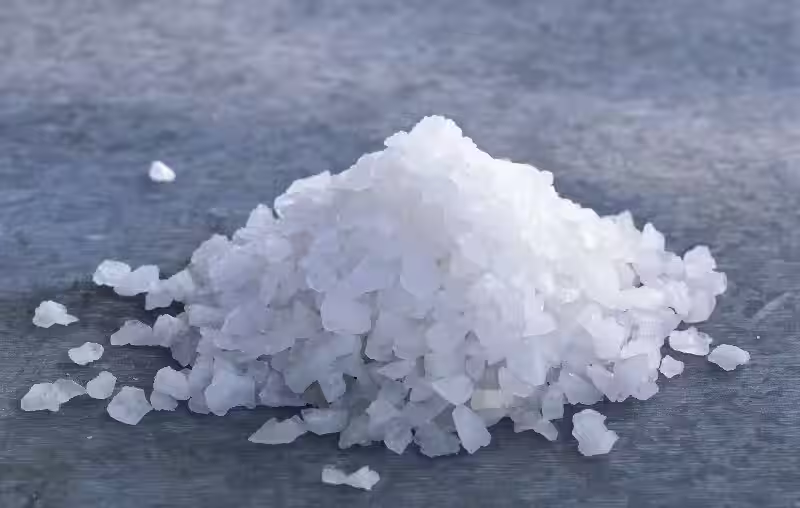
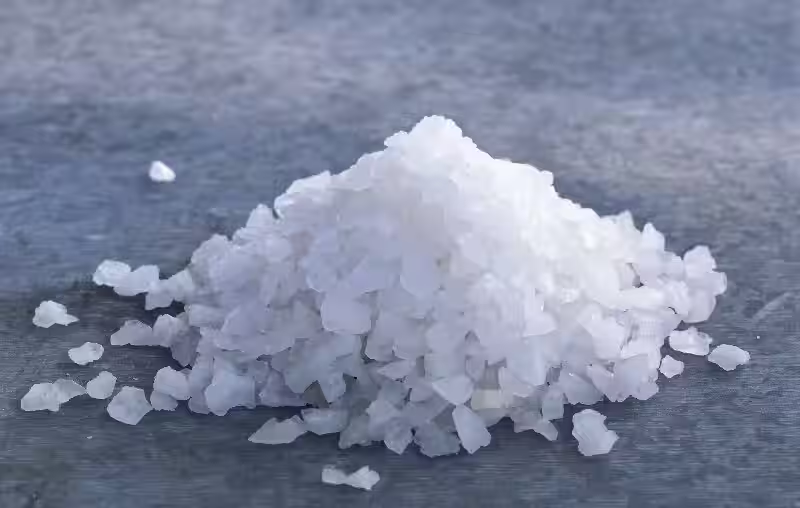
The SDS describes its appearance as white crystals or powder, highlighting its solubility in water and glycerol, but its insolubility in alcohol. The melting point (856°C) and specific gravity (2.54) are also listed, providing crucial data for various applications and handling procedures.
Knowing these properties is significant since they influence storage, transportation and reaction possibilities.
Toxicological and Ecotoxicological Data
The SDS includes toxicological data to help assess the potential health effects of sodium carbonate. An oral rat LD50 (lethal dose for 50% of the population) of 4090 mg/kg is provided. This indicates a relatively low acute toxicity. Further, an inhalation rat LC50 (lethal concentration for 50% of the population) of 2300 mg/m³ over 2 hours is also indicated, showing a relatively low inhalation toxicity.
Despite being categorized as an irritant, the SDS notes a lack of comprehensive data on chronic effects. Furthermore, investigations are underway to assess its potential mutagenic properties. The SDS also presents ecotoxicological data, including LC50 and EC50 values for fish and Daphnia, respectively, providing insights into its environmental impact.
Environmental Considerations
Responsible disposal of sodium carbonate is vital to minimize its environmental impact. The SDS directs users to consult local, state, and federal regulations regarding waste disposal (Section 13). Proper disposal methods might include collecting the spilled solid in sealed containers and disposing of it according to the regulations. The environmental data provided—LC50 and EC50 values—highlight the need for responsible handling and disposal to protect aquatic life. Understanding the potential consequences of improper disposal is key to ensuring environmental protection.
The SDS explicitly states that the provided information is for guidance only. Flinn Scientific, Inc., the provider of this specific SDS, disclaims liability for any damages related to its use. Users are urged to independently verify the information and comply with all applicable regulations.
Further details on laboratory chemical handling are suggested in the Flinn Science Catalog/Reference Manual. This emphasizes the necessity of seeking further information from credible sources and staying updated on best practices. The SDS also clarifies that sodium carbonate is not regulated for transport under the commonly used transport regulations.
In summary, thorough understanding of the SDS of sodium carbonate is integral to safe and responsible handling, storage, and disposal. This article has aimed to clarify the key aspects of the SDS, emphasizing the importance of adhering to safety protocols and environmental regulations. Always refer to the complete SDS provided by your supplier for the most up-to-date and comprehensive information.
What are the main hazards associated with sodium carbonate (soda ash)?
Sodium carbonate is classified as posing acute toxicity (Category 5) if ingested, causing mild skin irritation (Category 3), and serious eye irritation (Category 2A). Ingestion may require medical attention. Contact with eyes or skin necessitates immediate rinsing with copious amounts of water, and seeking medical advice if irritation persists. Heating sodium carbonate can produce toxic fumes. While not flammable, it reacts vigorously with fluorine and acids, and should be kept away from aluminum.
What are the first aid measures in case of accidental exposure?
Ingestion: Seek immediate medical attention.
Skin Contact: Rinse affected area immediately with plenty of water. Seek medical advice if irritation persists.
Eye Contact: Flush eyes immediately with plenty of water for at least 15 minutes, lifting upper and lower eyelids occasionally. Seek immediate medical attention.
How should sodium carbonate be handled and stored?
Handle sodium carbonate wearing appropriate personal protective equipment (PPE), including gloves, eye protection, and protective clothing. Store in a tightly closed container in a cool, dry place. Ideally, store it in a designated area for inorganic compounds like hydroxides, oxides, silicates, and carbonates. Avoid contact with acids and aluminum. Ensure adequate ventilation when handling.
Spills should be cleaned up using appropriate ventilation. Collect the spilled solid in sealed containers for proper disposal. Always comply with all local, state, and federal regulations regarding disposal (refer to Section 13 of the full SDS).
What are the physical properties of sodium carbonate?
Sodium carbonate appears as white crystals or powder. It is soluble in water and glycerol, but insoluble in alcohol. Its melting point is 856°C, and its specific gravity is 2.54.
What toxicological information is available for sodium carbonate?
The oral rat LD50 is 4090 mg/kg, and the inhalation rat LC50 is 2300 mg/m³ over 2 hours. While primarily an irritant, long-term effects are not fully specified, and it is under investigation as a potential mutagen. Ecotoxicity data (LC50 and EC50 values for fish and Daphnia) is also available in the full SDS.
What is the regulatory status of sodium carbonate?
Transport regulations for sodium carbonate are not specified in this summary. However, proper disposal procedures must adhere to all local, state, and federal regulations.
Is this SDS complete and accurate?
This SDS is for guidance only and is based on information believed to be reliable but without guarantee of accuracy or completeness. Users are urged to independently verify the information and comply with all applicable regulations. Flinn Scientific, Inc. disclaims liability for any damages related to its use. Consult the full SDS and other relevant resources for complete information.
Where can I find more information?
For more detailed information regarding laboratory chemical handling, consult the Flinn Science Catalog/Reference Manual. Always refer to the complete Safety Data Sheet (SDS) for comprehensive information and comply with all applicable regulations.