Understanding Arsenite Sodium: Uses, Risks, and Safety
Understanding Arsenite Sodium: Uses, Risks, and Safety
Arsenite sodium, a highly toxic inorganic compound, demands careful consideration due to its inherent dangers and surprisingly diverse applications. This article will explore the properties, uses, risks, and safety precautions associated with this substance.
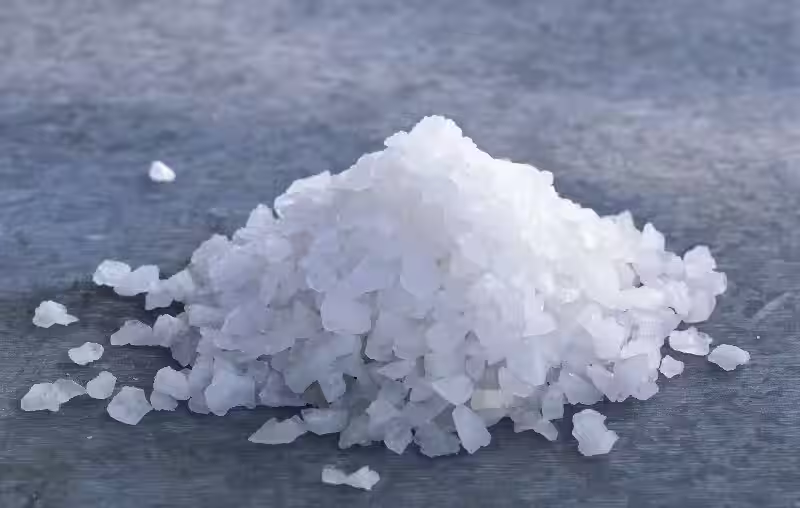
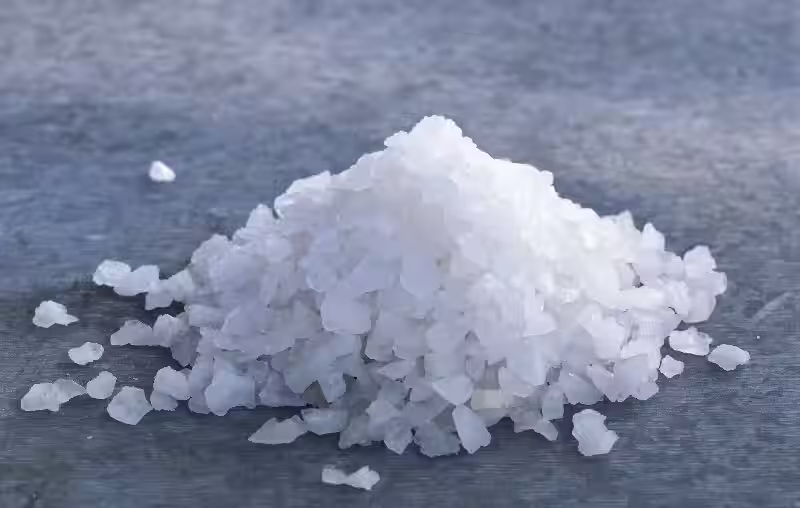
Arsenite sodium primarily refers to sodium meta-arsenite (NaAsO₂), a colorless solid often appearing as a powder or glassy mass. Its structure is polymeric, represented by the formula [AsO₂]ₙ⁻ⁿ, indicating a chain-like arrangement of arsenite units. The compound is typically produced through the reaction of arsenic trioxide with either sodium carbonate or sodium hydroxide.
Another related form is sodium ortho-arsenite (Na₃AsO₃), which possesses distinct chemical properties yet often coexists with the meta-arsenite form. Understanding the chemical distinctions between these forms is crucial for accurate handling and application, but for the average reader, knowing they are both highly toxic compounds is a more important takeaway.
The Significant Toxicity of Arsenite Sodium
The most critical aspect of arsenite sodium is its extreme toxicity. Exposure can occur through various routes, including inhalation, ingestion, and skin absorption. The consequences of exposure range widely in severity.
Mild effects might involve skin irritation (itching, burning, rash, or pigment loss) and gastrointestinal distress (loss of appetite, metallic taste, nausea, vomiting, and diarrhea). However, severe exposure can lead to far more serious consequences, such as neurological damage, weakness, poor coordination, paralysis, and even death. Importantly, arsenite sodium is classified as both carcinogenic (cancer-causing) and teratogenic (causing birth defects), underscoring the profound health risks associated with it.
Acute and Chronic Effects
Acute arsenite sodium poisoning presents with rapid onset symptoms, potentially leading to immediate life-threatening complications. Chronic exposure, on the other hand, often manifests as more subtle symptoms that can be overlooked initially, eventually leading to long-term health problems including various cancers and developmental issues. Early recognition of symptoms is vital for effective treatment and improved outcomes.
Applications of Arsenite Sodium: A Double-Edged Sword
Despite its inherent dangers, arsenite sodium has found applications in various fields throughout history. Its use as a pesticide, though now largely restricted due to its toxicity, continues in some parts of the world.
Historically, it also featured in hide preservation, antiseptic applications, dyeing processes, and soap manufacturing. These uses highlight its reactivity and specific properties that have been exploited in industrial processes.
Arsenite Sodium in Modern Research
Beyond its traditional applications, arsenite sodium holds a place in scientific research. It acts as a potent chemical stressor in cellular studies. Scientists use it to investigate cellular responses to stress, specifically the induction of heat shock proteins and the formation of cytoplasmic stress granules. Furthermore, its reducing properties find utility in some specific organic chemistry reactions, such as the reduction of trihaloalkanes to dihaloalkanes. These applications demonstrate arsenite sodium's value as a research tool when handled within strictly controlled laboratory settings.
Given its high toxicity, rigorous safety precautions are paramount when handling arsenite sodium. The oral LD₅₀ (lethal dose for 50% of test subjects) in mice is a mere 40 mg/kg, indicating a relatively low lethal dose.
This necessitates the implementation of stringent safety measures, including:
Personal Protective Equipment (PPE): Always wear appropriate PPE, including gloves, lab coats, eye protection, and respirators.
Controlled Environment: Work in well-ventilated areas or within a fume hood to minimize inhalation risks.
Spill Procedures: Establish clear spill procedures and have appropriate materials readily available for containment and cleanup.
Proper Disposal: Dispose of arsenite sodium waste in accordance with all relevant regulations and guidelines.
Emergency Preparedness: Have a detailed emergency plan in place that includes readily available first aid measures and emergency contact information.
The carcinogenic and teratogenic properties further emphasize the need for utmost caution in its handling, storage, and disposal, and underscores the importance of following all regulatory requirements strictly.
Arsenite Sodium and Arsenic Detection: A Paradoxical Use
Surprisingly, the highly toxic arsenite sodium plays a crucial role in advancing arsenic detection technology. It serves as a crucial precursor in the synthesis of arsenic-imprinted polymers (AIPs) at the nanoscale.
These AIPs are designed to selectively bind arsenic(III) ions (As³⁺), facilitating sensitive and accurate quantification of arsenic in various samples. This innovative application highlights the paradoxical nature of arsenite sodium: its inherent toxicity is cleverly leveraged to create tools for detecting and mitigating the very threat it poses. This innovative use underscores the importance of utilizing such hazardous substances under the strictest of controlled environments and conditions. This area of research continues to evolve, offering promises of even more sensitive and practical methods for environmental monitoring and arsenic contamination control.
In conclusion, arsenite sodium is a compound with a complex duality. Its high toxicity demands extreme caution, yet its unique properties find valuable applications in research and even in the development of tools to combat arsenic contamination. Understanding its properties, risks, and appropriate handling procedures is essential for safe and responsible use.
Frequently Asked Questions about Sodium Arsenite
What is sodium arsenite?
Sodium arsenite primarily refers to the inorganic compound NaAsO₂, existing as a colorless solid in polymeric form ([AsO₂]ₙ⁻ⁿ). It's often found as a powder or glassy mass and is produced by reacting arsenic trioxide with sodium carbonate or sodium hydroxide. Another form, sodium ortho-arsenite (Na₃AsO₃), also exists, and both forms may occur together.
How toxic is sodium arsenite?
Sodium arsenite is highly toxic. Exposure, whether through inhalation or skin absorption, can cause a wide range of adverse health effects. These range from mild skin irritation (itching, burning, rash, pigment loss) and gastrointestinal distress (poor appetite, metallic taste, nausea, vomiting, diarrhea) to severe neurological damage (weakness, poor coordination, paralysis). Severe acute poisoning can be fatal. Crucially, it's a known carcinogen (cancer-causing) and teratogen (causing birth defects). The oral LD₅₀ (lethal dose for 50% of test subjects) in mice is 40 mg/kg, indicating a relatively low lethal dose.
What are the uses of sodium arsenite?
Despite its toxicity, sodium arsenite has historical and some continued uses. These include applications as a pesticide, in hide preservation, as an antiseptic, in dyeing processes, and soap manufacturing. It also finds use in scientific research as a chemical stressor in studies of cellular responses and in some organic chemistry reactions due to its reducing properties. More recently, it serves as a key precursor in the creation of arsenic-imprinted polymers (AIPs) for arsenic detection.
What safety precautions should be taken when handling sodium arsenite?
Given its high toxicity and carcinogenic/teratogenic properties, stringent safety measures are essential when handling sodium arsenite. These should include appropriate personal protective equipment (PPE), such as gloves, eye protection, and respirators. Work should be conducted in a well-ventilated area, ideally a fume hood. Careful handling to prevent accidental exposure is crucial. Proper disposal procedures must be followed to minimize environmental impact.
How is sodium arsenite used in arsenic detection?
Sodium arsenite has a crucial role in creating arsenic-imprinted polymers (AIPs) used for detecting arsenic(III) ions. It acts as a template molecule during the polymerization process, resulting in a polymer with specific binding sites for As³⁺. After removing the sodium arsenite template, the resulting AIPs selectively bind to arsenic(III), enabling the creation of highly sensitive sensors for detecting even trace amounts of arsenic in various environments.
What are the symptoms of sodium arsenite poisoning?
Symptoms can vary depending on the level and route of exposure but can include skin irritation (rash, itching, burns, pigment loss), gastrointestinal problems (nausea, vomiting, diarrhea, metallic taste), weakness, poor coordination, paralysis, and in severe cases, death.
How is sodium arsenite poisoning treated?
Treatment for sodium arsenite poisoning is complex and requires immediate medical attention. There is no single antidote, and treatment will focus on supportive care, managing symptoms, and potentially using chelation therapy to help remove arsenic from the body. The specific treatment will depend on the severity of the poisoning. Seek immediate medical attention if you suspect sodium arsenite poisoning.