Marking and Labeling: Ensuring Safe and Efficient Product Handling
Marking and Labeling: Ensuring Safe and Efficient Product Handling
Understanding the importance of proper marking and labeling is crucial for businesses involved in the transportation and handling of goods, especially hazardous materials. These processes, while distinct, are intrinsically linked and contribute significantly to safety and efficiency throughout the supply chain. This article will explore the nuances of marking and labeling, highlighting their individual roles and the critical interplay between them.
Marking involves directly applying descriptive information onto the packaging of goods. This information serves as a primary identifier, facilitating proper handling and identification throughout the logistical process. Accurate and durable marking is essential for safe transportation, especially for hazardous materials.
The information included in marking varies depending on the nature of the product and relevant regulations. It often includes:
Descriptive name: Clearly identifies the product.
Identification number: A unique identifier for tracking and inventory management.
Instructions: Handling instructions, such as "fragile" or "this side up".
Cautions: Warnings about potential hazards.
Weight specifications: Essential for safe handling and transportation.
UN numbers (for hazardous materials): Globally recognized identifiers for dangerous goods.
The application of markings must adhere to strict guidelines to ensure readability and durability. Markings should be:
Durable: Able to withstand the rigors of transportation and handling.
Legible: Easily readable, preferably in English.
Clearly visible: Prominently displayed on a contrasting background.
Unobstructed: Free from any other markings or attachments that might obscure them.
Positioned strategically: Away from any conflicting information (such as advertising).
Labeling: The Visual Guide to Safety
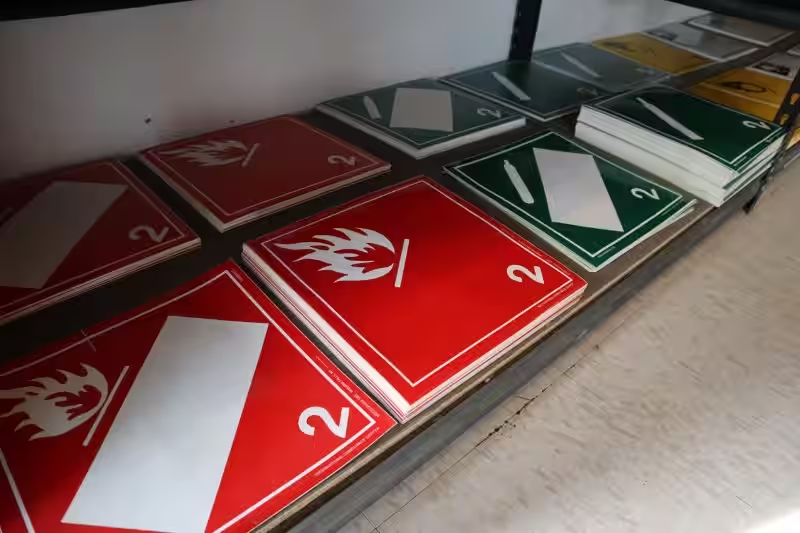
Labeling complements marking by providing a visual representation of the key characteristics and hazards associated with the product. Labels use a standardized system of colors, pictograms, and codes to immediately communicate crucial information. This visual cue system is particularly important in emergency situations, enabling rapid identification of hazardous materials.
Labels, according to regulations like 49 CFR 172.406, must meet specific requirements regarding placement and visibility. They must be:
Affixed to a visible surface: Excluding the bottom of the package, if space permits.
Positioned appropriately: Near the proper shipping name marking.
Clearly visible: Unobscured and easy to read.
The information conveyed by labels varies depending on the product and its hazards. Common elements include:
Hazard pictograms: Standardized symbols representing specific hazard classes.
Signal words: Words like "Danger" or "Warning" to indicate the severity of the hazard.
Hazard statements: Brief descriptions of the specific hazards.
Precautionary statements: Advice on how to handle the product safely.
The Interplay Between Marking and Labeling
While marking and labeling serve distinct purposes, they are interdependent. Marking provides the detailed textual information, while labeling provides the quick visual cues. Together, they create a comprehensive system for product identification and safe handling. For hazardous materials, both are legally mandated, and failure to comply can lead to serious consequences.
Compliance and Resources: Adhering to Regulations
Compliance with marking and labeling regulations is non-negotiable. It's not merely a best practice; it's a legal requirement designed to safeguard handlers, transporters, and the public. Strict adherence to regulations is paramount to prevent accidents and ensure responsible handling of goods.
Several resources provide comprehensive guidance on appropriate marking and labeling procedures:
49 CFR Part 172, Subpart D: The primary regulatory source for hazardous materials marking and labeling in the United States. This outlines specific requirements for different categories of dangerous goods.
DOT Chart 17 (PDF): A helpful reference chart providing detailed specifications and examples for marking and labeling hazardous materials.
Understanding and implementing these regulations are critical for any business involved in transporting goods, especially hazardous materials. Failure to comply can result in significant fines, legal repercussions, and potential harm.
Beyond Hazardous Materials: Marking and Labeling in Wider Applications
While the discussion so far has focused heavily on the importance of marking and labeling for hazardous materials, the application of these processes extends far beyond this specific area. In broader logistics and supply chain management, marking and labeling are fundamental for efficient product identification and tracking.
Various marking methods exist, each with its own advantages and disadvantages:
Inkjet marking: Fast and cost-effective, but may not be suitable for all surfaces.
Laser marking: Offers high accuracy and durability, but is more expensive.
Thermal transfer marking: Provides versatility and durability, but is slower.
Similarly, different labeling methods are available, including:
Pressure-sensitive labels: Easy to apply and widely used.
Shrink sleeve labels: Conform to the product's shape and provide excellent protection.
In-mold labels: Integrated directly into the packaging during the manufacturing process.
The choice of marking and labeling methods depends on factors such as:
Product characteristics: Size, shape, material, and surface properties.
Packaging type: The material and design of the packaging.
Environmental conditions: Temperature, humidity, and exposure to sunlight.
Regulatory requirements: Compliance with industry standards and regulations.
Effective marking and labeling play a pivotal role in inventory management, streamlining shipping and delivery processes, and ensuring product traceability. The integration of technologies like barcodes, QR codes, and RFID further enhances efficiency and accuracy.
The Future of Marking and Labeling: Technological Advancements
Technological advancements continue to shape the future of marking and labeling. The integration of barcodes, QR codes, and RFID technology is enhancing information storage and scanning efficiency. The Internet of Things (IoT) allows for real-time tracking of product location, temperature, and other critical data, improving logistical planning and preventing potential problems. These innovative solutions are streamlining processes, improving accuracy, and enhancing the overall efficiency of supply chains. The ongoing evolution of these technologies will necessitate ongoing adaptation and innovation within the logistics industry to maintain efficiency and compliance with evolving standards.
Frequently Asked Questions: Marking and Labeling of Dangerous Goods
What is the difference between marking and labeling dangerous goods?
Marking involves adding descriptive information directly onto the outer packaging of hazardous materials. This information is crucial for proper handling and identification and must be durable, legible, and clearly visible. Labeling, on the other hand, uses a standardized system of colors, codes, and pictograms to visually identify the primary and subsidiary hazards of the dangerous goods. Labels provide a quick visual cue for emergency situations. While distinct, both processes work together to ensure safe transportation.
What information is included in marking dangerous goods?
Markings may include a descriptive name, identification number, instructions, cautions, weight specifications, and UN numbers, or a combination thereof. Specific marking requirements vary depending on the type of hazardous material (liquids, radioactive materials, poisonous substances, etc.). The markings must be easily visible and understandable. Refer to 49 CFR, Part 172, Subpart D for detailed specifications.
Where should labels be placed on dangerous goods packaging?
According to 49 CFR 172.406, labels must be affixed to a visible surface of the package (excluding the bottom), near the proper shipping name marking, provided the package size allows. Placement and visibility are paramount for quick identification in emergencies.
What are the consequences of non-compliance with marking and labeling regulations?
Failure to comply with marking and labeling regulations for dangerous goods can lead to serious consequences, including accidents, injuries, fines, and legal repercussions. Compliance is mandatory, not just a best practice.
Where can I find more information on proper marking and labeling procedures?
For comprehensive guidance, consult DOT Chart 17 (PDF), which provides detailed specifications and examples. A thorough understanding of 49 CFR Part 172, Subpart D is also essential for correctly identifying and applying specialized marking requirements for specific categories of dangerous goods.
Why are both marking and labeling necessary for safe transportation?
Marking provides essential descriptive information for safe handling and identification, while labeling uses a standardized visual system for rapid hazard identification, particularly crucial in emergencies. Both are critical components of safe hazardous materials transportation. Strict adherence to regulations is vital to minimize risks and ensure legal compliance.
Are there specific regulations governing marking and labeling?
Yes, compliance with all marking and labeling regulations is mandatory. These regulations are designed to protect handlers, transporters, and the public. The specific requirements are detailed in 49 CFR Part 172, Subpart D and other relevant regulations.
What makes a marking or label acceptable?
Markings and labels must be durable, legible (in English), clearly visible, affixed to a contrasting background, unobstructed by other markings, and positioned away from conflicting information. The information must be easily understood and readily identifiable.
What happens if my markings or labels are damaged during transit?
Damaged markings or labels compromise the safety of the shipment and must be addressed immediately. Depending on the extent of damage, re-labeling or repackaging may be necessary. Consult the relevant regulations for guidance.
Are there different marking and labeling requirements for different types of hazardous materials?
Yes, absolutely. Specific marking and labeling requirements exist for various hazardous materials, including liquids, radioactive materials, and poisonous substances. The specific requirements will be detailed in the relevant regulations (such as 49 CFR Part 172, Subpart D).
How important is the legibility of markings and labels?
Legibility is crucial for safety. If markings and labels are not easily readable, they fail their primary purpose of providing clear and accurate information about the hazardous materials. This increases the risk of accidents and injuries.
Can I use my own custom marking and labeling system?
No, you cannot. You must adhere to the established regulations and standards for marking and labeling dangerous goods. Using a non-compliant system poses significant safety risks and legal liabilities.
What are the potential consequences of using incorrect markings or labels?
Using incorrect or incomplete markings and labels can lead to misidentification of hazardous materials, resulting in improper handling, accidents, injuries, and significant legal penalties.
How can I ensure compliance with marking and labeling regulations?
Regular training for personnel involved in handling and shipping dangerous goods is critical. Also, maintain up-to-date knowledge of relevant regulations and consult appropriate resources like DOT Chart 17 and 49 CFR Part 172, Subpart D.
Are there any resources available to help me understand marking and labeling regulations?
Yes, the Department of Transportation (DOT) provides numerous resources, including DOT Chart 17 and the complete text of 49 CFR Part 172, Subpart D, which details specific requirements for marking and labeling dangerous goods.
What is the role of technology in marking and labeling?
Technology plays an increasingly important role, with barcodes, QR codes, and RFID technology improving efficiency and accuracy in tracking and managing dangerous goods throughout the supply chain.
How do I know which regulations apply to my specific situation?
Consult the relevant regulations (e.g., 49 CFR) and seek advice from relevant transportation authorities or hazardous materials specialists if you are unsure about the specific requirements.
How often should I review my marking and labeling procedures?
Regularly review your procedures to ensure they remain compliant with current regulations and best practices. Changes in regulations or improvements in technology may necessitate updates to your procedures.